

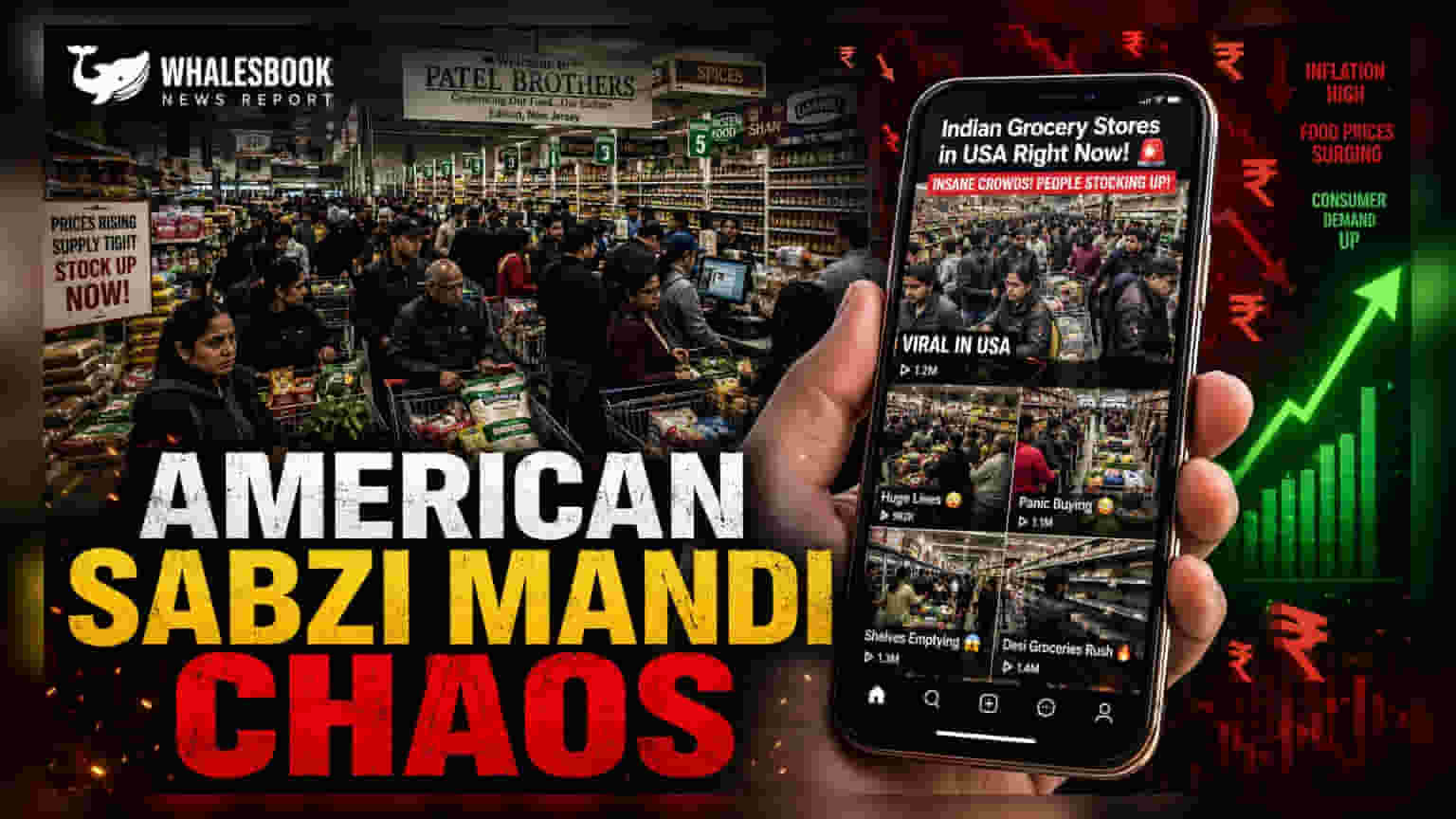
A newly opened Indian grocery store in New Jersey has seen massive footfall, reflecting the rising demand for ethnic products in the U.S. market. While the high turnout signals a growing business opportunity for specialty retailers, it has also sparked community discussions regarding management and public conduct in shared spaces.
What Happened
A newly opened Indian grocery store in New Jersey has attracted significant consumer attention, with viral footage showing long queues and crowded aisles. Often referred to as an 'American Sabzi Mandi,' the store’s popularity reflects a high immediate demand for ethnic groceries among the Indian diaspora in the region. This trend highlights the rapid growth of the specialty food retail sector, which caters to specific cultural needs for fresh produce, regional spices, and heritage food brands that are often unavailable in mainstream American supermarket chains.
The Growth of Ethnic Grocery Retail
The surge in popularity at this New Jersey location points to a broader economic trend. As the Indian-American population increases, the demand for dedicated retail space that stocks specific regional food items is rising. Retailers operating in this space benefit from high customer loyalty and a niche market. Unlike general retailers, these stores often operate on a high-inventory-turnover model, where providing a vast range of culturally specific products is the primary advantage over larger, generic competitors.
Challenges in Scalability and Operations
For retailers in this sector, success brings significant operational hurdles. When demand spikes, managing crowd control, parking logistics, and supply chain efficiency becomes critical. An inability to scale operations to meet such high footfall can lead to issues ranging from inventory shortages to local community friction. Retailers in the ethnic segment must often balance rapid expansion with the need for better infrastructure to handle high volumes, as unexpected overcrowding can sometimes lead to local regulatory attention or negative public sentiment.
How Investors May Read This
From an investor’s perspective, the high demand for Indian grocery formats in the U.S. demonstrates the potential for scaling specialty retail models. However, it also emphasizes that long-term business success in this segment depends on more than just high footfall. Investors may look for companies that can maintain consistent profit margins while managing the increased operational costs associated with handling large crowds and maintaining a complex supply chain. The ability of a brand to transition from a 'viral' sensation to a sustainable, well-managed retail chain is a key monitorable.
What To Watch Next
For those monitoring the retail sector, the next steps include observing how these businesses manage the transition from initial launch crowds to sustainable daily operations. Key factors to track include the ability to maintain shelf availability without excessive waste, the implementation of more efficient checkout technologies to manage queues, and the capacity to expand footprint without compromising on the quality of service. Furthermore, any feedback from local authorities regarding safety or zoning regulations will be an important indicator of whether the business can scale without encountering legal or civic resistance.