 Whalesbook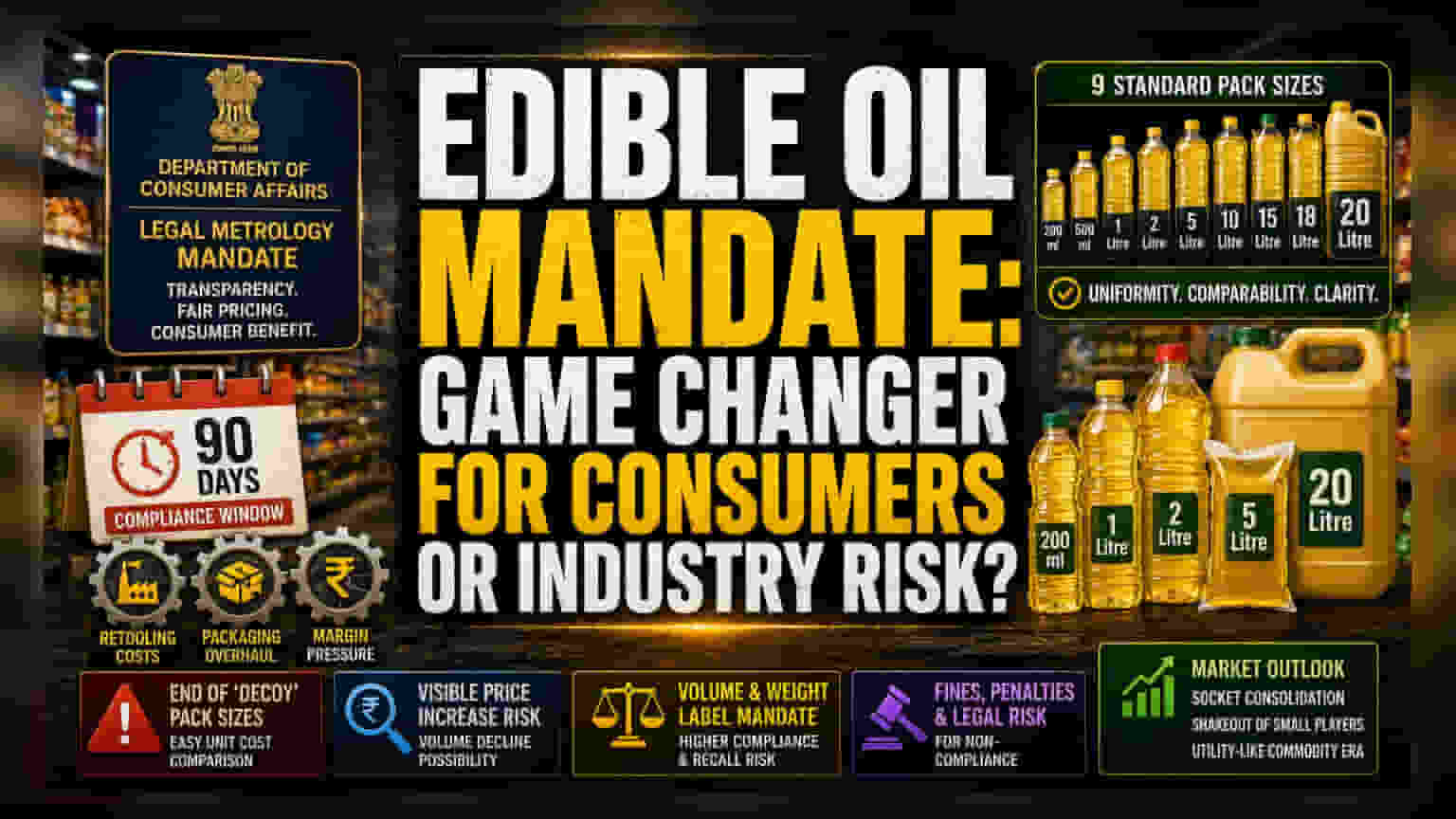


The Shift Toward Retail Transparency
The Department of Consumer Affairs has effectively dismantled the opacity surrounding edible oil pricing by restricting retailers to nine specific pack sizes. While framed as a consumer protection initiative under the Legal Metrology framework, the move targets the underlying mechanics of retail competition. By forcing uniformity in volumes ranging from 200 ml to 20 litres, the mandate eliminates the ability for manufacturers to introduce 'decoy' package sizes that complicate unit-cost comparisons for the average household.
Margin Compression and Operational Costs
Transitioning to these rigid standards imposes immediate operational friction for major players like Adani Wilmar and Patanjali Foods. The three-month compliance window requires a massive retooling of high-speed bottling lines and a complete overhaul of secondary packaging inventory. Historically, firms utilized varied packaging volumes to protect margins during periods of high raw material volatility, such as during the 2022 palm oil supply crunch. Without the flexibility to adjust grammage during price fluctuations, manufacturers now face a binary choice: absorb rising import costs or implement visible price increases that could trigger volume declines in a price-sensitive market.
The Forensic Bear Case
The real threat here is not the cost of implementation but the loss of marketing dexterity. For years, the edible oil sector has masked retail inflation by marginally adjusting pack sizes instead of raising shelf prices. With that strategy now prohibited for all major oil categories, the industry enters a period of heightened transparency that will likely expose brand loyalty to fierce price competition. Furthermore, the mandatory requirement to display both volume and weight on all packaging creates a secondary compliance layer that increases the risk of product recalls or fines if labels fail to account for density variations across different oil types. The exemption for sub-200ml packs remains a potential loophole, yet firms focusing on premium, larger-format segments will find their pricing strategies under intense scrutiny as unit prices become easily comparable across competing digital and physical retail shelves.
Future Market Outlook
As the industry consolidates its product offerings to meet these standards, analysts expect a short-term surge in supply chain overhead, followed by a potential shakeout of smaller regional brands that lack the logistical capacity to adapt within the 90-day window. While the Indian Vegetable Oil Producers' Association has publicly endorsed the move as a means to restore market order, the underlying reality for investors is a transition toward a utility-like commodity market where brand differentiation becomes significantly harder to defend without aggressive price positioning.