

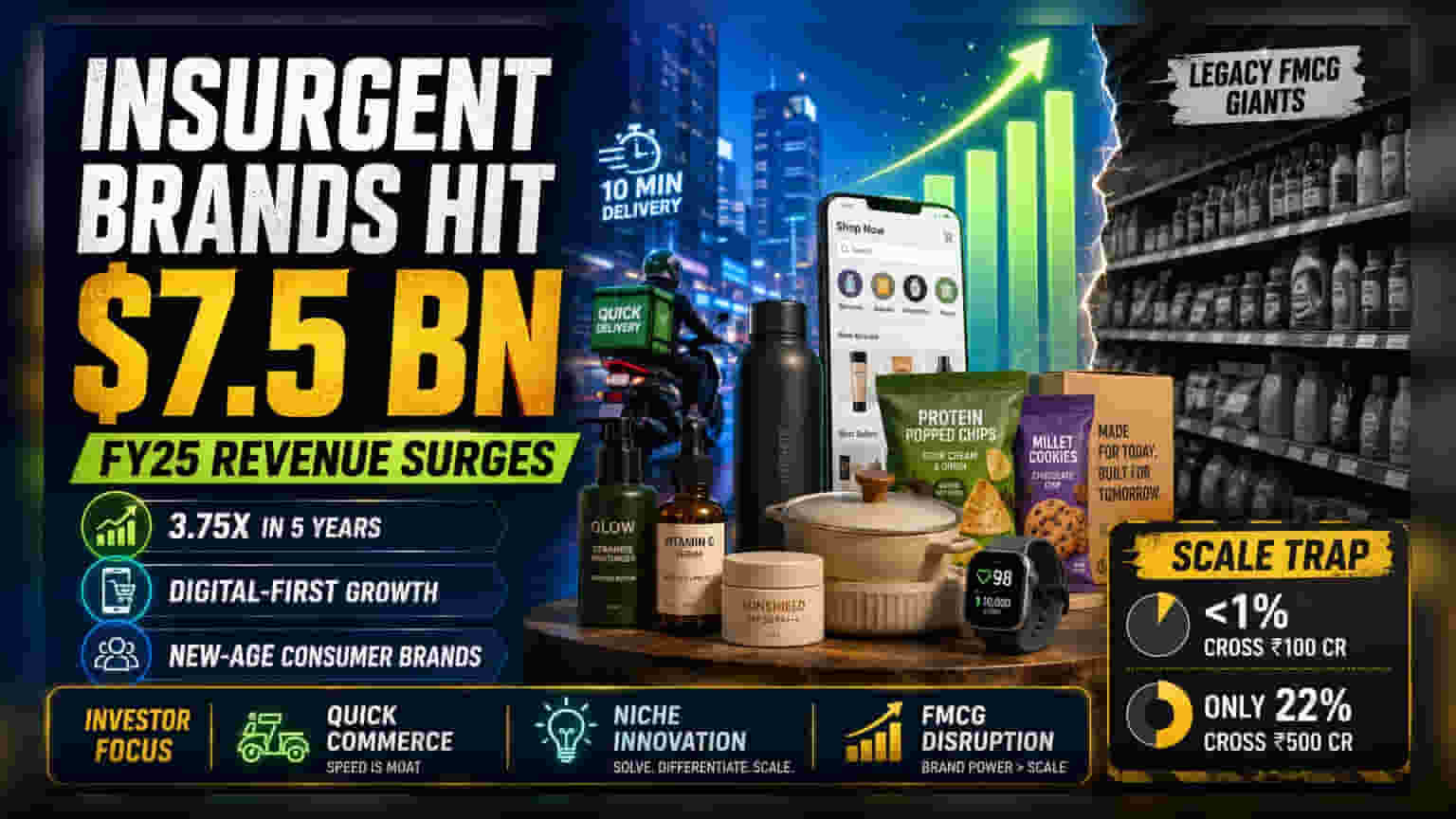
Emerging Indian consumer brands have surged to over $7.5 billion in revenue for FY25, growing nearly four times faster than the broader market over the last five years. While these agile startups are rapidly capturing niche needs, industry data shows that most face significant hurdles in scaling beyond ₹500 crore, creating a divide between early-stage disruption and sustainable, long-term growth.
What Happened
India's new-age consumer companies, often referred to as "insurgent brands," have achieved a significant milestone by generating over $7.5 billion in total revenue during the fiscal year 2025. According to the "Game Changers 2026" report by Bain & Company and DSG Consumer Partners, this figure marks a 3.75-fold increase in revenue over the past five years. These companies, typically founded after 2007 and focused on digital-first strategies, are outperforming established market averages by a factor of 3.3, demonstrating that they are not just minor players but are actively reshaping consumer demand in India.
The Growth Drivers
The rapid ascent of these insurgent brands is largely tied to their ability to identify and solve specific consumer needs that legacy FMCG giants often overlook. While traditional incumbents rely on mass-market distribution and broad appeal, these newer players focus on high-velocity innovation and agility. By targeting niche segments such as specialized skincare, ergonomic kitchenware, and wearable electronics, they have built strong, loyal customer bases. This strategy has been supercharged by the digital economy. The rise of quick commerce and digital marketplaces has allowed these brands to reach customers with minimal physical distribution infrastructure, enabling them to test products, iterate quickly, and scale within specific, high-intent urban cohorts.
The 'Scale Trap' For Investors
Despite their impressive early growth, achieving long-term sustainability remains a major challenge for these insurgent brands. The industry data reveals a distinct "scale trap." While many brands find success in their initial stages, the path to becoming a large, enduring business is narrow. Research shows that less than 1% of consumer companies founded since 2008 have surpassed ₹100 crore in revenue. Furthermore, among those that have crossed the ₹100 crore mark, only 22% have managed to scale beyond ₹500 crore.
This difficulty often stems from the transition out of the "founder-led" growth phase. As these companies move from small-scale digital wins to broad-market operations, they face rising customer acquisition costs (CAC), the need for complex supply chain management, and the requirement for professionalized operational structures that can function without the constant oversight of the founders.
Impact on Established Players
For investors monitoring the broader FMCG sector, the rise of these insurgents is a critical indicator of shifting market dynamics. Established FMCG majors are no longer passive observers. Many large incumbents are now aggressively adapting their strategies to counter this threat. This includes the acquisition of high-growth insurgent brands, launching "premium" versions of existing products to compete in the same niche segments, and shifting distribution priorities toward quick commerce channels to retain their market share.
What Investors Should Track
Investors looking at the consumer goods landscape may want to watch how established companies defend their market position. Key monitorables include whether traditional FMCG giants can successfully integrate these smaller, agile brands, or if they are forced to sacrifice profit margins to counter the pricing and innovation of insurgent competitors. Additionally, tracking the "Insurgex Index" cohorts—or similar data regarding the success rate of brands moving from the ₹100 crore to ₹500 crore revenue bucket—provides a clear signal on whether the digital-first model is truly becoming more capital-efficient and sustainable over time.