

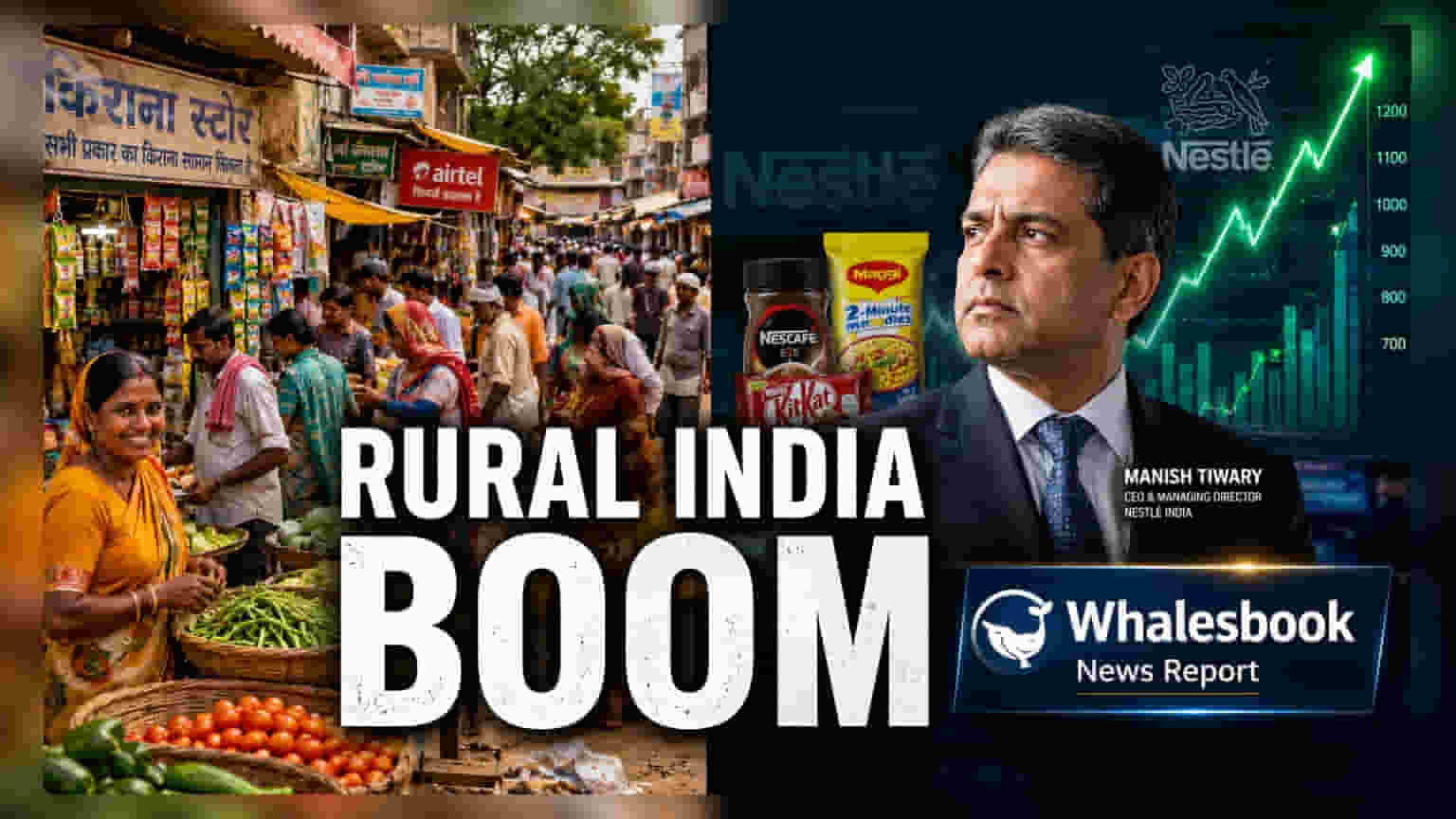
Nestlé India is shifting its growth focus toward rural and Tier-II/III cities to increase household reach. Despite recent food inflation, the company achieved domestic sales of ₹23,071.5 crore. The move aims to sustain volume growth by expanding its distribution network and increasing brand penetration in smaller markets.
What Happened
Nestlé India has announced a strategic shift to focus on rural and semi-urban markets to fuel its next phase of expansion. During a recent update, Chairman and Managing Director Manish Tiwary identified these regions as vital for driving future consumption. The company aims to move beyond traditional urban strongholds by tailoring its product offerings and distribution reach to match the growing aspirations of consumers in smaller towns. This announcement follows the company's record-breaking performance in the previous financial year, where domestic sales reached ₹23,071.5 crore, supported by double-digit volume growth despite a challenging economic environment.
The Strategy for Market Penetration
To turn this plan into reality, Nestlé India is heavily investing in its physical presence. Since April 2023, the company has added roughly 5.2 lakh new retail outlets, significantly widening its reach into rural and Tier-II and Tier-III locations. This expansion is part of a broader capital spending commitment of approximately ₹2,000 crore made over the last two years. This capital is being deployed toward new production capacity, including a greenfield project in Odisha, as well as technology upgrades and a move toward higher-value, premium product categories.
Challenges in the Consumption Landscape
While the company has seen success, the path forward involves managing complex economic pressures. Fiscal year 2025-26 saw significant food inflation, which forced many Indian households to rethink their grocery spending. Consumers often shifted their habits by choosing smaller pack sizes or reducing purchase frequency. Furthermore, rural demand continues to be closely linked to unpredictable factors like monsoon quality and farm income levels. While urban demand has remained relatively steady, management noted that the Indian market is highly diverse, requiring distinct strategies for different income groups.
Comparing Peer and Sector Context
The fast-moving consumer goods sector in India has been navigating a period of mixed demand. Many major players in the food and beverage space have faced similar pressure from high raw material costs and fluctuating consumer sentiment. Nestlé India’s focus on volume growth rather than just price-led revenue growth is a strategy shared by several large peers who are also attempting to deepen their distribution in rural areas to combat urban saturation. Investors often track how well these companies maintain their profit margins while simultaneously spending large amounts on expanding their reach into less-developed regions.
What Investors Should Track
Moving forward, the success of this strategy will depend on several key factors. First, the actual performance of the rural economy, specifically farm income, will dictate how much disposable income is available for branded food products. Second, the progress of the company's capital spending projects, such as the facility in Odisha, will be important for future capacity. Investors will also look for data on whether the increased outlet expansion leads to a sustained improvement in volume growth without putting excessive pressure on the company's operating profit margins.