

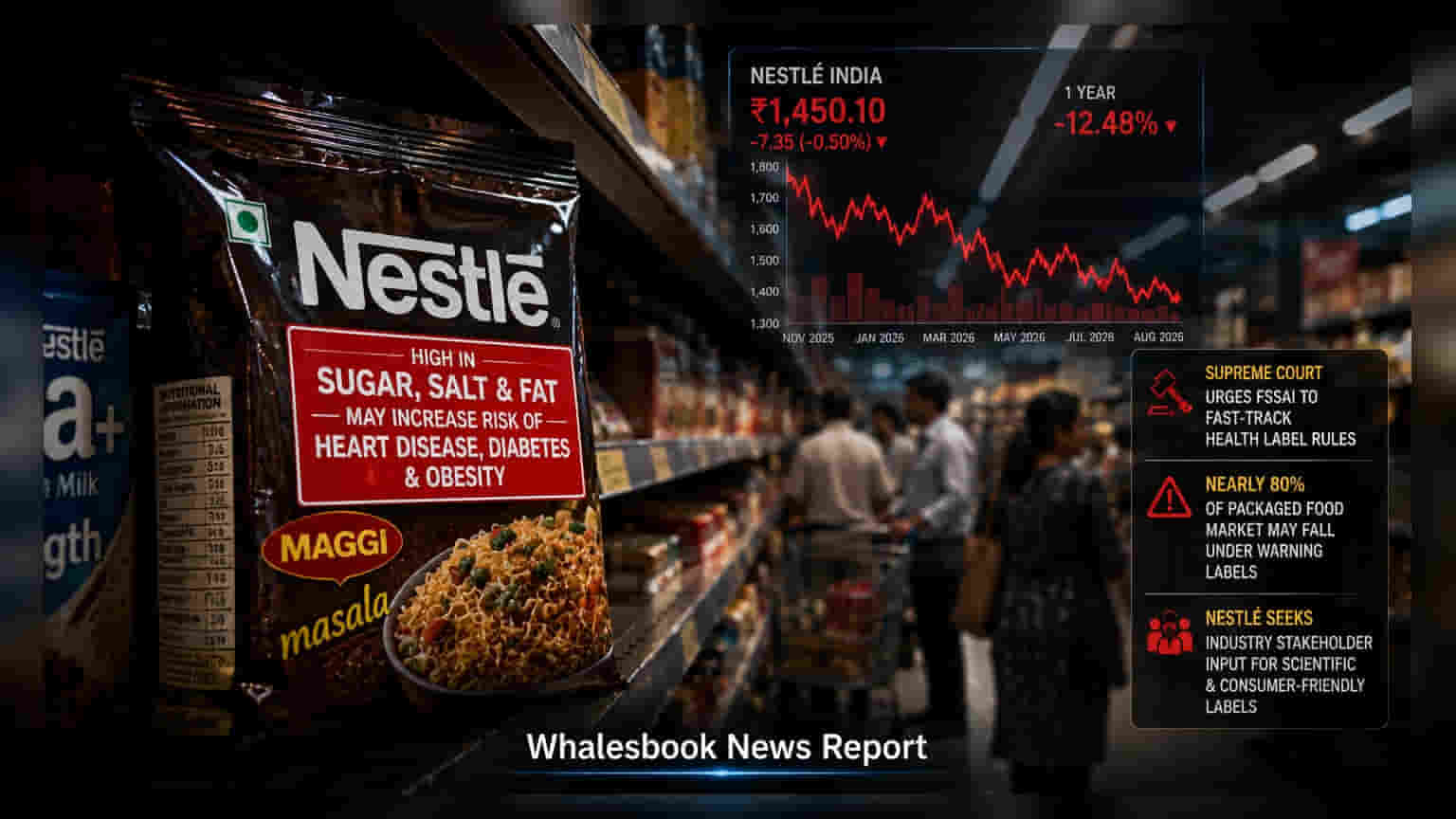
Nestlé India is calling for formal industry consultation on upcoming front-of-pack health warning labels, arguing for a science-based approach. The push comes amid intense judicial and public pressure to flag packaged foods high in sugar, fat, and salt. Investors are watching how stricter regulations might impact the company’s product portfolio, profit margins, and valuation in a competitive, inflationary market.
Nestlé India has formally requested the government to include industry stakeholders in the design of new front-of-pack health labeling regulations. Nestlé’s management, led by CEO Philipp Navratil, argues that any labeling system must be "scientifically robust" and tailored to Indian consumer consumption patterns. This intervention comes as the Food Safety and Standards Authority of India (FSSAI) faces increasing pressure to finalize rules that would require packaged food companies to display clear health warnings for products high in sugar, salt, and fat.
The regulatory environment has become increasingly stringent. The Supreme Court of India has recently expressed frustration over the delays in implementing these warning labels, urging authorities to move faster to protect public health. The stakes are significant, as industry data suggests nearly 80% of India’s roughly $100 billion packaged food market could fall under the criteria for these mandatory labels. For a company like Nestlé, which holds a substantial market presence across categories like noodles, chocolates, and dairy, such regulations could lead to a need for product reformulation or changes in marketing strategies if specific ingredients are targeted for health warnings.
Adding to the regulatory complexity, the FSSAI has been conducting a broader crackdown on misleading advertisements and false health claims across the food industry, having issued over 150 notices to major manufacturers, including Nestlé India. This environment of heightened scrutiny poses a potential risk to brand reputation and necessitates strict compliance, which can be costly and operationally complex.
From a financial perspective, Nestlé India continues to trade at a premium valuation, with a price-to-earnings (P/E) multiple often hovering around 74 to 75. While the company has maintained robust financial performance, it faces ongoing pressures that investors typically track closely. These include persistent inflation in key commodity costs, such as cocoa, coffee, and palm oil, which can squeeze profit margins. Additionally, management has noted in recent communications that the company faces risks from short-term consumption moderation as inflationary pressures impact consumer spending habits.
On the market front, shares of Nestlé India were trading near ₹1,450 as of late August 2026, showing minor price fluctuations following the news. The stock’s high valuation means that any negative developments—whether from regulatory hurdles, forced product changes, or margin compression—can lead to sharper reactions from market participants.
Moving forward, the primary monitorable for investors will be the FSSAI’s next steps regarding the final policy framework. The market will watch whether the government adopts the industry's call for a consultative approach or proceeds with strict, mandatory warnings. Additionally, shareholders will likely continue to evaluate how the company manages raw material cost volatility and maintains its profit margins in an increasingly regulated and price-conscious environment.