

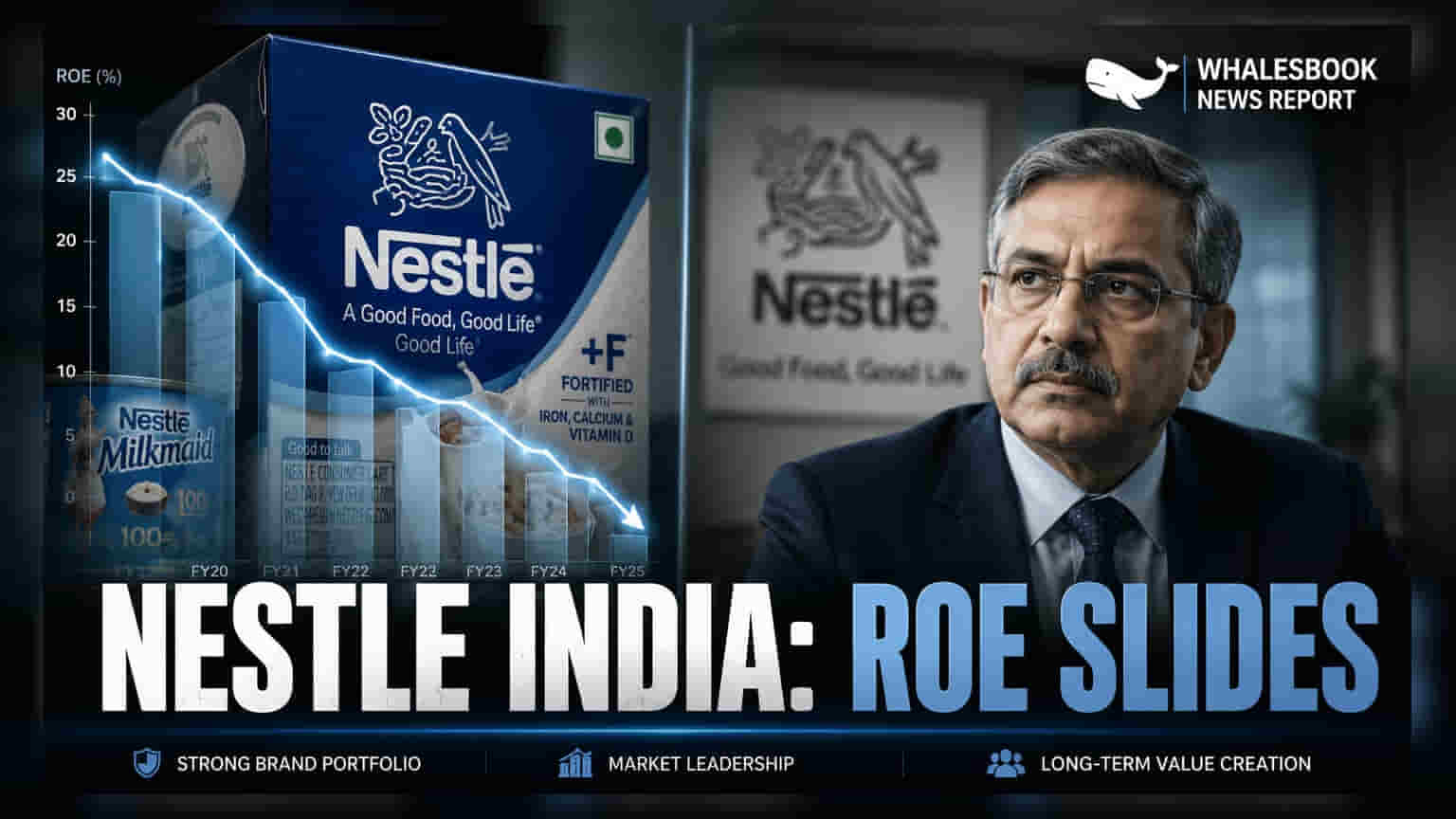
Nestlé India's Return on Equity dropped to 75.2% in FY26, its lowest level in six years. This decline reflects a faster expansion of the company's equity base compared to its profit growth, rather than a fall in earnings. Investors should focus on how this change in financial structure affects future capital efficiency.
What Happened
Nestlé India, one of the leading companies in the Fast-Moving Consumer Goods sector, has reported a Return on Equity (RoE) of 75.2% for the financial year 2026. This figure marks the company's lowest RoE level in the last six years. RoE is a financial metric used by investors to understand how effectively a company generates profit from the money shareholders have invested. While a dip in this metric can often signal declining profitability, the company’s recent performance shows a different story related to its balance sheet structure.
Why The Metric Dropped
The decline in RoE is primarily driven by the company's equity base growing faster than its total earnings. In the calculation of RoE, the equity base acts as the denominator. When this number increases significantly—often due to the accumulation of retained earnings or changes in reserves—the overall ratio can decrease even if the company's absolute profit remains steady or continues to grow. It is important for investors to distinguish between a drop caused by falling business profits and one caused by this mathematical adjustment in the company's capital structure.
The Bigger Financial Context
Nestlé India is traditionally known for maintaining one of the highest RoE percentages among Nifty 50 companies. This high efficiency has been a cornerstone of its appeal to long-term investors. By maintaining a large equity base, the company is managing a different financial balance than in previous years. This shift invites a deeper look at whether the company's strategy involves holding more capital to fund future operations or if it is a result of structural changes in how the company manages its reserves.
Peer And Sector Context
The Indian FMCG sector has recently faced pressure from varied consumer demand patterns and rising raw material costs. Many consumer goods companies are currently focusing on balancing their volume growth with price hikes to protect their margins. Compared to peers, Nestlé India has historically focused on premium food products, which allows it to maintain a distinct position. However, the current trend of an expanding equity base is a specific company-level development that sets it apart from competitors who may be operating with different debt-to-equity strategies.
What Investors Should Track
Moving forward, the primary monitorable will be the company’s ability to deploy this expanded equity base effectively to generate future returns. Investors may look for details in upcoming management commentary regarding capital allocation strategies. Key factors to track include the trend in profit margins, the impact of raw material price fluctuations on the bottom line, and any further changes in the company’s equity or reserve structure in the next quarterly filings.