

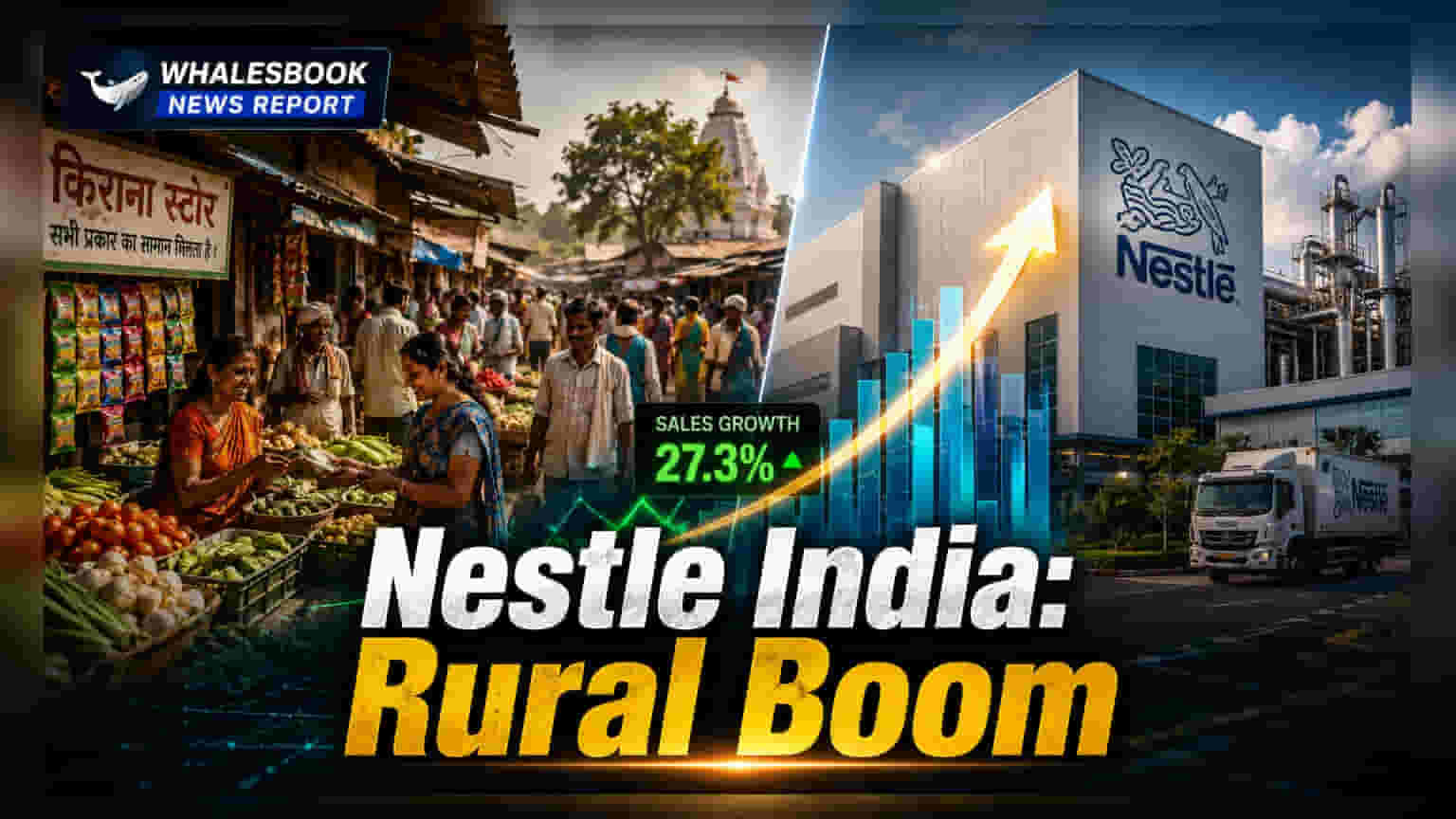
Nestle India is shifting focus to rural and semi-urban markets to boost long-term demand. The company, which recently achieved record domestic sales of ₹23,071.5 crore, plans to spend ₹2,000 crore on distribution and capacity expansion. Investors should track how this geographic push impacts profit margins amid persistent food inflation.
What Happened
Nestle India has announced a strategic move to focus on rural and semi-urban expansion, identifying these regions as the primary drivers for its next phase of growth. The company, led by Chairman and Managing Director Manish Tiwary, reported record domestic sales of ₹23,071.5 crore for the recent fiscal year. To support this growth, Nestle India has committed ₹2,000 crore toward capital spending over a two-year period. This investment is directed toward expanding the distribution network in Tier-II and Tier-III towns, as well as building a new greenfield manufacturing plant in Odisha.
The Growth Strategy and Distribution Push
The company's strategy relies on increasing household penetration and driving volume growth. Since April 2023, Nestle India has added approximately 5.2 lakh retail outlets to its distribution network. By deepening its reach in smaller towns, the company aims to capitalize on rising consumer aspirations outside of major metropolitan areas. This is supported by a dual focus on making products more accessible and investing in the premium segments of its portfolio, such as confectionery.
Financial Context and Market Resilience
Despite facing pressure from food inflation and global supply chain disruptions over the past year, Nestle India managed to achieve double-digit, volume-led growth. The company’s ability to gain market share in a year marked by high inflation suggests resilience in its brand portfolio. However, the company also noted that consumer demand in rural areas remains sensitive to factors such as monsoon performance and general farm income, which will continue to be a key variable for sales stability.
Why Capital Spending Matters
The ₹2,000 crore investment program is significant for the company’s balance sheet. While this expenditure is aimed at securing long-term capacity, investors may monitor how it affects cash flow and overall return ratios in the near term. The upcoming Odisha facility is intended to serve as a modern manufacturing hub, which could eventually improve logistics and operational efficiency once it becomes fully operational.
Potential Risks and Competitive Landscape
Nestle India operates in a highly competitive FMCG sector where pricing power is often tested by food inflation. Increased competition in the rural segment from both large domestic players and smaller regional brands could impact market share. Additionally, the success of the expansion depends on the company's ability to maintain healthy profit margins while absorbing the costs associated with a massive distribution drive and potential input cost volatility.
What Investors Should Track
Moving forward, the key monitorables include the commissioning timeline of the new Odisha project and the impact of rural distribution expansion on overall revenue growth. Investors may also watch for commentary on how the company manages raw material costs and whether the premiumization strategy effectively offsets any pressure on margins. Quarterly results will provide further insight into whether the volume-led growth seen in the past year remains sustainable in the face of varying macroeconomic conditions.