 Whalesbook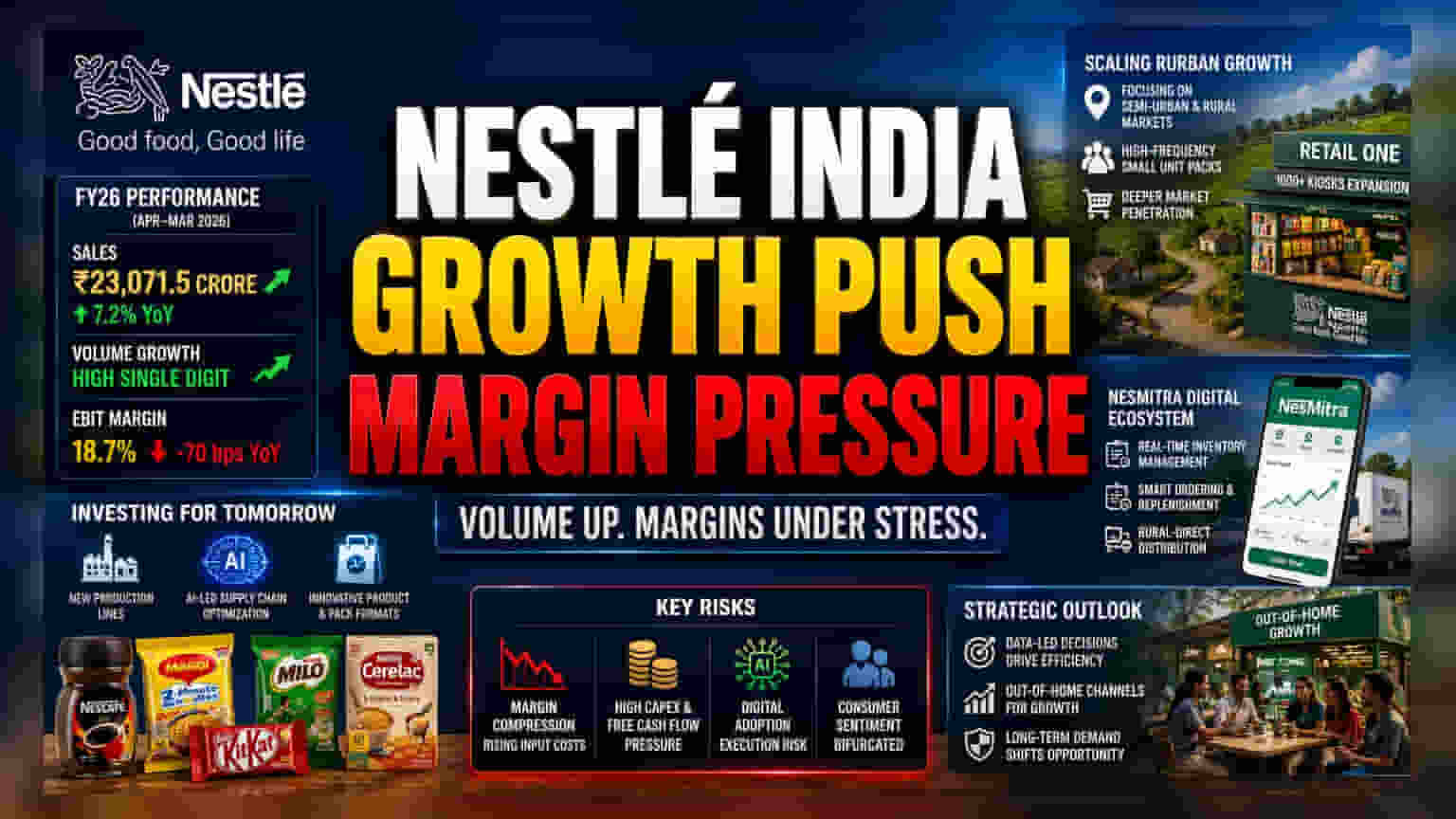


The Volume-Margin Disconnect
The fiscal performance of Nestlé India reveals a classic tension within the consumer staples sector: volume growth is currently being bought through aggressive reinvestment rather than organic market expansion alone. While the reported ₹23,071.5 crore in sales reflects successful penetration, the underlying cost structure indicates a struggle to protect operating margins. With food inflation remaining stubborn, the firm is leveraging internal cost-saving initiatives to subsidize its push into semi-urban and rural territories, effectively trading short-term profitability for long-term market share dominance.
Scaling the RUrban Framework
The company’s reliance on the 'RUrban' strategy marks a departure from traditional metro-centric growth models. By leveraging the NesMitra digital ecosystem, Nestlé is bypassing legacy distribution bottlenecks, allowing for real-time inventory management in underserved rural pockets. This pivot is critical as competitors like HUL and Britannia are simultaneously intensifying their own rural rural-direct-distribution efforts. Unlike in previous cycles where growth was largely premium-led, the current strategy focuses on high-frequency, smaller-unit offerings designed to remain price-accessible despite commodity price volatility.
The Forensic Bear Case
Investors must weigh the aggressive expansion plans against significant structural risks. The primary concern remains margin compression; if input costs—specifically energy and raw materials—do not stabilize, the heavy capital expenditure required for 1,000 Retail ONE kiosks and new production lines could weigh on free cash flow. Furthermore, the reliance on AI and digital distribution tools presents an execution risk. Should regional adoption of these digital platforms lag, the company risks overextending its operational expenditure. Additionally, the broader consumer staples sector is currently experiencing a valuation correction, with high P/E ratios facing scrutiny as consumer sentiment remains bifurcated between aspirational urban spenders and price-sensitive rural households.
Strategic Outlook
Management is positioning the brand to capture long-term demand shifts by embedding data-led decision-making into the core supply chain. By treating AI as a tool for cost-efficiency rather than just a sales gimmick, the firm aims to sustain its growth trajectory even if broad market consumption remains uneven. Brokerage sentiment remains cautious regarding the immediate margin upside, but the focus on 'out-of-home' consumption channels suggests a deliberate attempt to hedge against stagnant at-home pantry growth.