

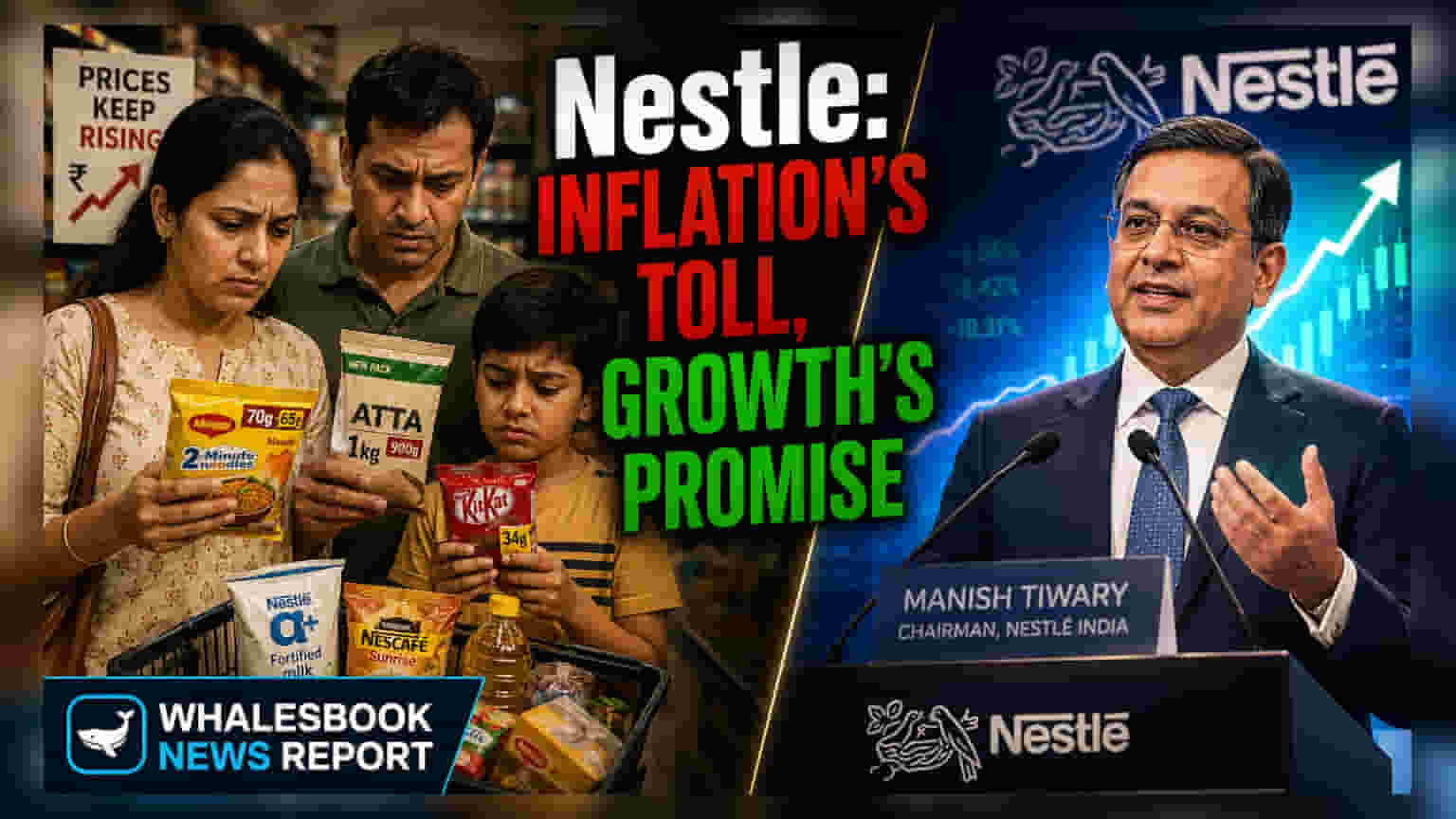
Nestle India’s Chairman Manish Tiwary stated that persistent food inflation in FY26 led households to adjust their purchase frequency and pack sizes. While the company reported strong revenue growth in the March 2026 quarter, it continues to face challenges from uneven demand and rising commodity costs. Investors should track how these changing consumer habits influence volume growth and profit margins moving forward.
What Happened
At Nestle India’s 67th Annual General Meeting, Chairman and Managing Director Manish Tiwary discussed the significant impact of food inflation on Indian consumers during the fiscal year 2026. He explained that high prices have forced households to change their spending habits, specifically by altering the size of packages they buy and how often they shop for food products. Despite these pressures, the company maintained a positive outlook on the Indian market, focusing on long-term growth through brand investment and increased production capacity.
Financial Performance Snapshot
For the January-March 2026 quarter, Nestle India reported a revenue of ₹6,748 crore, marking a 22.6% increase compared to the same period last year. This growth highlights the company’s ability to expand its top line despite the broader economic challenges mentioned by the leadership. However, the company is operating in an environment marked by volatile commodity costs and unpredictable consumer demand patterns, which are critical factors that can influence its ability to maintain profit margins.
Strategic Adjustments to Inflation
To navigate the current economic environment, Nestle India has been focusing on agility and deep consumer insight. The management noted that they are reinvesting cost savings back into the business, particularly through increased advertising and digital marketing. The objective is to drive volume growth by reaching more consumers and improving product penetration. By prioritizing these areas, the company aims to sustain its competitive edge even when inflation pressures households to become more selective with their purchases.
How Investors May Read This
For investors, the key takeaway is the shift in how consumers interact with food brands. When inflation remains high, the 'pack size' and 'purchase frequency' dynamics become essential indicators of whether a company can retain its market share. If consumers move toward smaller, more affordable packs to manage their budgets, this can impact the overall product mix and profitability. The company’s success will likely depend on its ability to balance these consumer trade-offs with effective cost management.
What Investors Should Track
Moving forward, investors may monitor several areas to understand the company's trajectory. First, watch the quarterly trends in volume growth versus price-led growth, as high inflation can sometimes mask a decline in the number of units sold. Second, keep an eye on commodity price movements, such as coffee and milk costs, which are significant raw materials for the company and directly affect operating margins. Finally, listen for updates on capacity expansion projects, as these indicate the company’s confidence in future demand despite the current short-term economic fluctuations.