

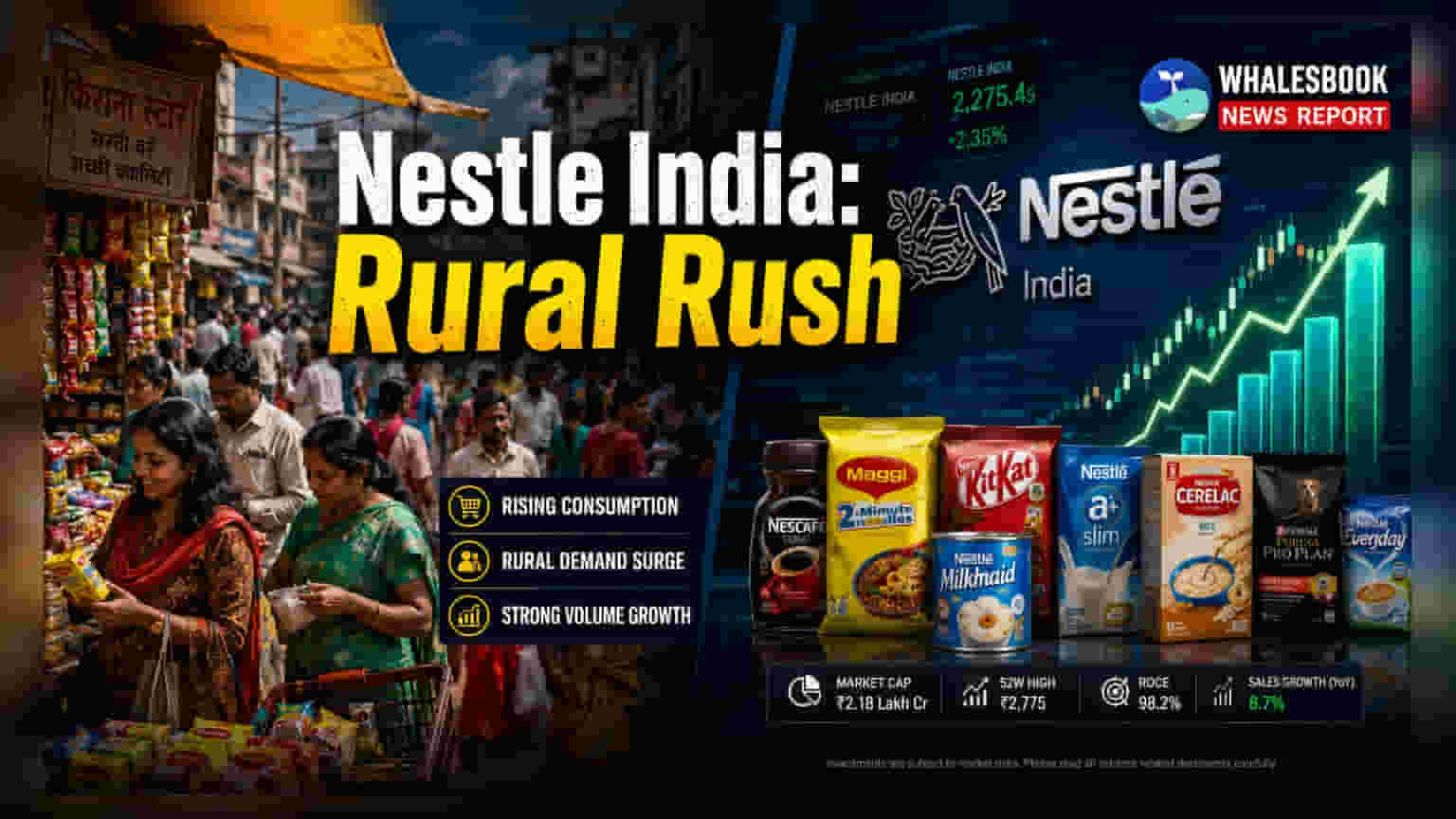
Nestle India is aggressively expanding its distribution to tier-2 and tier-3 towns, where consumption growth is outperforming major metros. The company aims to capture rising demand by adding over 5 lakh retail outlets despite recent challenges from food inflation and high input costs.
What Happened
Nestle India, led by Chairman and Managing Director Manish Tiwary, has launched a strategic push to deepen its footprint in smaller Indian cities. Speaking at the company’s recent annual meeting, management highlighted that while major metropolitan areas show stable but plateauing demand, tier-2 and tier-3 towns are experiencing faster consumption growth. To capture this shift, the company has expanded its distribution network by adding 5.2 lakh new retail outlets, aiming to increase household penetration for its diverse food and confectionery portfolio.
Financial Context and Expansion
The company is balancing this expansion with significant capital spending, having committed ₹2,000 crore over the last two years. This capital is being used to increase production capacity and fund a new factory in Odisha. These investments are essential to ensure the company can meet the projected volume growth from its rural and semi-urban outreach initiatives. While the company faces pressure from food inflation and fluctuating energy costs, the management is using this capital to build a more resilient supply chain and distribution network.
The Rural and Urban Consumption Mix
Management noted that demand trends are currently split. While urban consumption remains stable, it is sensitive to income levels. Rural demand, which is crucial for long-term volume growth, remains tied to monsoon performance and agricultural income. By utilizing technology to manage distribution and partnering with quick-commerce platforms, Nestle India is attempting to bridge the gap between traditional retail and digital consumer habits in both urban and semi-urban markets.
Balancing Premium Products and Accessibility
Nestle India is navigating a dual strategy of moving toward higher-value products while maintaining affordable options for price-sensitive regions. This "premiumization" approach is designed to improve profit margins, but it requires careful execution to avoid alienating consumers in smaller towns who may be more cautious due to food price inflation. The company’s ability to maintain its market position will depend on how effectively it balances these price points across its vast distribution network.
What Investors Should Track
Investors may monitor the company’s volume growth metrics in upcoming quarterly results, as these will indicate if the new retail outlets are successfully converting into actual sales. Other important monitorables include the commissioning timeline of the new Odisha facility and management commentary on whether food inflation has begun to ease. Additionally, tracking the effectiveness of the company’s omni-channel strategy—specifically how well quick-commerce partnerships contribute to revenue—will be vital for understanding the company's long-term margin stability.