

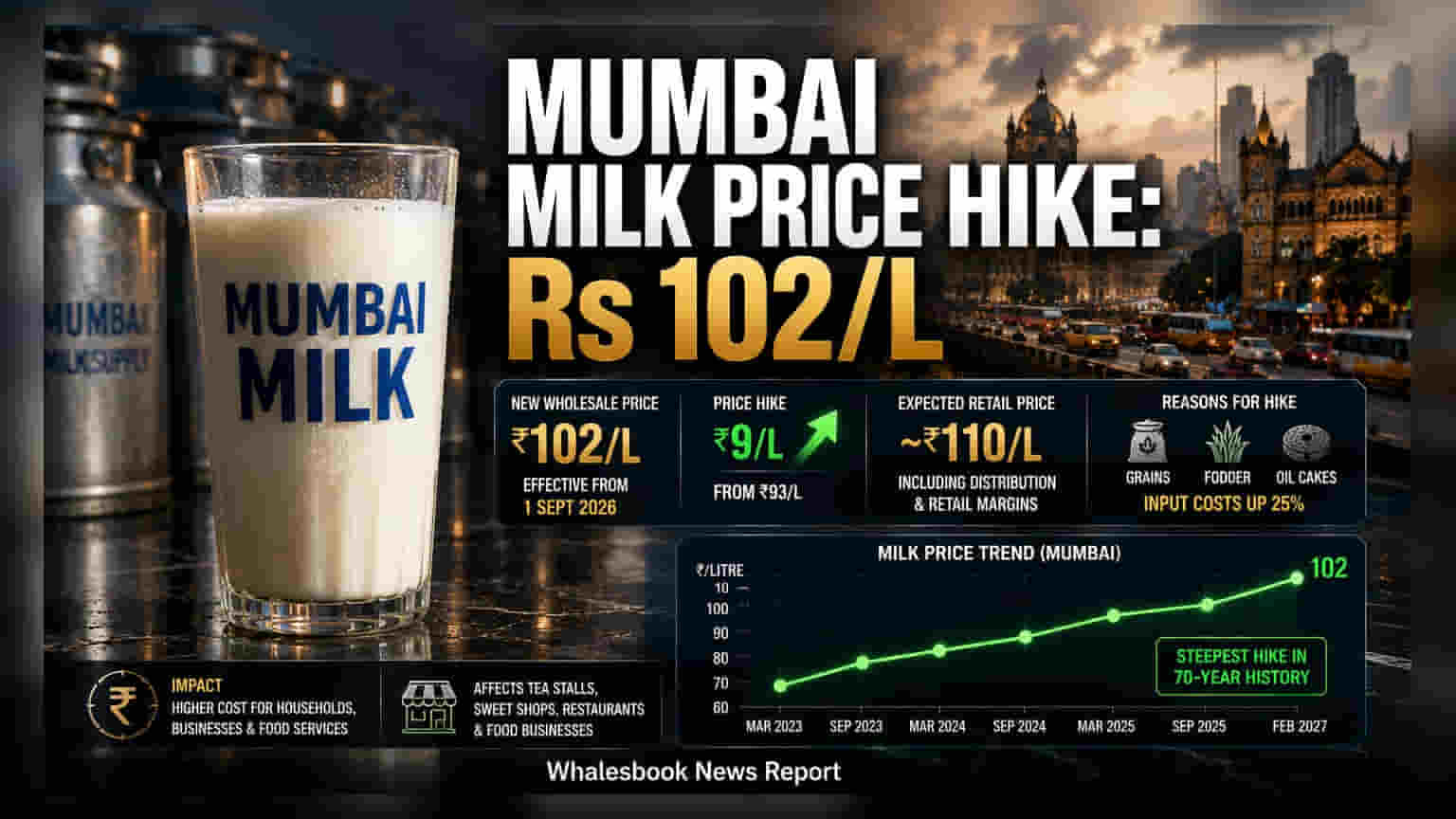
Fresh buffalo milk prices in Mumbai will increase to Rs 102 per litre from September 1, 2026, up from the current Rs 93. The Mumbai Milk Producers Association cites a 25% surge in animal feed costs as the primary driver. This increase will remain in effect until February 2027 and signals potential inflationary pressure on the broader food services and hospitality sector.
Starting September 1, 2026, households and businesses in Mumbai will face higher dairy costs as the wholesale price of fresh buffalo milk is set to increase to Rs 102 per litre. This adjustment, announced by the Mumbai Milk Producers Association, represents a rise of Rs 9 from the current rate of Rs 93. The new pricing structure is scheduled to remain in effect until February 28, 2027, covering the upcoming festive season.
The decision follows a period of mounting financial stress for dairy farmers in the region. The association has pointed to a steep 25 per cent rise in the costs of essential inputs, such as grains, fodder, and oil cakes, which are required for livestock maintenance. This hike marks the steepest one-time increase in the association’s 70-year history, reflecting significant supply-side constraints.
While the wholesale rate is set at Rs 102, retail consumers are expected to pay even more, with market estimates suggesting prices could reach approximately Rs 110 per litre once distribution and retailer margins are added. This change carries implications beyond direct household budgets, as higher milk costs often translate into increased operating expenses for commercial users such as tea stalls, sweet shops, and restaurants.
For investors and market observers, this development highlights the persistent nature of input cost inflation in the dairy and agriculture sectors. While this specific news relates to the Mumbai tabela milk market, it underscores broader risks of commodity price volatility that can compress profit margins for food-based businesses. Companies reliant on dairy as a core raw material may face pressure to either absorb these costs or pass them on to consumers, which could impact demand volume in a price-sensitive market.
The primary monitorable for the coming months will be whether these input cost pressures remain elevated or if any cooling in global or local commodity prices occurs. Additionally, market participants will watch to see if similar supply-side adjustments take place in other urban centers, as continued increases in the cost of livestock maintenance could signal wider inflationary trends in dairy products.