 Whalesbook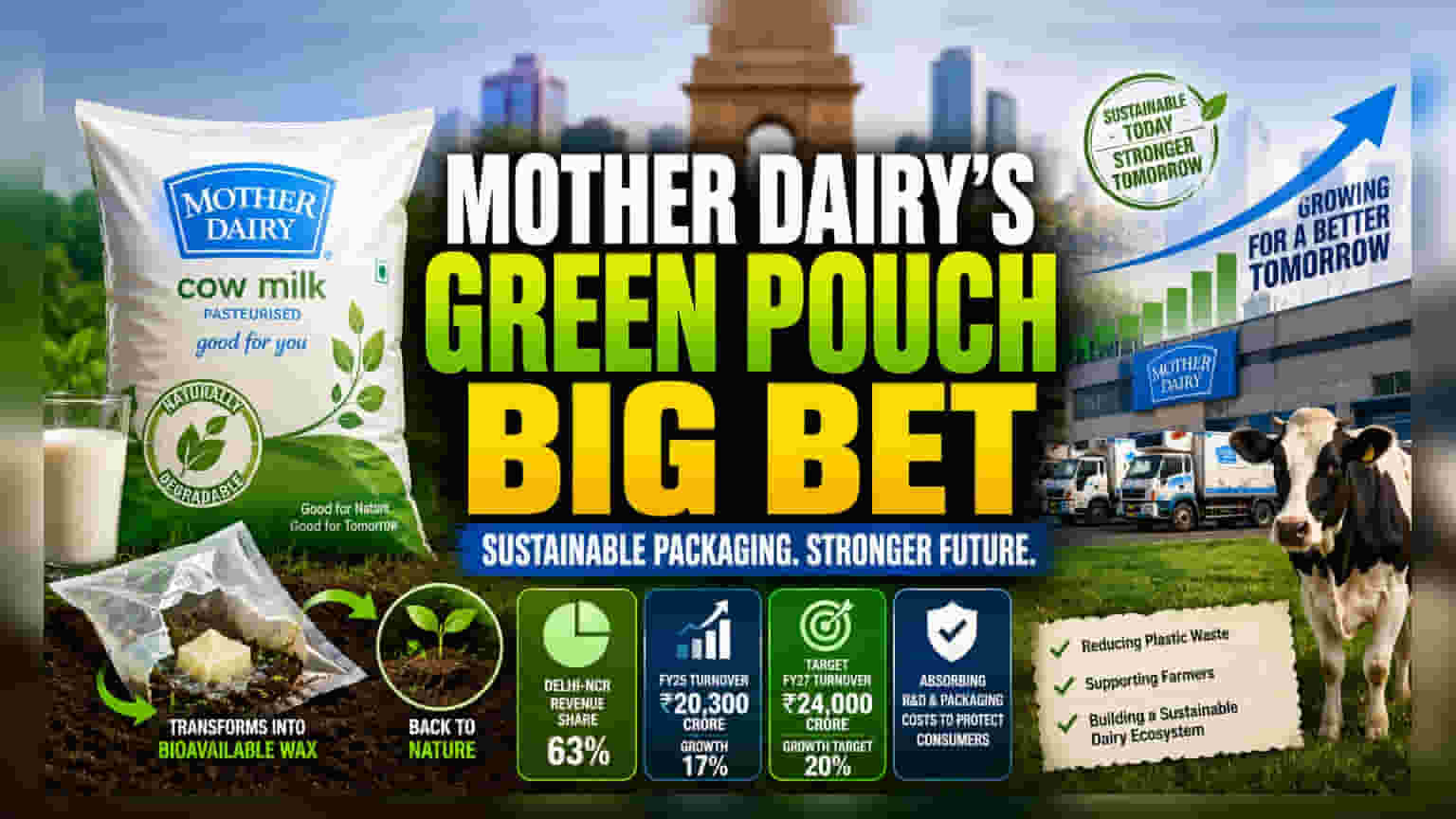


Beyond the Greenwashing: The Infrastructure Reality
Mother Dairy’s initiative to introduce naturally degradable milk pouches represents a strategic attempt to modernize its packaging lifecycle while operating under the fiscal constraints of a government-backed entity. Unlike private-sector competitors who often pass research and development costs directly to the consumer, the National Dairy Development Board (NDDB) subsidiary has committed to absorbing these expenses. By ensuring the new packaging transforms into bioavailable wax upon disposal, the company is attempting to decouple its expansion from the environmental backlash typically associated with the widespread use of flexible, multi-layered plastic films in the dairy industry.
Scaling the Sustainable Shift
This rollout, debuting in the Delhi-NCR market—which accounts for approximately 63% of the company's total revenue—serves as a high-visibility stress test for the company’s new supply chain processes. The technical transition is significant for a firm that handles massive daily volumes. With an annual turnover of ₹20,300 crore and a 17% growth rate last fiscal, Mother Dairy faces a logistical challenge in maintaining consistent product quality while implementing new material standards. The company’s ability to scale this beyond cow milk in the capital will likely depend on whether these degradable materials can maintain the same shelf-life and puncture resistance as traditional polyethylene films under India’s varying climatic conditions.
The Forensic View: Risks and Structural Constraints
Despite the positive branding, the dairy sector’s transition to bioplastics is fraught with systemic hurdles. Industry analysts frequently note that most biodegradable plastics require specific industrial composting conditions to break down effectively; if these pouches end up in standard landfills, their environmental benefit is significantly diminished. Furthermore, Mother Dairy remains highly susceptible to fluctuations in milk procurement costs and packaging material prices—which have spiked by 20% recently. While the company is currently absorbing these costs to maintain market share against aggressive private challengers like Country Delight and legacy giants like Amul, this strategy places immense pressure on its margins. The company’s large-scale debt-funded capital expenditure plans, paired with the mandate to prioritize remunerative pricing for farmers, limit its flexibility to pivot if these new packaging costs prove unsustainable over the long term.
Forward Guidance
Management has set an ambitious 20% growth target for the 2026-27 fiscal year, aiming for a ₹24,000 crore turnover. Achieving this while maintaining the current packaging innovation will require a delicate balancing act between aggressive geographical expansion and the operational costs of sustainability. Observers will be watching whether this packaging shift becomes a standard industry benchmark or remains a localized pilot for a company increasingly focused on premiumization and value-added product segments.