 Whalesbook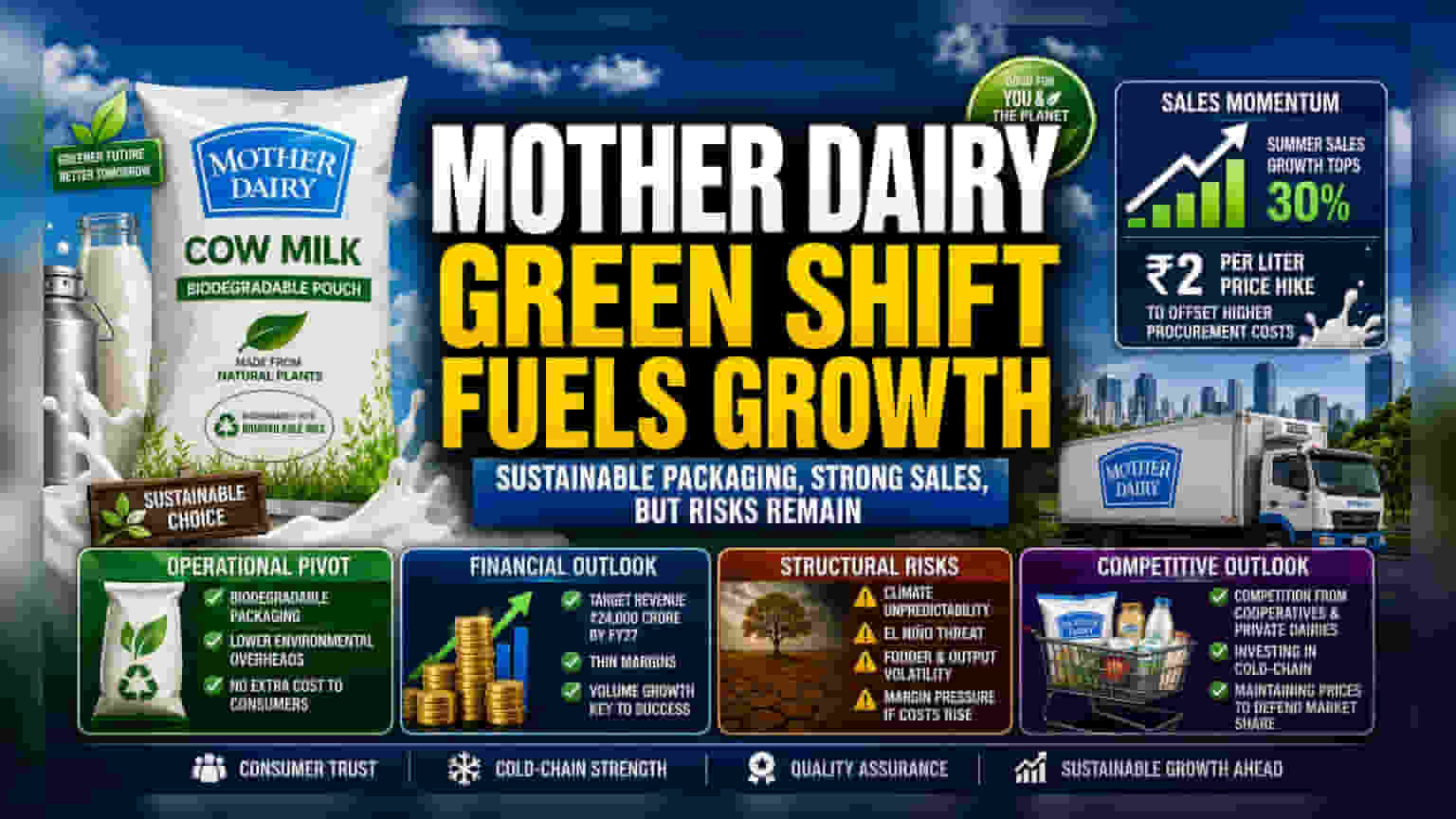


The Operational Pivot
The move toward biodegradable packaging for cow milk in the Delhi-NCR market represents a strategic attempt to lower environmental overheads without passing costs to the consumer. By transitioning to a material that degrades into bioavailable wax, the firm is distancing itself from the regulatory and public relations risks tied to conventional plastic waste. While this innovation addresses the growing consumer demand for green initiatives, the immediate financial benefit lies in maintaining market share in a highly competitive regional hub, rather than a direct reduction in manufacturing costs.
Sales Momentum and Margin Constraints
Recent financial performance shows significant top-line expansion, with summer sales growth topping 30 percent. However, this revenue growth masks underlying volatility in procurement. Mother Dairy recently implemented a ₹2 per liter retail price adjustment to offset higher farmer procurement costs. While leadership suggests the current pricing remains stable, the company operates on thin margins inherent to the Indian dairy sector. Achieving the targeted ₹24,000 crore revenue by FY27 requires sustained volume growth, which is sensitive to price elasticity; any further move to pass input costs to the consumer could trigger volume churn in a price-sensitive market.
The Structural Risk Profile
Beyond the immediate supply-demand balance, the firm faces significant macroeconomic headwinds. Reliance on stable seasonal output is increasingly threatened by climate unpredictability. Although leadership has expressed confidence in geographic diversification to offset potential fodder shortages linked to El Nino cycles, such dependency leaves the supply chain exposed. Should regional droughts or localized production drops intensify, the company may find itself forced to choose between eroding margins or breaking its promise to avoid further price hikes.
Competitive and Strategic Outlook
As Mother Dairy expands, it remains in a tug-of-war with regional cooperatives and private dairies that are also investing in cold-chain logistics. The firm's success depends on its ability to scale the new pouch technology while controlling the logistical cost of reverse logistics or material sourcing. Given that the dairy industry in India is characterized by low brand loyalty and high sensitivity to retail price changes, the current pause in price increases is likely a defensive measure to secure market share against competitors who have also faced significant inflationary pressure on input costs.