 Whalesbook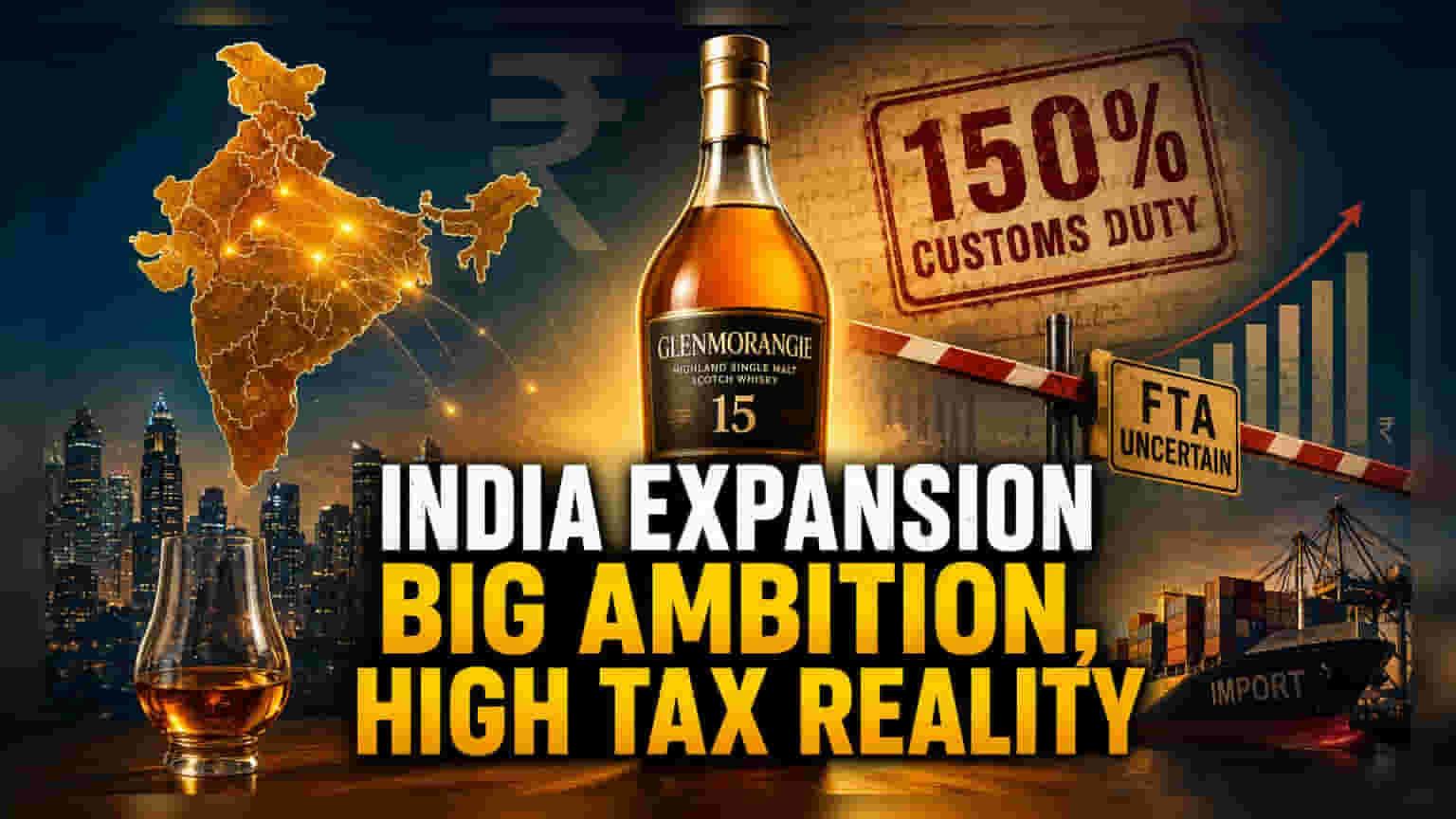


The Margin Mirage
While the expansion into 15 to 24 Indian states suggests a massive growth trajectory, the underlying financial reality remains tethered to India's volatile tax environment. The current reliance on an imported model for the Glenmorangie 15-year-old expression keeps the company vulnerable to prohibitive customs levies. Unlike local competitors such as United Spirits or Radico Khaitan, which leverage domestic manufacturing to bypass heavy import duties, Moët Hennessy is betting that a long-awaited trade pact will compress costs. Without a significant reduction in the 150% customs duty structure, the company faces a structural hurdle that limits its addressable market to a sliver of the elite consumer base, potentially stalling its ambition to reach top-three global status within the projected four-year window.
The Competitive Shift
The Indian alcobev sector is currently witnessing a intense battle for the premiumization of the 'aspirational' consumer. While Moët Hennessy focuses on the high-end Scotch segment, it faces increasing friction from domestic players producing high-quality craft whiskies that qualify for local tax advantages. Data suggests that while premium-plus imported spirit growth remains steady, the rate of expansion is frequently checked by state-level pricing interventions and fluctuating excise policies. Moët Hennessy’s current distribution strategy of prioritizing major metros is a defensive necessity to maintain brand cachet, yet it leaves the firm susceptible to supply chain disruptions in secondary markets where regional players hold entrenched monopolies over distribution channels.
The Forensic Bear Case
Investors should view the aggressive expansion plan with caution regarding the regulatory dependency. History indicates that the Indian government’s stance on alcohol taxation is often protectionist, frequently prioritizing local revenue generation over international trade alignment. The assumption that an FTA will provide relief is a speculative hedge rather than a guaranteed fiscal tailwind. Furthermore, the reliance on Diwali-timed launches to drive volume exposes the company to extreme seasonality. Should macro-economic headwinds dampen discretionary spending during the festive period, the capital expenditure required to expand into these additional nine states could result in immediate margin compression, placing pressure on the brand’s local profitability before the desired scale is ever achieved.
Future Outlook
Long-term success for the brand in this region will likely depend less on brand equity and more on logistics and political maneuvering. Unless the company pivots toward a localized bottling strategy to qualify for lower duty tiers, it will remain tethered to the whims of international trade negotiations. Analysts remain watchful of how the company intends to balance the high overhead of market penetration against the reality of a price-sensitive consumer base that remains sensitive to the retail inflation caused by excessive import taxation.