

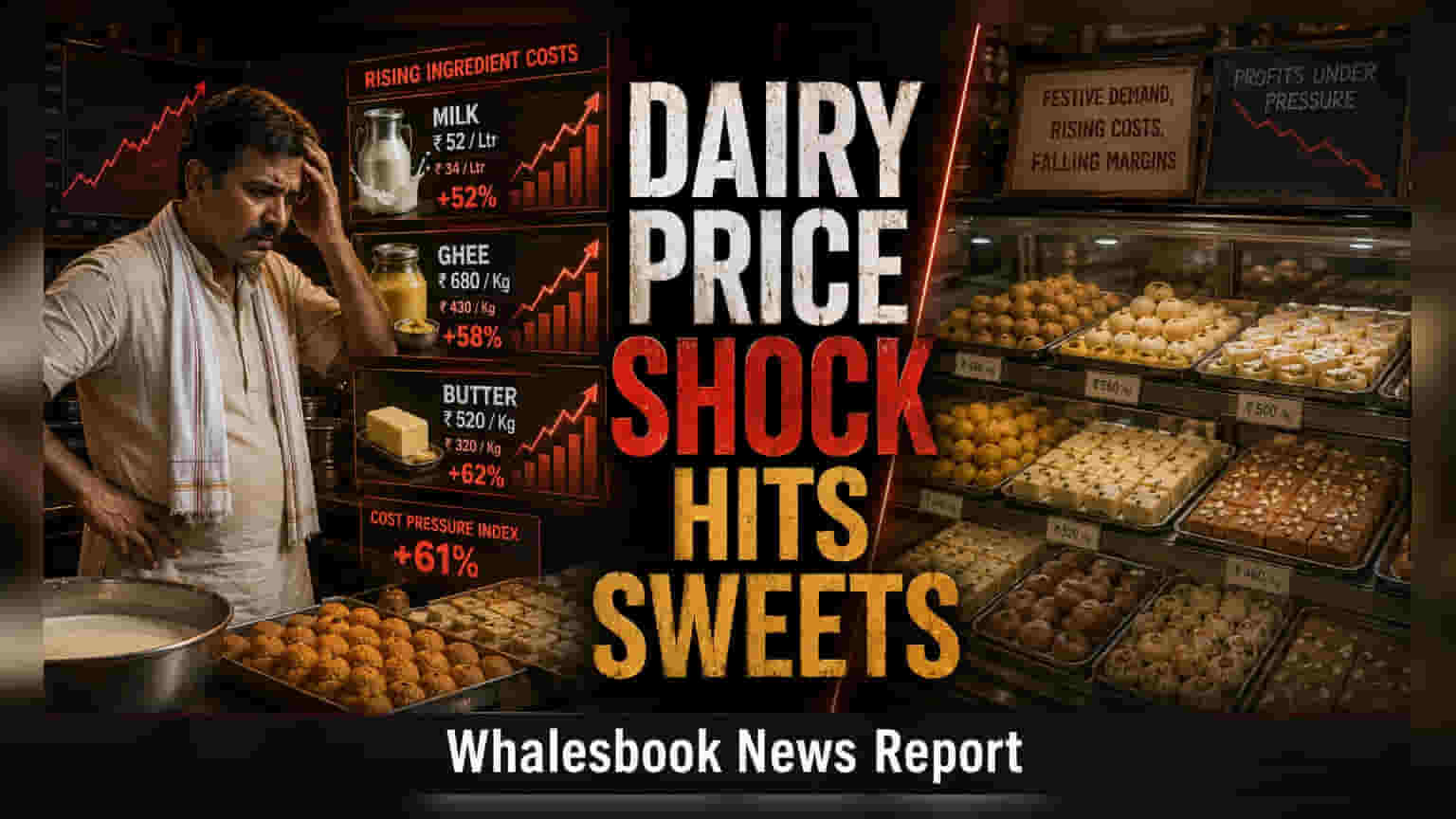
Indian sweet and snack producers are entering the crucial festive season facing a sharp increase in milk fat prices. Listed players like Bikaji Foods have already reported margin pressure despite revenue growth. With the festive period accounting for roughly 35% of annual sales, manufacturers are now struggling to decide whether to pass on these costs to price-sensitive consumers or absorb them to protect market share.
The peak Indian festive season is approaching, but sweet and snack manufacturers are facing a difficult start as milk fat costs climb. A specific shortage of butterfat, combined with broader inflationary pressures, is challenging the profitability of both regional sweet shops and large national brands. As of August 11, 2026, milk procurement prices in key markets like Maharashtra have increased by ₹2 per litre, adding immediate pressure to production budgets that were already stretched by higher expenses for packaging, fuel, and fodder.
For investors, this situation highlights a classic trade-off between volume growth and profit margin protection. The impact is already visible in the financial results of publicly traded companies in the sector. For instance, Bikaji Foods International Ltd reported its results for the June quarter of fiscal year 2027. While the company achieved a strong revenue growth of 12.5% year-on-year, reaching ₹734.3 crore, its operating profit margin (EBITDA margin) contracted to 13.5%, down from 14.8% in the same period last year. This demonstrates that while consumer demand for snacks and sweets remains healthy, the rising cost of raw materials like moong dal, chana dal, and dairy fat is directly eating into the company’s take-home profit.
Companies are reacting with widely different strategies. Some, such as Vadodara-based Jagdish Farshan, are opting to pass the cost burden directly to consumers with planned price hikes of around 10% for the Diwali season. These companies are also attempting to secure supply contracts early to stabilize input costs. On the other hand, several brands are choosing to absorb the inflation to keep their product prices attractive. Speciality Restaurants, which operates the Sweet Bengal chain, and Bengaluru-based Lal Sweets are among those limiting price increases, betting that brand loyalty and high volume during the festive months will help them navigate the temporary cost spike. This is a critical gamble, as the organized sweets sector typically generates roughly 35% of its annual revenue during this peak festive window.
Beyond immediate pricing decisions, the sector faces several long-term challenges. Climate stress continues to affect fodder availability, which impacts dairy yields and keeps milk fat prices volatile. Additionally, investors should monitor potential regulatory developments. Discussion around new taxes on processed or high-sugar foods, as suggested in recent economic surveys, remains a background risk that could alter the cost structure for sweet manufacturers in the future.
For shareholders and market observers, the next few quarters will be telling. The main monitorable is whether companies can maintain their sales volume during the festive months without sacrificing too much profitability. If inflationary pressures on dairy and packaging remain elevated into the second half of the year, those companies that have avoided price hikes may find it difficult to maintain their margins unless they can significantly increase their production efficiency or demand spikes beyond current expectations.