

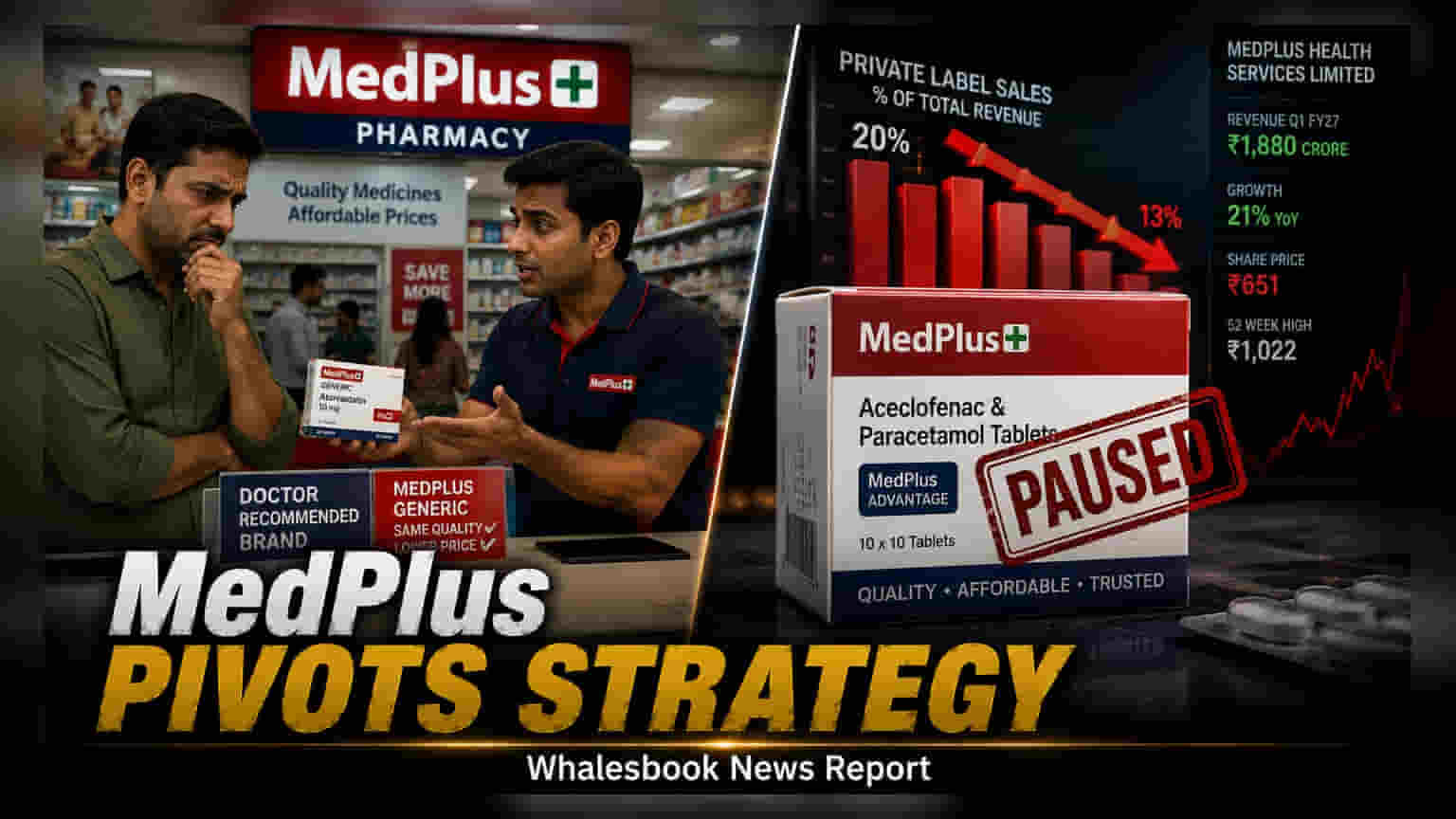
MedPlus is reducing its aggressive in-store promotion of private-label drugs following customer resistance. The move, which shifts focus to patient choice, may pressure the pharmacy chain's margin expansion plans. The stock is currently trading at ₹651, down from its 52-week high of ₹1,022.
MedPlus Health Services is recalibrating its in-store sales strategy, specifically regarding the promotion of its private-label prescription medicines. The Hyderabad-based pharmacy chain has instructed its store employees to tone down the aggressive push to switch customers from doctor-recommended brands to MedPlus’s own-brand alternatives. This change comes after the company acknowledged that staff had been pushing too hard, leading to frustration among some customers.
Impact on Profit Margins
For MedPlus, private-label products have historically been a significant lever for profitability. These products generally offer better economics compared to branded medicines, helping the company improve its gross margins. In the June quarter, private-label products accounted for 20 percent of total revenue. By shifting toward a customer-centric approach where staff merely explain the benefits and leave the final decision to the buyer, the company faces the risk of a slowdown in private-label sales. If this happens, it could put pressure on the company's operating margins.
MedPlus reported a 21 percent revenue growth for the first quarter of fiscal year 2027, with revenue reaching ₹1,880 crore. However, the company has faced investor concerns regarding the sustainability of its growth-at-any-cost strategy and potential margin dilution. The stock has experienced significant volatility recently, currently trading at ₹651, which is a considerable decline from its 52-week high of ₹1,022.
Sector and Peer Context
Other major pharmacy chains have adopted a more cautious approach to prescription substitution. Competitors like Apollo Pharmacy and Wellness Forever have generally avoided the aggressive promotion of private labels for prescription drugs, focusing instead on doctor intent and patient trust. These chains tend to direct their private-label strategy primarily toward over-the-counter (OTC) products and wellness items rather than switching medication prescribed for chronic therapies.
Regulatory and Operational Risks
Beyond the sales strategy, MedPlus has also navigated regulatory challenges. The company’s subsidiary, Optival Health Solutions, has seen minor, store-level drug license suspensions in states including Karnataka and Andhra Pradesh. While the management has stated that these events have had a minimal financial impact, they remain a point of attention for stakeholders regarding operational compliance.
Looking ahead, investors will be closely tracking the company's ability to maintain its margin profile while managing the shift in sales tactics. The key monitorable will be the company’s ability to drive private-label penetration through brand preference and quality assurance rather than staff-led substitution. Additionally, the impact of increased competition from quick-commerce players remains a factor influencing the pharmacy retail landscape.