 Whalesbook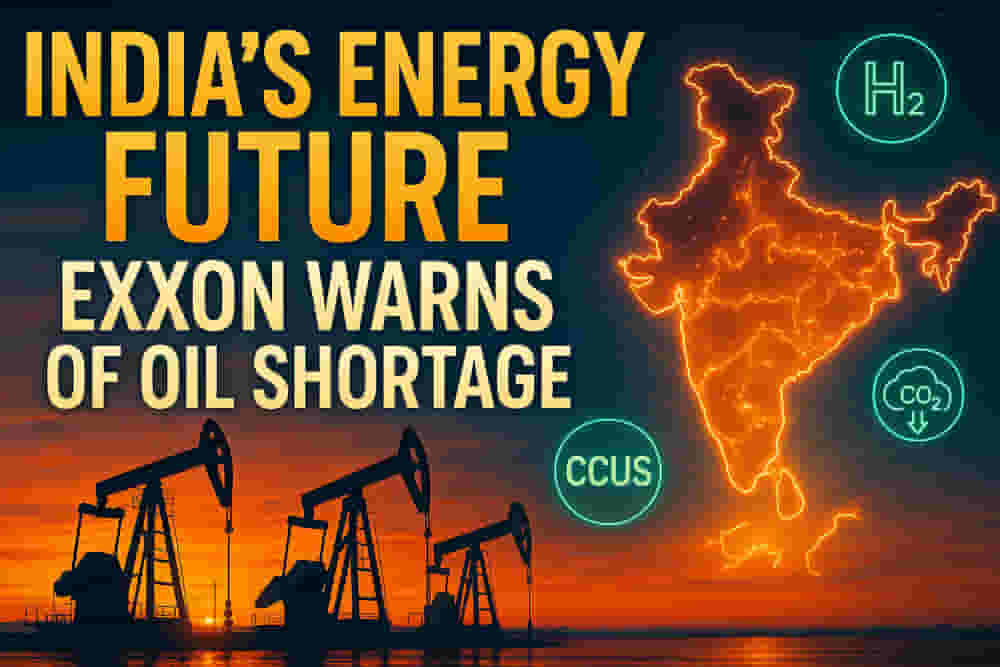
ExxonMobil Executive Calls for Urgent Investment in Oil Exploration Amidst Future Demand Concerns
Prasanna V. Joshi, a senior executive at ExxonMobil, has issued a stark warning regarding the future of global oil supply, emphasizing the critical need for oil companies to ramp up investments in exploration and production. His comments come at a time of fluctuating global energy markets, with potential short-term oversupply from the Organization of Petroleum Exporting Countries (Opec) contrasting with projections of significant long-term demand growth, particularly from India.
Joshi, who serves as corporate director for economics and energy at the US energy giant, highlighted that current investment levels are insufficient to meet the projected energy needs of the future. This lack of investment could lead to substantial supply deficits and price increases down the line, despite current market dynamics.
The Opec+ Equation: Near-Term Glut vs. Long-Term Shortage
The global oil market faces a complex demand-supply scenario. In November, Opec+ countries, including Russia, reportedly increased crude output by approximately 160,000 barrels per day. This contributes to a cumulative increase of around 2.25 million barrels per day since April 2025, as Opec+ began unwinding production cuts.
Joshi noted that while these increased outputs could lead to an oversupply and potentially lower global crude prices in the near term, the cartel might also consider cutting production moving forward. "We are seeing that Opec might actually start cutting (production) moving forward, as opposed to continuing to grow," he stated. The group is scheduled to raise output by another 137,000 barrels per day in December but plans to pause these increases from January to March, anticipating a seasonal drop in demand.
India's Growing Energy Appetite
The outlook for energy demand presents a significant opportunity for growth in India. While demand from developed nations is expected to plateau or weaken, and China's demand is also projected to level off, India is identified as one of the fastest growth drivers for global oil demand. Southeast Asian countries like Indonesia and Malaysia are also expected to see significant demand increases.
The International Energy Agency (IEA) projects that India will become the largest demand hub for all forms of energy, including oil, gas, and electricity, by 2035. Over the next decade, nearly half of the additional global energy demand is forecast to originate from India. Joshi further elaborated that by 2050, global energy demand is expected to rise by about 12%, while India's demand is projected to surge by approximately 75%.
The Investment Gap: Why Current Spending Isn't Enough
A core concern raised by Joshi is the inadequacy of current investments in new energy assets. He pointed to projections suggesting that if all investment in oil and gas were halted today, oil production would decline by 15% annually, and natural gas production by 11% per year. These figures are exacerbated by an accelerating global decline rate in oil and gas fields, as reported by the IEA.
The IEA indicated that a halt in upstream investment, which previously would have cut oil supply by under 4 million barrels per day annually, now corresponds to a shortfall of 5.5 million barrels per day. Similarly, natural gas decline rates have risen significantly. Joshi warned that without substantial investment in the coming years, prices could surge due to this inevitable supply-demand imbalance.
Navigating the Energy Transition
Looking ahead, Joshi stressed the importance of investing in both conventional energy sources and emerging technologies such as Carbon Capture Utilization and Storage (CCUS) and green hydrogen. He advocated for a mixed energy basket for every country, tailored to their specific requirements, emphasizing that oil and gas will continue to supply the primary energy mix globally and in India.
The pace of energy transition and the evolution of the energy mix will depend heavily on the affordability and scalability of new solutions. Joshi estimated that new-age energy transition technologies, including green hydrogen, would require 15–25 years to be established at scale, with costs expected to decrease over that period. Economics will be the key driver for their widespread adoption.
Policy's Crucial Role
Joshi also commented on the critical role of policy in managing the energy transition. He cautioned against extreme policy approaches that prematurely select "winners and losers" among energy technologies. Citing Europe as an example, he noted that overly prescriptive policies can lead to de-industrialization and excessively high energy prices.
He advocated for technology-agnostic policies that allow all solutions to compete based on their merits, ensuring a more stable and affordable energy future. This balanced approach is crucial for countries like India to navigate their rapidly growing energy demand while pursuing sustainability goals.
Impact
This news has a significant impact on India, a major crude oil importer. Potential volatility in global crude prices, driven by Opec+ decisions and future supply concerns, directly affects India's import bill, inflation, and economic stability. While short-term price drops could offer relief, the warning about future supply shortages and price hikes underscores the urgency for India to secure its energy future through strategic investments, diversified energy sources, and robust policy frameworks. An impact rating of 8/10 is assigned due to the direct relevance to India's economy and energy security.
Difficult Terms Explained
- Opec+: An expanded group of oil-producing countries, including members of the Organization of the Petroleum Exporting Countries (Opec) and other allied nations like Russia, that coordinate production levels to influence global oil prices.
- Exploration and Production (E&P): The upstream segment of the oil and gas industry focused on finding (exploration) and extracting (production) crude oil and natural gas.
- Glut: An excessive supply of a commodity, leading to a sharp fall in its price.
- Brent Crude: A major global benchmark for crude oil prices, commonly used as a reference for international oil market pricing.
- Demand-Supply Scenario: The balance or imbalance between the amount of a product or service consumers want (demand) and the amount available (supply).
- Carbon Capture Utilization and Storage (CCUS): Technologies designed to capture carbon dioxide emissions from industrial sources or the atmosphere, and then either use it or store it underground to prevent its release into the atmosphere.
- Green Hydrogen: Hydrogen produced using renewable energy sources (like solar or wind power) through electrolysis, making it a clean fuel source.
- Primary Energy Mix: The combination of different energy sources (like oil, gas, coal, renewables) used to meet a country's or the world's total energy demand.
- Chemical Feedstock: Raw materials derived from crude oil or natural gas that are used in the chemical industry to produce various products.
- De-industrialization: A process where industrial activity in a country or region declines, often leading to a shift towards a service-based economy.
- Upstream Investment: Investments made in the early stages of the oil and gas industry, specifically in exploration and drilling for reserves.
- International Energy Agency (IEA): An intergovernmental organization that provides analysis, data, and recommendations on energy policies worldwide.