

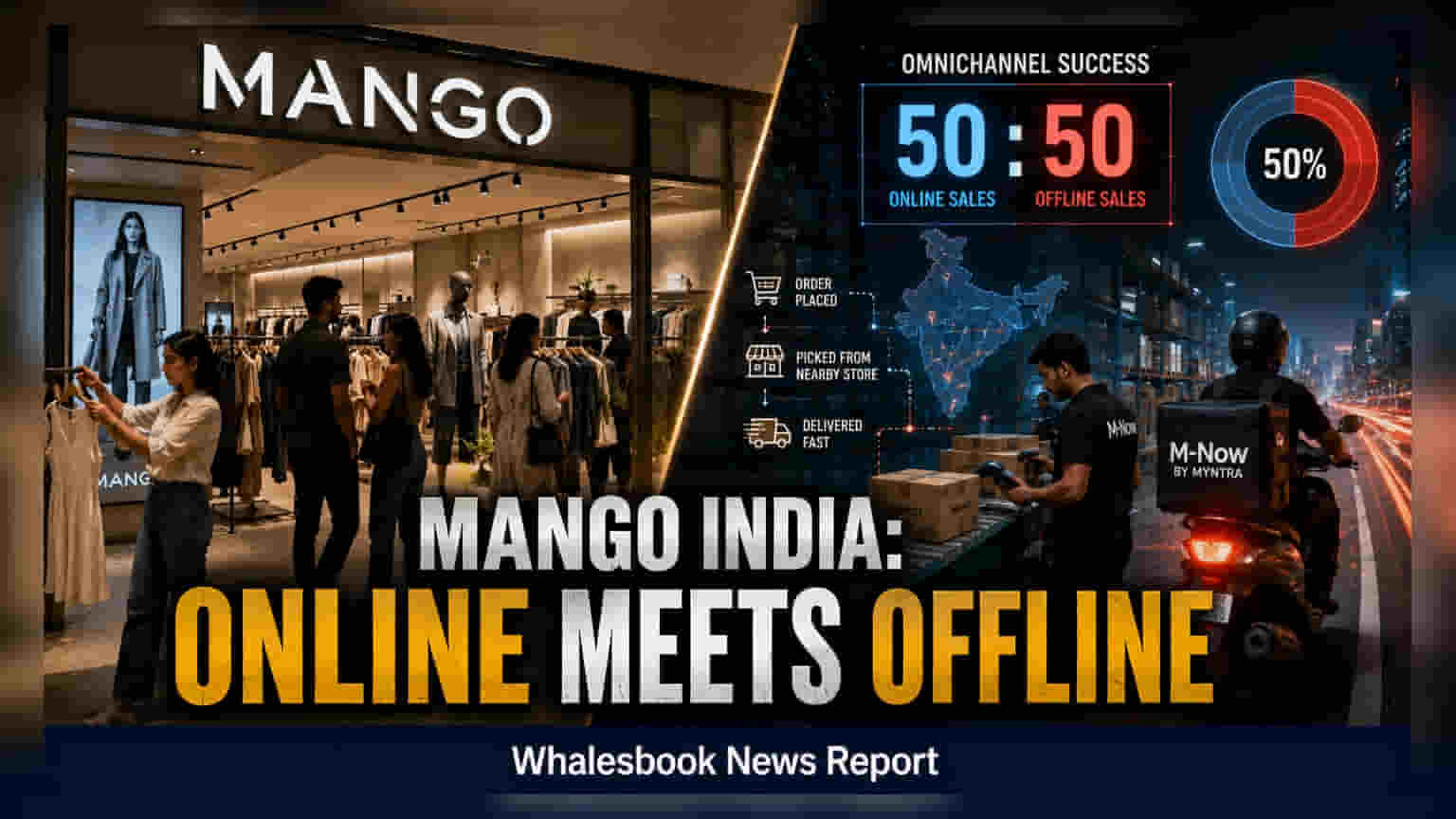
Spanish retailer Mango has achieved a balanced sales split between physical stores and online channels in India. The brand is using its physical stores as local delivery hubs through its partnership with Myntra to speed up fulfillment. This strategy is helping the company improve repeat sales and manage inventory more efficiently.
Spanish fashion retailer Mango has achieved a balanced 50:50 split between its online and physical retail sales in India. This milestone marks a significant shift in how the brand reaches its customers, moving away from a traditional model where online and offline businesses operated largely in silos.
The Role of Quick Commerce
The success of this omnichannel strategy—where online and physical retail are connected—is heavily supported by Mango’s long-standing partnership with Myntra. By using Myntra’s M-Now service, Mango can turn its physical retail stores into micro-fulfillment centers. When a customer places an order online, the product is often picked and dispatched from a nearby store rather than a distant warehouse. This approach significantly shortens delivery times and allows the brand to serve customers across a wider area, not just in major metropolitan cities.
Data suggests that this rapid fulfillment model is driving higher customer loyalty, with a large share of users utilizing the service becoming repeat shoppers. For the retail industry, this highlights a growing trend: physical stores are no longer just for browsing; they are becoming essential logistics hubs that support online growth.
Strategic Changes in Operations
Mango has also refined its physical store network. The brand currently operates approximately 76 points of sale in India, a reduction from about 110 stores in 2024. This decrease is a deliberate move to close smaller, less efficient shop-in-shop formats, which often struggled to display the full product range and brand identity. Instead, the company is shifting its focus toward larger, destination-style stores that provide a better customer experience.
While Mango has found success with this model, the company remains a private entity in India, meaning its financial performance is not directly accessible to public stock market investors. However, its business model offers a case study for the broader retail sector, which is increasingly focused on balancing the high costs of real estate with the efficiency of digital delivery.
Challenges and Competition
The Indian retail market presents unique challenges. Mango has pointed to a scarcity of quality retail real estate as a hurdle for aggressive expansion. Furthermore, the fashion segment is highly competitive, with both international premium brands and large domestic retail chains fighting for space and consumer attention.
Another consideration for the business is its reliance on a single partner. Because Myntra manages both the online and offline franchise operations, Mango is heavily dependent on this relationship for its growth in India. Any disruption in this partnership or changes in platform strategy could impact its market reach. Looking ahead, the company plans to focus on growing its 'Mango Man' division and introducing casual, affordable product lines to appeal to a younger, budget-conscious customer base.