

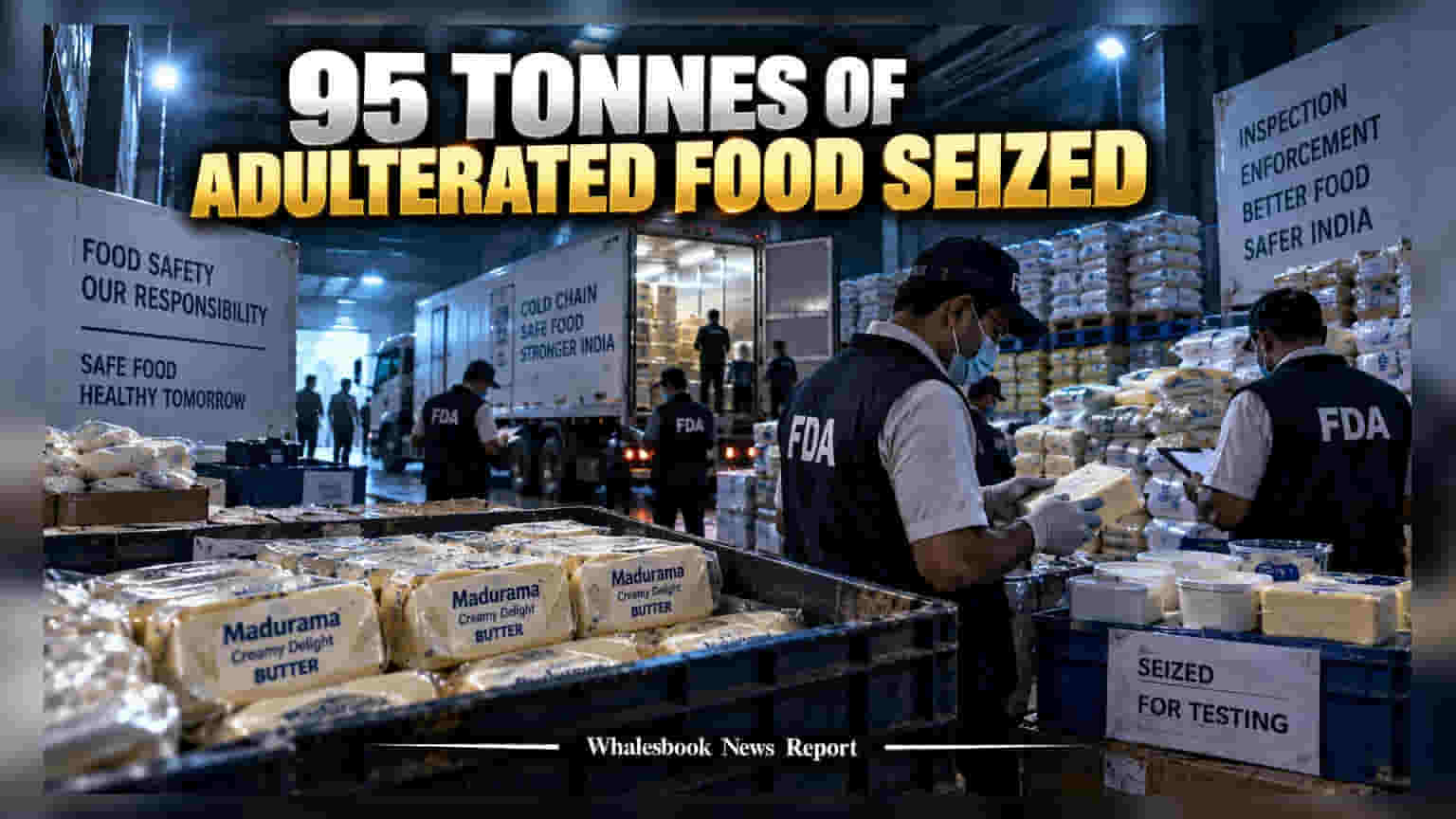
The Maharashtra Food and Drug Administration has seized 95 tonnes of adulterated dairy products worth Rs 4.45 crore ahead of the festive season. This regulatory action reflects a push for stricter supply chain compliance. For the broader food and logistics industry, heightened enforcement may drive up operational costs, while potentially creating a competitive advantage for organized, complaint players.
The Maharashtra Food and Drug Administration (FDA) has intensified its enforcement operations, seizing 95 tonnes of substandard and adulterated dairy products valued at approximately Rs 4.45 crore. The crackdown, led by Commissioner Tukaram Mundhe, is a direct move to ensure food safety ahead of the festive rush for Ganesh Chaturthi.
Authorities targeted supply chains across Ahilyanagar, Pune, Nashik, and Buldhana, uncovering significant violations involving storage, temperature control, and documentation. In the most notable incident, regulators impounded over 75,000 kg of 'Madurama Creamy Delight' butter in Ahilyanagar. The batch was seized due to suspected quality failures and regulatory non-compliance, leading to an immediate seal and laboratory testing. Further inspections in Pune and Buldhana revealed products being transported in vehicles without mandatory refrigeration and a lack of proper invoices or origin records, which are critical for traceability in food safety.
This action is part of a broader, ongoing campaign by the state regulator to clean up food supply chains. Data from the three months between June and August 2026 shows that the FDA conducted over 12,000 inspections, resulting in the seizure of Rs 67.20 crore worth of food stock and 875 arrests. This suggests that the current enforcement is not an isolated incident but part of a sustained regulatory trend aimed at curbing the sale of tainted or unhygienic food.
For the food and dairy sector, this regulatory tightening carries important implications. Smaller, unorganized players who often rely on cheaper, less compliant logistics and storage methods face significant operational risks, including license suspensions and heavy penalties. As the FDA continues its audit of manufacturing and distribution standards, businesses across the state may need to increase their spending on proper storage, cold chain infrastructure, and rigorous documentation to meet safety standards.
While these compliance requirements could pressure profit margins in the short term, they also create a clearer divide between unorganized operators and established, organized brands. Companies that have already invested in robust cold chain infrastructure and transparent sourcing practices are better positioned to weather this regulatory scrutiny. Investors should track future updates on FDA audit results and any changes in compliance costs across the sector, as these factors will influence long-term stability and demand for food products in the state.