

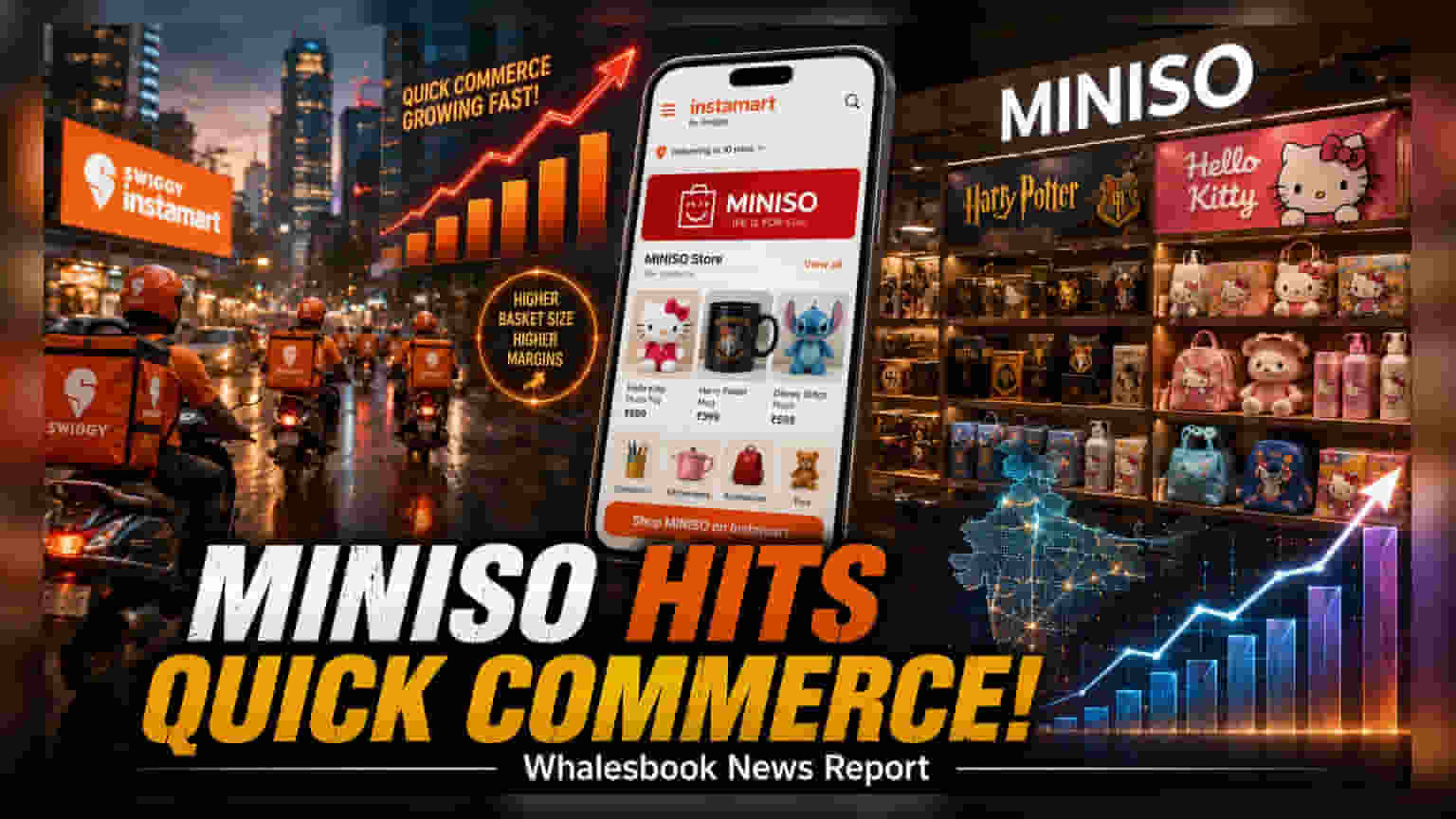
Global lifestyle retailer MINISO has partnered with Swiggy Instamart to offer over 90 products for quick delivery in India. This move highlights the growing strategy of quick commerce platforms to add lifestyle and high-margin goods to their offerings to increase order values and attract more customers.
Global lifestyle retailer MINISO has entered India’s quick commerce market through a new partnership with Swiggy Instamart, effective August 21, 2026. The collaboration allows customers to order more than 90 MINISO products, including stationery, kitchenware, accessories, and toys, with rapid delivery. The product range also features licensed merchandise from global franchises such as Harry Potter, Hello Kitty, and Disney’s Stitch.
The partnership is being managed by Opptra, which serves as MINISO’s digital commerce distribution partner in India, handling the catalog and fulfillment on the platform. The service is initially rolling out in key metropolitan cities, with plans to expand the product list and city coverage in the future.
This move is part of a broader trend in the Indian quick commerce sector. Platforms like Swiggy Instamart, Blinkit, and Zepto are increasingly looking beyond daily groceries and vegetables. By adding lifestyle goods—which are often seen as impulse purchases or gifts—these companies aim to increase the total bill size for every order. Because lifestyle products often carry higher profit margins than basic grocery items, this strategy is important for platforms trying to improve their financial performance in a highly competitive market.
For MINISO, the partnership provides a new digital channel to reach customers who prefer the speed of quick commerce over visiting physical stores. By making its products available on a delivery app, the brand can reach a wider audience without needing to open new physical locations immediately.
However, the move comes with operational challenges. Managing inventory for non-grocery items in a quick commerce setup is complex. Unlike staples or milk, lifestyle products have different demand patterns, and storing them in dark stores—which are small warehouses used for rapid delivery—takes up valuable space. These companies must balance the variety of products offered against the limited storage space available in their delivery hubs.
Furthermore, the Indian quick commerce sector remains fiercely competitive. Companies are spending heavily on logistics and dark store networks to maintain fast delivery times. Investors tracking this space often watch whether these platforms can successfully sell non-grocery items without increasing their delivery costs too much. The success of this partnership will depend on consumer demand for buying lifestyle goods on-demand and how efficiently the companies can manage the stock and delivery process.
Investors and market observers will likely watch for future updates regarding the number of cities covered and whether the range of products expands as the partnership moves forward.