 Whalesbook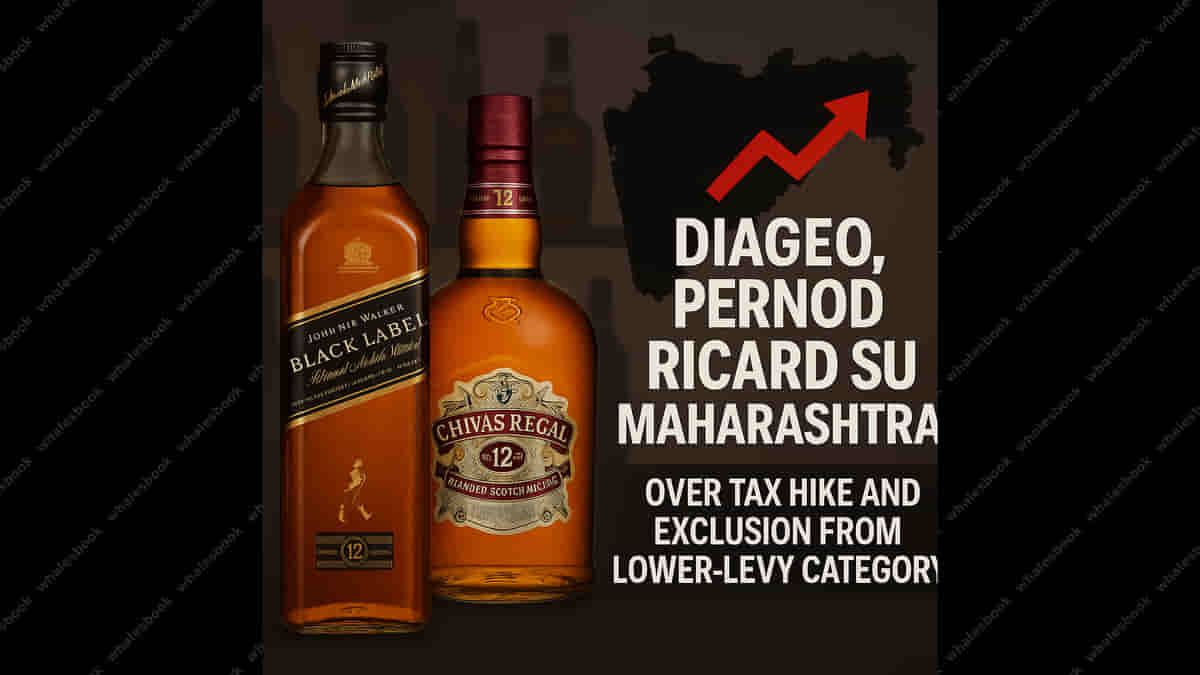


Global liquor majors Diageo and Pernod Ricard, represented by the International Spirits and Wines Association of India (ISWAI), have filed a lawsuit against the Maharashtra state government. The legal challenge targets a recent tax policy that has significantly increased taxes on affordable premium liquor brands and created a preferential tax bracket for local manufacturers.
The Lawsuit and Tax Hike
ISWAI's legal filing seeks to overturn Maharashtra's recent policy changes. The state, which accounts for 7% of India's premium liquor consumption and hosts major factories for these companies, has raised taxes on affordable premium brands (with a production cost below ₹260 per litre) to 450% from 300%. This sharp increase impacts a significant portion of the market.
'Maharashtra Made Liquor' Policy
Between June and August, Maharashtra introduced a new category called "Maharashtra Made Liquor." Under this policy, manufacturers headquartered in the state with zero foreign investment can offer liquor products with a lower tax rate of 270%. ISWAI contends that this policy creates an "artificial competitive advantage" for preferred local firms and excludes companies with foreign investment, thereby creating trade barriers.
Affected Brands and Sales Impact
Several popular brands are directly affected by these changes. These include Diageo's McDowell's, claimed to be India's largest-selling whisky brand, Pernod Ricard's Royal Stag, Tilaknagar Industries' Imperial Blue, and Allied Blenders and Distillers' Officer's Choice. According to industry experts, the affected segment contributes 70% of Maharashtra's premium spirit sales. Sales of these impacted brands have reportedly fallen by 35-40% in recent weeks following the excise duty hike.
Maharashtra Government's Stance
The Maharashtra government has not responded to specific queries from media outlets. However, it has publicly stated that the new policies are designed to foster job creation, attract new investments, increase the operating capacity of existing factories, and generate an estimated $1.56 billion in additional annual revenues for the state.
Company Statements and Market Context
Diageo's Indian unit, United Spirits, issued a statement emphasizing that Maharashtra is a key market and expressing hope for a level playing field. Other affected companies and ISWAI have not provided further comment. India is recognized as the world's eighth-biggest alcohol market, generating annual revenues of $45 billion, with each state maintaining its own distinct regulations and pricing structures.
Court Hearing
Mumbai's High Court is scheduled to hear the case concerning the controversial policy on December 9. The outcome of this legal battle could have significant implications for the spirits industry operating within Maharashtra and potentially set a precedent for similar policy challenges in other Indian states.
Impact
This legal challenge and tax increase could substantially affect the profitability and sales volumes of major global liquor players in one of India's most important consumer markets. It underscores the complexities of operating within India's state-specific regulatory landscape, particularly concerning foreign investment and domestic industry protection.
- Impact Rating: 7/10
Difficult Terms Explained
- Lobbying: The act of attempting to influence decisions made by officials in a government, most often legislators or members of regulatory agencies.
- Excise Duty: A tax levied on the production or sale of specific goods, such as alcohol and tobacco, usually imposed by the central or state government.
- Quash: To reject or void a legal decision or ruling.
- Affordable Segment: Products priced at the lower end of the market, making them accessible to a broader consumer base.
- Trade Barriers: Government-imposed restrictions on international trade, such as tariffs, quotas, and regulations, designed to protect domestic industries.
- Artificial Competitive Advantage: An unfair benefit given to a company or group, often through policy or regulation, that is not based on market merit.
- Operating Capacity: The maximum output that a facility or company can achieve within a given period.