

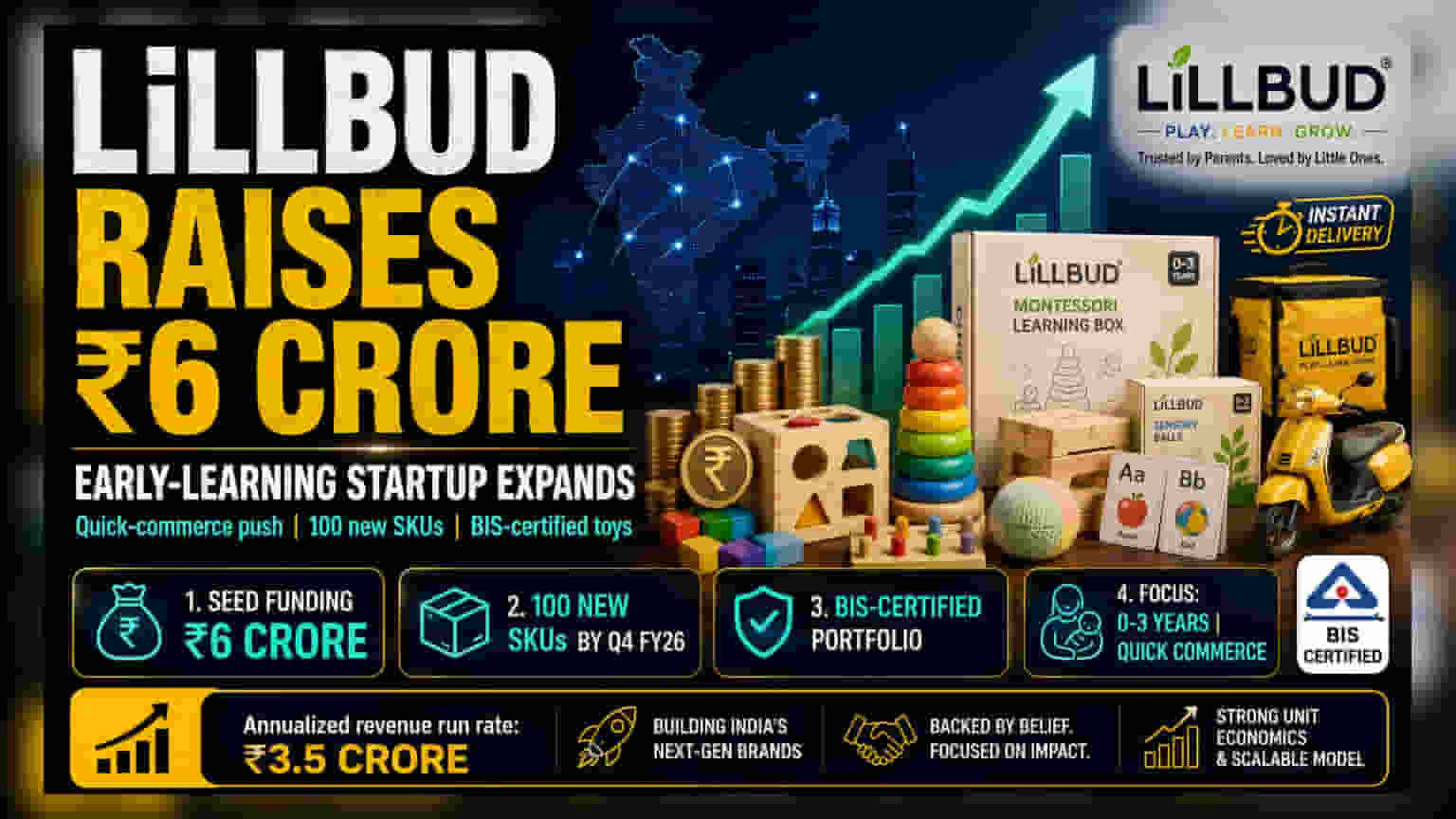
Early-learning startup LiLLBUD has secured Rs 6 crore in seed funding led by Zeropearl VC, with backing from industry leaders including Kunal Shah. The Gurugram-based company will use the capital to launch 100 new products, scale its supply chain, and expand its footprint in the quick-commerce market. The startup targets the 0-3 age segment with BIS-certified, Montessori-inspired learning products.
What Happened
Gurugram-based early-learning startup LiLLBUD has successfully raised Rs 6 crore in a seed funding round led by Zeropearl VC. The round also saw participation from prominent angel investors, including Abhishek Bansal (CEO of Shadowfax) and Kunal Shah (founder of CRED), alongside a syndicate of supply-chain and consumer goods operators.
Founded in May 2025 by Abhishek Sharma and Ayush Bansal, LiLLBUD focuses on the early development of children aged 0 to 3 years. The company plans to use these funds to launch 100 new stock-keeping units (SKUs) for the 18-36 month age group by the fourth quarter of FY26. Additionally, the startup aims to deepen its presence in the quick-commerce channel and invest in supply chain and brand-building infrastructure. The company currently reports an annualized revenue run rate of Rs 3.5 crore.
Building Trust in a Competitive Market
The Indian toy and early-learning market is witnessing a shift toward premium, safer products, driven by rising disposable incomes and parental awareness of cognitive development. LiLLBUD is positioning itself as a trusted brand by focusing heavily on BIS (Bureau of Indian Standards) certification. This is a critical factor in the Indian context, as the government’s Toys (Quality Control) Order, 2020, mandated strict safety standards to combat the influx of cheap, uncertified, and potentially hazardous toys.
By ensuring that its entire portfolio of over 200 products is BIS-certified, LiLLBUD is attempting to differentiate itself from the large unorganized segment, where compliance often remains low. For parents of toddlers in the 0-3 age group—a developmental window where safety is non-negotiable—this focus on compliance serves as a core business advantage (or 'moat').
The Business Model and Quick-Commerce Integration
LiLLBUD operates a direct-to-consumer (D2C) model, selling through its own website, Amazon, and Flipkart. A significant part of its expansion strategy involves strengthening its presence on quick-commerce platforms like Blinkit. This is a strategic move, as quick commerce has become a primary channel for urban Indian parents to purchase immediate-need items, including baby essentials.
The company's focus on Montessori-inspired, play-based learning caters to a growing niche of parents seeking screen-free, developmentally stimulating products. By limiting its scope to the 0-3 years age bracket, the startup is narrowing its focus, which can help in building deeper brand loyalty compared to generalist toy brands.
Challenges and Risks to Watch
While the market for early childhood development is growing, LiLLBUD faces typical startup risks. The toy sector is crowded with both established domestic brands and thousands of unorganized, low-cost local manufacturers. Scaling production while maintaining strict BIS compliance across a wide range of new SKUs will test the company’s supply chain capabilities.
Additionally, customer acquisition costs in the D2C segment can be high. As the company expands into the 18-36 months category, it will need to ensure that its unit economics remain sustainable despite the increased spending on brand building and inventory.
What Investors Should Track
For those monitoring the startup and the broader D2C sector, the key developments to watch will be the successful rollout of the planned 100 new products by Q4 FY26. Investors and industry observers will also keep an eye on how the company balances its growth in quick-commerce—which often involves higher platform fees—with its overall profit margins. Ultimately, the startup’s ability to move beyond its current revenue base while maintaining product quality will be the true test of its long-term viability in a competitive landscape.