 Whalesbook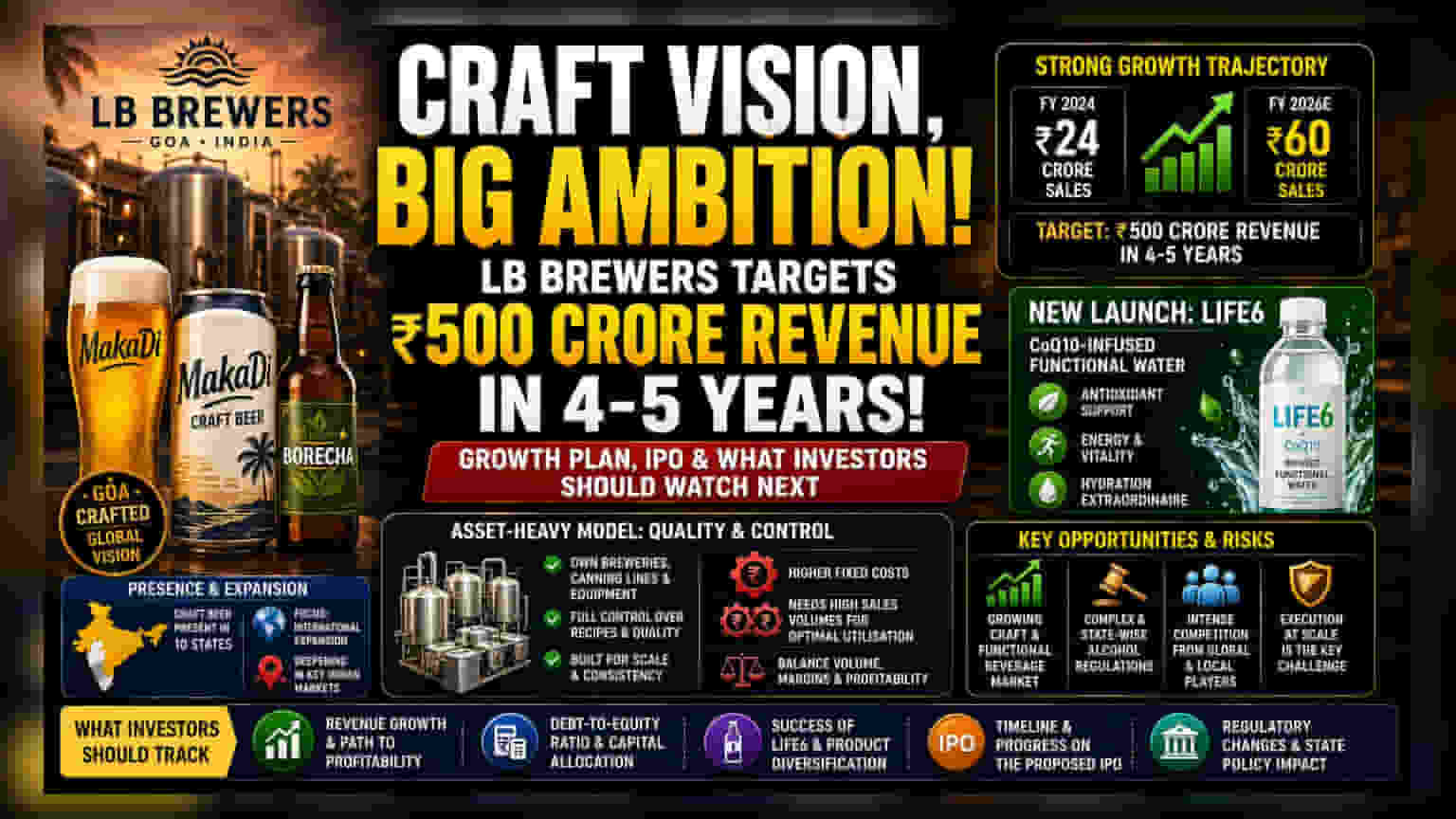


Goa-based Latambarcem Brewers, the company behind MakaDi beer and Borecha functional drinks, has set a target to reach ₹500 crore in revenue over the next five years. To support this growth, the company plans a future IPO and is sticking to an asset-heavy manufacturing model to ensure quality control.
What Happened
Latambarcem Brewers (LB Brewers), the Goa-based startup behind the craft beer brand MakaDi and functional beverage line Borecha, has announced ambitious growth plans. The company aims to scale its annual revenue to ₹500 crore within the next four to five years. For the current fiscal year, the company projects its sales to reach ₹60 crore, a significant increase from the previous year's ₹24 crore.
As part of its long-term strategy, the company is preparing for an Initial Public Offering (IPO) in the mid-term to fund its expansion. The business has also recently expanded its portfolio by launching 'Life6', a CoQ10-infused functional water. While the company's craft beer division operates in 10 states, it is currently focusing on international expansion and plans to deepen its presence in key Indian markets.
Business Strategy: The Asset-Heavy Model
Unlike many consumer brands that choose an asset-light approach—where they outsource production to third parties—LB Brewers has chosen an asset-heavy model. This means the company invests directly in its own manufacturing facilities, canning lines, and production equipment.
The management emphasizes that this approach allows for better control over the proprietary recipes and the overall production process. However, this strategy requires significant capital spending. For investors, this model often leads to higher fixed costs compared to contract manufacturing, meaning the company must consistently maintain high sales volumes to ensure the manufacturing facilities remain efficient and profitable.
Why The Sector Matters
The craft beverage industry in India has grown rapidly, driven by changing consumer preferences toward unique flavors and healthier alternatives like kombucha and functional water. However, the alcohol industry in India is highly regulated, with excise laws and distribution policies varying significantly from one state to another.
This regulatory landscape often acts as a barrier to entry and expansion. Additionally, the space is increasingly crowded with established commercial beer brands and other emerging craft players. Successfully scaling in this environment requires not just a popular product, but also strong supply chain management and the ability to navigate complex, state-specific liquor regulations.
How Investors May Read This
While the goal of ₹500 crore in revenue shows strong confidence in the brand's potential, investors typically look for balanced growth. The shift from a private startup to a potential public entity requires meeting higher standards of governance, profitability, and financial transparency.
The company's asset-heavy model, while ensuring quality, creates a higher hurdle for profitability. If production volumes do not scale as expected, the depreciation and fixed costs of these assets could put pressure on profit margins. Conversely, if the brand successfully scales, the asset-heavy model could offer better control over margins in the long run compared to competitors who rely on external manufacturing.
What Investors Should Track Next
For those watching the company’s progress, the key monitorables include the consistency of revenue growth and the path to sustained profitability. Investors may look for updates on how the company manages its debt-to-equity ratio as it continues to invest in new manufacturing capacity.
Future developments to track include the successful rollout of the 'Life6' functional water, the timeline for the proposed IPO, and any significant shifts in the regulatory environment for alcoholic beverages that could impact distribution. Management's ability to navigate the fragmented alcohol policies across different Indian states will also remain a critical factor for the company's long-term success.