

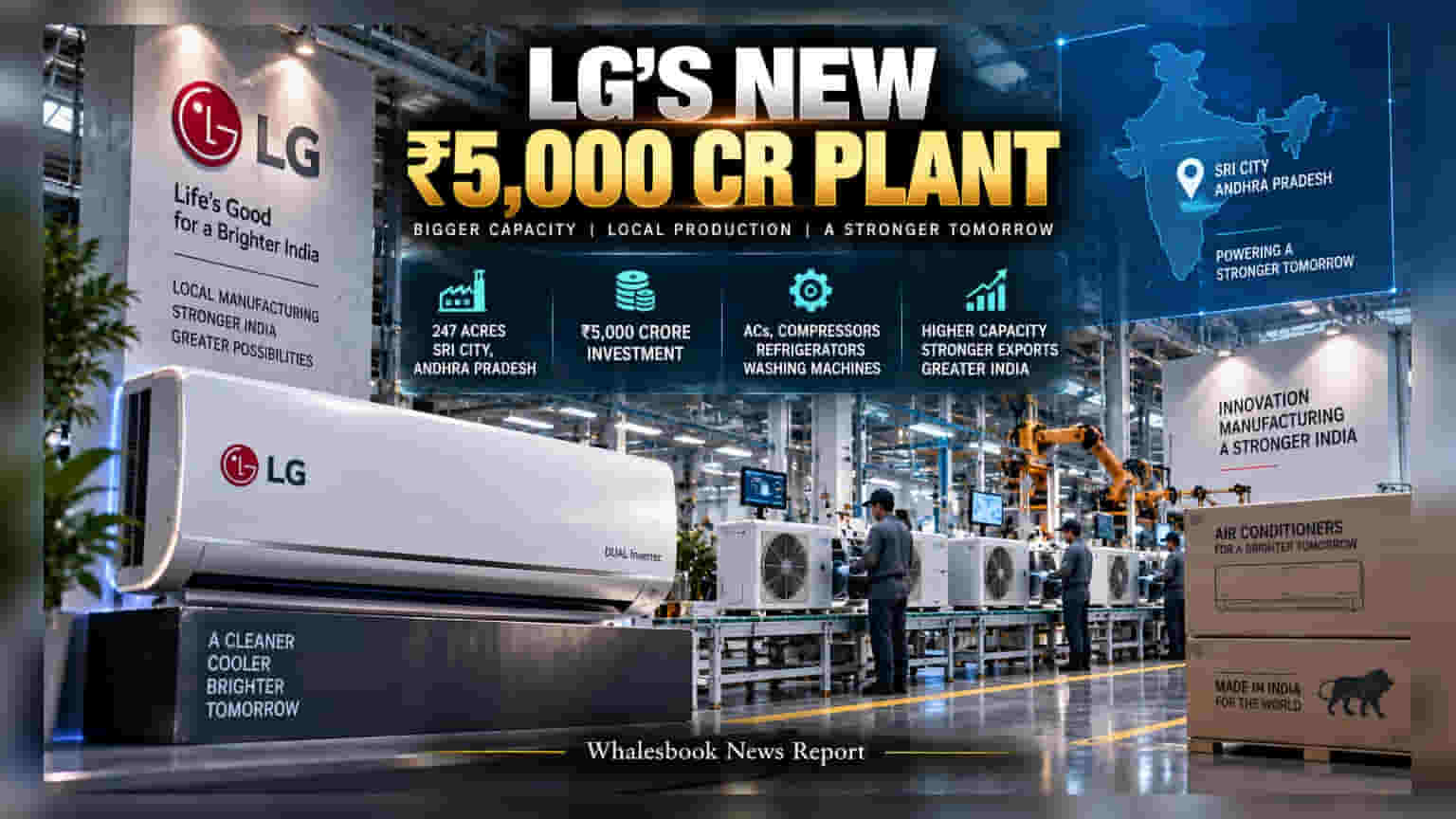
LG Electronics India is set to launch its 247-acre manufacturing facility in Sri City, Andhra Pradesh, by December 2026. The ₹5,000 crore project aims to double production capacity and improve logistics efficiency for its appliance business. Investors may watch how this capital expenditure impacts operational margins and import dependency as the firm positions India as a key global export hub.
LG Electronics India is preparing for a major production boost with its upcoming manufacturing facility in Sri City, Andhra Pradesh. The 247-acre plant, backed by a planned investment of ₹5,000 crore, is scheduled to commence operations in December 2026. This project marks a significant step in the company's strategy to localize component manufacturing and streamline logistics for the southern Indian market, which currently accounts for roughly 38% of its total business volume.
Strategic Shift in Manufacturing
The new site is expected to prioritize the production of air conditioners, including critical components like compressors, before expanding to other appliances such as refrigerators and washing machines. This vertical integration is a key strategic move for the manufacturer, as it seeks to reduce reliance on imported components, a common priority for major consumer durable players operating in the country to mitigate supply chain risks and duties. By establishing local manufacturing capacity, the firm aims to reduce logistics costs and shorten delivery times. Once fully operational by 2030, the facility is projected to nearly double the company's total annual capacity from its current level of 14.5 million units.
Growing Market and Export Footprint
The company has been actively expanding its reach since its public listing in October 2025. Beyond serving the domestic market, the expansion aligns with the firm's broader objective to leverage its Indian operations as a global supply hub. The manufacturer currently services 66 export markets, a notable increase from the 47 countries it reached prior to its listing. Plans for 2026 include expanding its 'essential series' of appliances into 22 nations and scaling the distribution of locally manufactured semi-automatic washing machines to at least 10 additional countries by 2027.
As the company commits significant capital to this expansion, investors may monitor the impact of this spending on financial flexibility and profit margins. While the move reduces logistical hurdles, the eventual success will depend on managing execution timelines and maintaining efficient utilization rates at the new, larger facility compared to its existing plants in Greater Noida and Pune. The next important update for shareholders will be the commissioning progress of the Sri City facility and any updates on capacity utilization targets in the upcoming quarterly reports.