

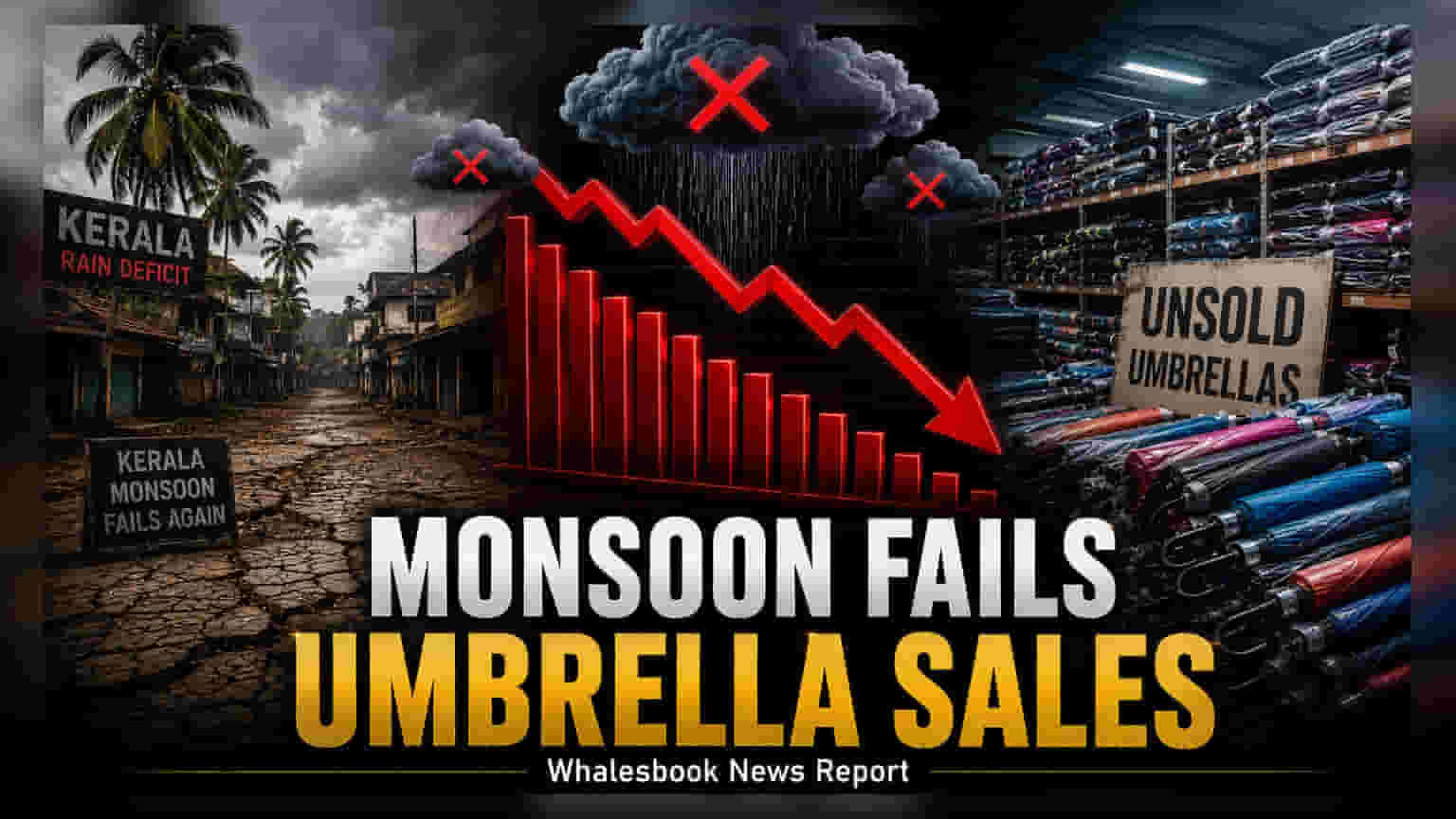
Kerala's umbrella industry is witnessing a demand downturn as erratic rainfall hits peak season sales. While manufacturers face rising import costs for specialized fabrics, some brands are attempting to mitigate local losses by expanding their presence in other states with better monsoon coverage.
Detailed Coverage
The crucial May-to-July umbrella sales season in Kerala has faced significant headwinds this year due to a weak and erratic southwest monsoon. This seasonal period typically accounts for a major portion of annual revenue for local manufacturers. The lack of consistent rainfall has discouraged consumers from purchasing new umbrellas, leading to a build-up of inventory across retail channels.
Operational Challenges and Rising Costs
Beyond the weather-related demand decline, the industry is grappling with higher operational expenses. The ongoing crisis in West Asia has disrupted logistics, leading to a sharp increase in shipping charges. Additionally, manufacturers are facing elevated procurement costs for high-quality, waterproof fabrics. Most of these specialized materials are imported from Taiwan, as domestic alternatives currently struggle to meet the required quality and durability standards for the premium segment.
Business Resilience and Retail Strategy
Despite the broader sector pressure, individual company performance has shown variations. While some manufacturers report missing sales targets due to the dry spell, others have managed to maintain growth by diversifying their market reach. John's Umbrella, which reports an annual sales volume of approximately 2.4 million units, noted a 12% growth in Kerala. This was achieved by balancing the subdued demand in their home state with stronger sales performance in regions that experienced more favorable weather conditions.
Retailers have also adopted a cautious approach this season. Anticipating lower footfall and weaker consumer spending on seasonal goods, many stores have reduced their inventory levels, particularly for budget-friendly umbrella models. This trend of cautious stocking further limits the ability of manufacturers to push volume in the current market environment.
Monitoring Future Triggers
For investors and industry observers, the primary factor to monitor remains the progression of the monsoon in the coming months. Because the industry relies heavily on seasonal demand, the ability of companies to manage inventory levels and pass on increased raw material costs to consumers will be critical. Additionally, the success of companies in expanding their distribution networks outside of Kerala will likely remain a key indicator of their ability to offset localized weather risks in future cycles.