

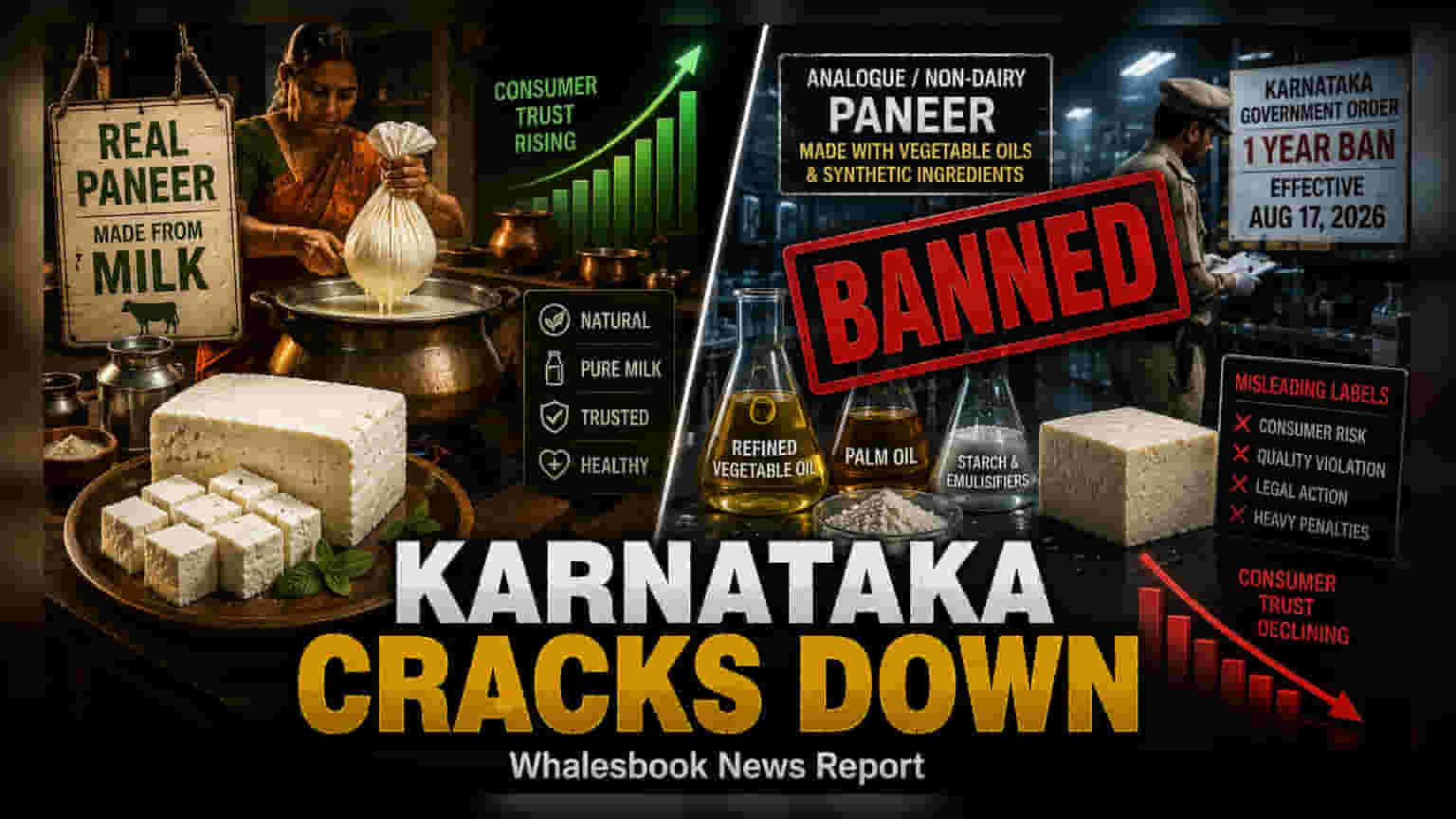
The Karnataka government has prohibited the manufacturing and sale of non-dairy 'analogue' paneer for one year, effective August 17, 2026. This regulatory move seeks to maintain market standards by ensuring products labeled as paneer are derived exclusively from milk, following similar enforcement actions in other Indian states.
The Karnataka government has announced a one-year ban on the production, processing, packaging, distribution, and sale of non-dairy or 'analogue' paneer. Effective from August 17, 2026, the state’s Food Safety and Drug Administration (FSDA) order aims to ensure that any product sold under the name 'paneer' is derived exclusively from milk, adhering to established food safety regulations.
The regulatory action is intended to prevent consumer confusion regarding food composition. Under the Food Safety and Standards Act of 2006, paneer is defined as a standardized product where milk fat is a primary ingredient. The substitution of these components with vegetable fats, without proper disclosure or labeling, has triggered this administrative crackdown. The state officials have clarified that while recent testing of paneer samples did not show evidence of direct adulteration, the ban is a proactive measure to maintain product standards and protect public health.
It is important to note that the ban does not apply to other standardized dairy products such as processed cheese, frozen desserts, or mixed fat spreads, which are already governed by separate industry regulations. These products remain exempt as they have clearly defined quality standards under existing food safety norms.
For businesses, this move signals a shift in compliance requirements. Manufacturers, restaurants, and retailers that have historically sold dairy alternatives as 'paneer' will now need to re-evaluate their product labeling and sourcing to avoid regulatory penalties, such as stock seizures or legal action under food safety laws. This development reflects a broader, ongoing trend among Indian state governments to tighten regulations around food labeling and dairy integrity. Similar restrictions have already been implemented in Maharashtra, Himachal Pradesh, Chhattisgarh, and Gujarat, indicating a coordinated move toward harmonizing dairy product standards across these regions.
Investors in the broader food and consumer goods sector may monitor how this enforcement impacts companies that rely on dairy substitutes or cost-effective alternatives. The primary factor to track will be how strictly the FSDA enforces these guidelines and whether manufacturers can successfully pivot their product portfolios to comply with the stricter labeling requirements without facing significant operational or financial disruption.