 Whalesbook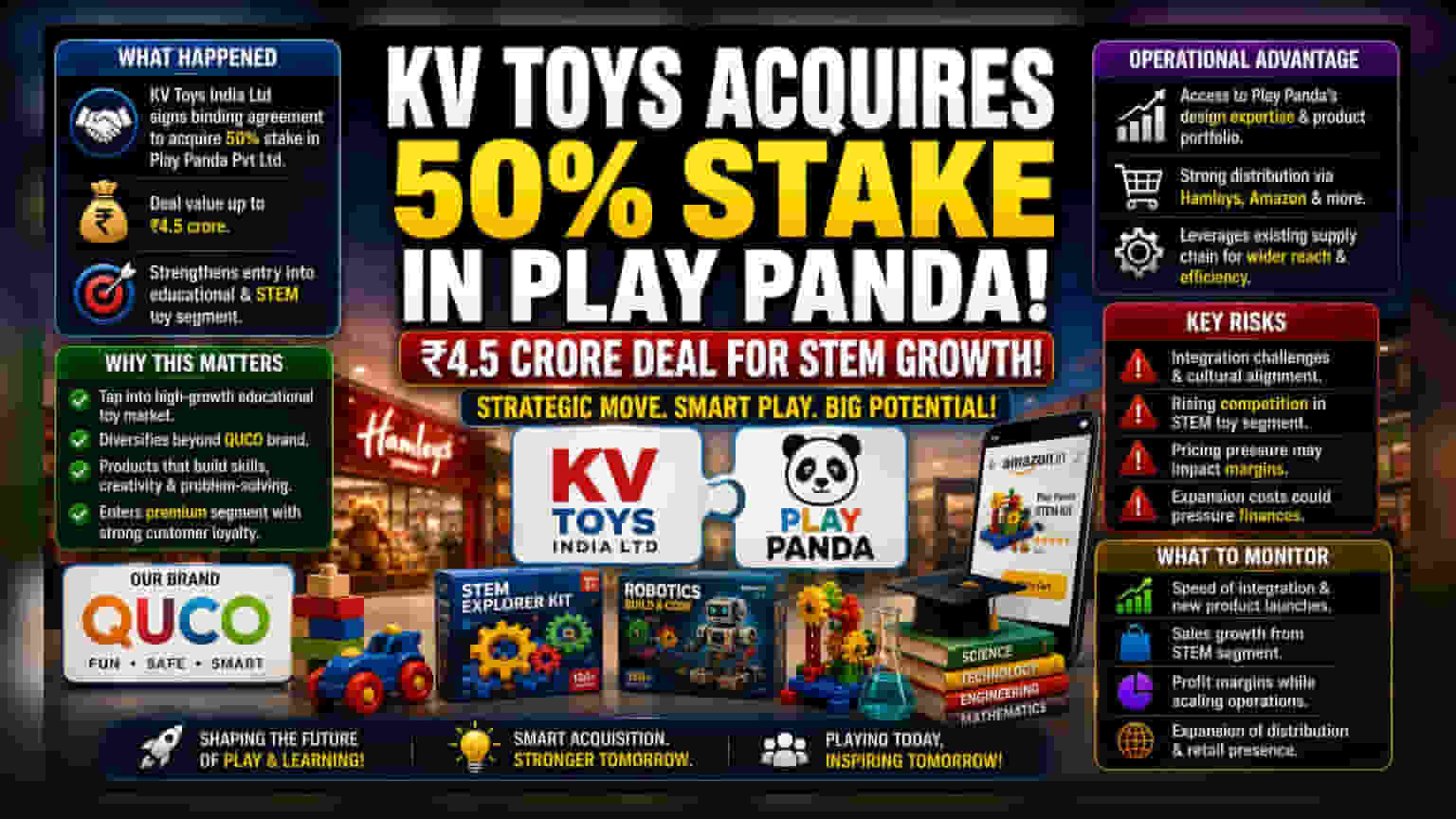


KV Toys India is acquiring a 50% stake in Play Panda for Rs 4.5 crore. The deal aims to capture a larger share of the growing market for educational and STEM-focused toys. This investment allows KV Toys, known for its QUCO brand, to expand its product range and design capabilities. The key focus for the business will be on how well it integrates this new partnership and scales up its presence in the premium learning-toy segment.
What Happened
KV Toys India Ltd has signed a binding agreement to acquire a 50% stake in Play Panda Pvt Ltd, a company focused on educational and STEM (Science, Technology, Engineering, and Math) toys. The deal is valued at up to Rs 4.5 crore. Through this investment, KV Toys aims to bring Play Panda’s specialized product portfolio and design expertise into its own business operations. Currently, KV Toys sells its own range of products under the QUCO brand, and this partnership is designed to help the company tap into the shift towards products that combine play with learning.
Why This Matters For Business Strategy
The acquisition reflects a calculated move to enter the high-growth segment of educational toys. In recent years, the Indian toy industry has seen a notable change in consumer preferences, with more parents moving toward products that aid in child development, creativity, and problem-solving. By securing a 50% interest in a specialized player like Play Panda, KV Toys is looking to diversify its offerings beyond its existing QUCO portfolio. This helps the company reduce its reliance on its traditional product lines and enter a premium segment that often commands higher customer loyalty.
The Operational Context
Play Panda has established distribution channels, including retail presence in stores like Hamleys and online platforms such as Amazon. Integrating these channels with KV Toys' existing supply chain could help improve market reach and visibility. For a company like KV Toys, the benefit lies in adopting proven design capabilities without having to build them from scratch. This type of partnership often helps companies save time and money that would otherwise be spent on research and development for new product categories.
The Bigger Business Context
The Indian toy manufacturing sector has been receiving significant support from government initiatives, such as the push for local manufacturing and efforts to curb cheap toy imports. This environment has created opportunities for domestic brands to scale up and capture market share. However, the toy industry is highly competitive, with many players vying for space in both online and offline retail. Success in this segment requires constant innovation, as children's preferences can shift rapidly, and maintaining shelf space in major retail outlets is essential for long-term growth.
What Could Go Wrong
While the investment is strategic, it carries typical operational risks. Integrating two different business cultures and product lines can be complex. There is the risk that the transition may not be as smooth as planned, which could affect the operational efficiency of the combined entity. Additionally, the STEM and educational toy market is becoming crowded. As more companies enter this space, pricing pressure may increase, and the company will need to ensure its products remain attractive and innovative to maintain margins. Investors and stakeholders should also watch if the company can effectively manage the costs associated with this expansion without putting pressure on its overall financial position.
What To Monitor Next
The primary monitorable will be the integration process and how quickly the company can roll out new product lines under this partnership. Key updates to watch include the growth in sales contribution from the new segment, the company's ability to maintain its profit margins while scaling up, and any expansion in distribution reach. The market will also look for management's commentary on how this investment impacts the overall product mix and whether the expected demand for educational toys translates into steady revenue growth.