

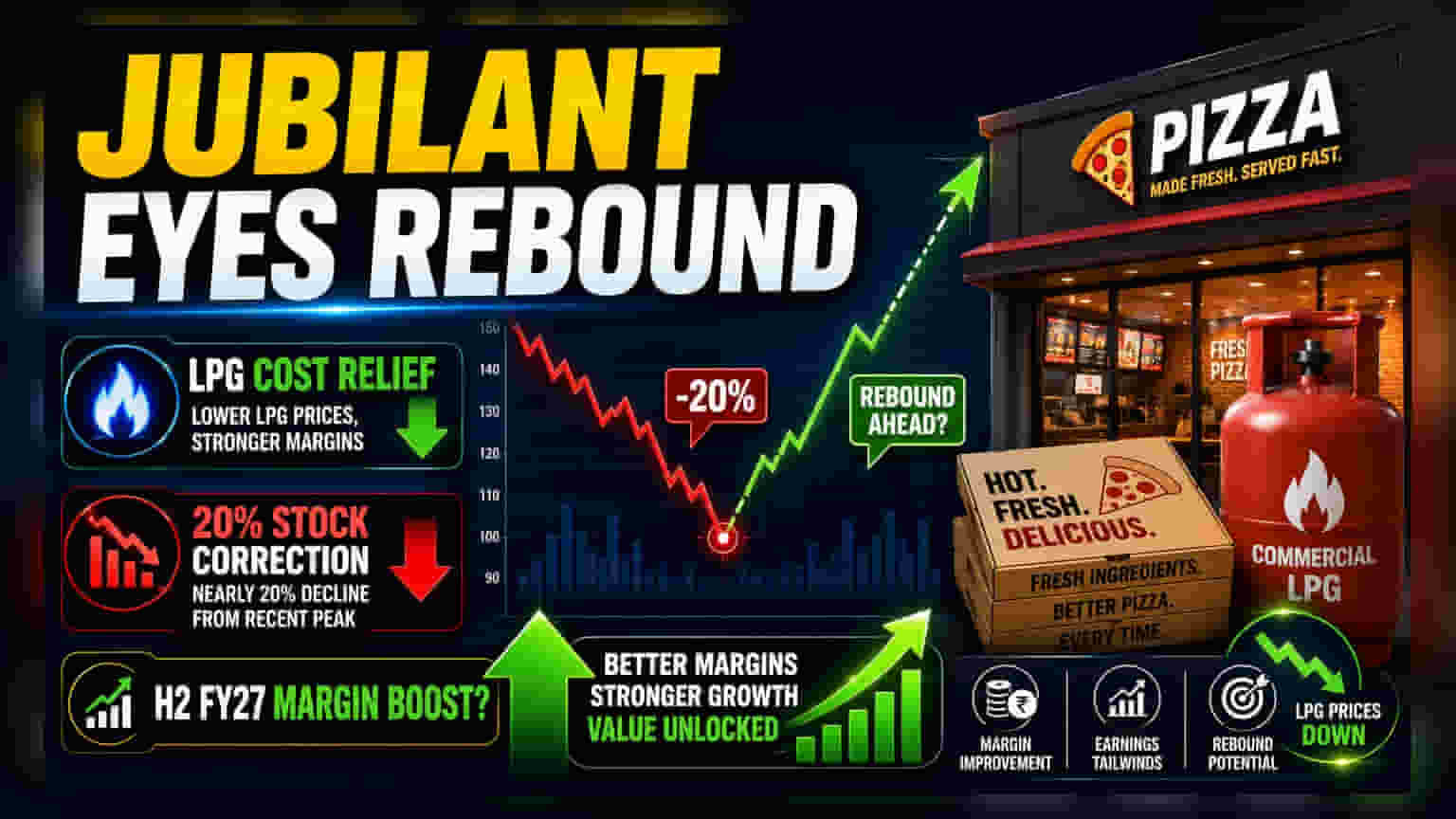
Jubilant FoodWorks has seen its stock price drop nearly 20% recently, but expectations of falling commercial LPG prices could offer a path to better profit margins in H2 FY27. While operational costs may moderate, investors are also tracking broader food inflation and demand trends in the QSR sector.
What Happened
Jubilant FoodWorks, the operator of the Domino's Pizza chain in India, is facing investor attention after its stock recently corrected by nearly 20% from its recent highs. Market analysts are now looking at the potential for a rebound, primarily driven by a change in operational costs. Expectations of a decline in commercial Liquefied Petroleum Gas (LPG) prices—a major expense for pizza chains that rely on high-heat ovens—are fueling optimism for improved profit margins in the second half of fiscal year 2027 (H2 FY27).
The Cost Equation For QSRs
For Quick Service Restaurants (QSRs), operational expenses are heavily influenced by fuel and food costs. In the case of Jubilant FoodWorks, LPG is a primary energy source, with a significant majority of its restaurant outlets dependent on it for operations. Recent periods of high LPG pricing acted as a direct drain on the company’s operating profit margins. When fuel costs surge, it becomes difficult for chains to pass these costs entirely to the customer without impacting order volumes. Consequently, any normalization in fuel prices acts as a direct support for margins, potentially allowing the company to retain more profit from each sale.
Growth and Margin Expectations
Brokerage analysts have updated their outlook, anticipating that the cost environment will stabilize as the fiscal year progresses. Projections for the second half of FY27 suggest that operating margins could recover compared to the first half, supported by both lower fuel prices and potentially moderating food inflation. Beyond cost management, the focus remains on revenue growth. After a period of flat performance, there is market anticipation that sales growth may accelerate from the third quarter onwards, helped by favorable base periods. Analysts are eyeing a potential compound annual growth in operating profits over the next two fiscal years, provided the company can maintain steady demand.
Beyond LPG: The Real Risks
While lower fuel costs are a positive development, they do not resolve all challenges. The QSR sector in India continues to deal with significant food inflation, particularly for essential items like cheese and vegetables. If food inflation remains stubborn, it may offset the gains made from cheaper LPG. Furthermore, discretionary spending patterns remain a risk. If consumers cut back on dining out or ordering in due to broader economic pressures, even an efficient cost structure cannot fully protect revenue. Investors often weigh these cost benefits against the risk of slowing consumer demand.
What Investors Should Track
Investors are likely to focus on upcoming quarterly earnings for signs that these margin improvements are actually taking place. Key monitorables include the company’s ability to drive like-for-like sales growth, the management’s commentary on food inflation trends, and actual margin data. Additionally, tracking the broader QSR sector performance can help determine if this is a company-specific turnaround or a wider trend of recovery in the fast-food space.