

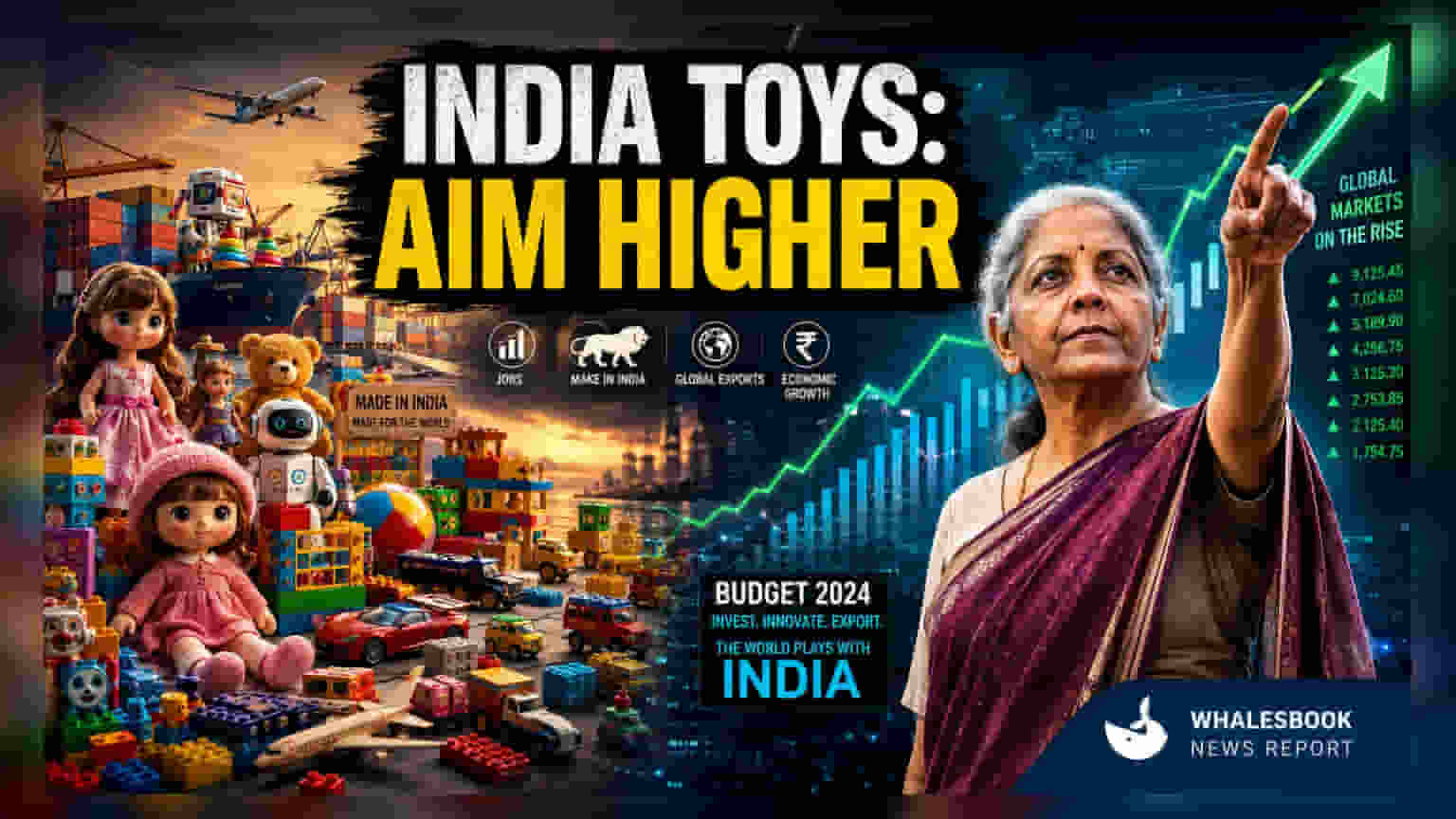
India's toy exports reached $186 million in FY26, with imports dropping 71% since 2020. Finance Minister Nirmala Sitharaman has urged the industry to target a larger share of the $179 billion global market. This shift reflects a move toward higher-value manufacturing and reduced reliance on cheap imports.
The Indian toy industry is undergoing a significant transformation, with government data showing exports climbed to $186 million in the 2026 fiscal year. Finance Minister Nirmala Sitharaman, speaking at a recent international toy expo in New Delhi, noted that Indian-made toys are now reaching 153 countries. This export growth is paired with a sharp 71% decline in imports compared to 2020 levels, indicating that domestic production is increasingly replacing foreign products.
Policy Measures and Market Protection
The reduction in imports is largely the result of targeted government interventions. In 2020, the government increased the basic customs duty on toys from 20% to 60% to protect domestic manufacturers from inexpensive global competition. Additionally, the Bureau of Indian Standards has implemented stricter safety and quality norms to regulate incoming goods. These policies aim to create a stable foundation for local companies, allowing them to shift focus from merely competing on price to investing in quality and design.
Strategic Shift to Higher-Value Products
While the domestic market is projected to reach $5 billion by 2034, the Finance Minister encouraged manufacturers to aim for a much larger piece of the $179 billion global toy market. Achieving this goal will require more than basic manufacturing; it will necessitate a focus on higher-value products such as electronic toys, coding-based games, and augmented reality experiences. The government's National Action Plan for Toys is currently working to support this shift by establishing dedicated manufacturing clusters and providing skill development programs.
Challenges in Global Branding
For Indian companies, the path to global expansion involves overcoming hurdles related to brand recognition. As noted by the Finance Minister, manufacturing capacity is only one part of the equation, as long-term success often depends on creating brands that are globally recognized. While trade agreements with countries like the UAE and Australia provide duty-free access, Indian exporters must still compete with established global players who have deep distribution networks and strong brand equity. Investors should monitor whether local companies can successfully transition from being contract manufacturers to building their own consumer brands. Continued investment in R&D and digital innovation will be critical to sustaining export growth and improving margins, as the industry moves away from low-cost plastic goods toward more complex, value-added segments.