

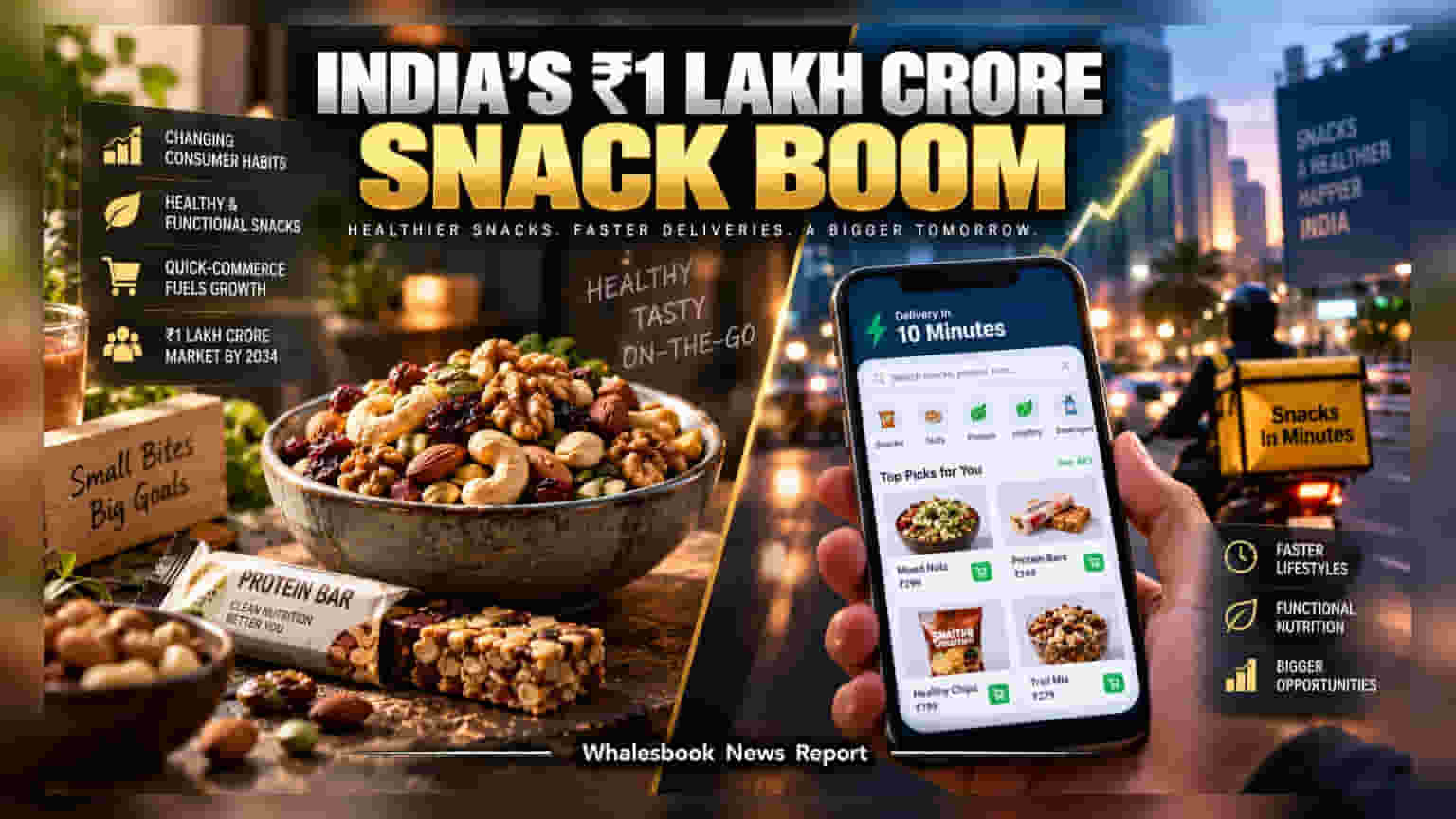
India’s food consumption is shifting from formal meals to a snack-heavy model, driving the industry toward a ₹1 lakh crore valuation by 2034. Quick-commerce platforms and a demand for functional health snacks are fueling this growth, though companies face challenges from inflationary pressures and evolving food safety regulations.
The Indian food consumption landscape is undergoing a significant transformation, moving away from a traditional three-meals-a-day structure toward a more fluid, snack-driven economy. As urban lifestyles become faster and more time-constrained, snacks are increasingly replacing full meals. This shift is expected to propel the domestic snacking market toward a valuation exceeding ₹1 lakh crore by 2034, reflecting a fundamental change in how Indian households allocate their food budgets.
Recent expenditure data for 2023-24 illustrates this trend clearly, with spending on beverages, refreshments, and processed foods now accounting for over 11% of monthly per-capita expenditure in urban areas. This is a noticeable move away from the historical dominance of traditional staples like cereals. For investors, this shift indicates a change in revenue models for FMCG companies, as they pivot toward smaller, higher-frequency, and often higher-margin products that align with these changing habits.
Quick-commerce platforms are acting as the primary catalyst for this trend. Services like Blinkit, Zepto, and Instamart have compressed delivery times, allowing for impulse, high-frequency, small-ticket purchases that were previously difficult to capture. By bridging the gap between pantry-loading retail grocery shopping and full-service dining, these platforms are enabling a modular approach to food consumption. Behavioral data shows that a substantial portion of these orders are impulse-driven, providing a new distribution channel that brands are aggressively targeting.
Alongside convenience, the demand for functional nutrition has become a core growth driver. There is a marked interest in clean-label products, protein-rich snacks, and items sweetened with natural alternatives. This health-oriented segment allows companies to experiment with premium pricing, potentially improving profit margins if they can successfully maintain brand loyalty. However, this also forces companies to navigate a more complex regulatory environment. Food safety authorities are increasingly strict regarding nutritional labeling and health claims, making compliance a critical operational risk for manufacturers.
While the market shows strong potential, it is not without challenges. High competitive intensity from both established multinational corporations and agile regional players remains a hurdle for maintaining market share. Companies must continuously invest in product innovation and distribution to stay relevant. Furthermore, macro-economic factors such as persistent inflation can lead to cautious consumer spending, sometimes masking volume growth even when value sales appear to rise. Rural demand, in particular, remains sensitive to external factors like irregular monsoons, which directly impact disposable income in those regions.
For investors and industry observers, the key monitorables moving forward will include the ability of these firms to manage raw material cost fluctuations, their success in scaling healthy-snacking portfolios without sacrificing margins, and how they navigate evolving food safety standards. Long-term performance will depend on a company’s ability to balance premium product growth with affordability as they reach into newer markets.