 Whalesbook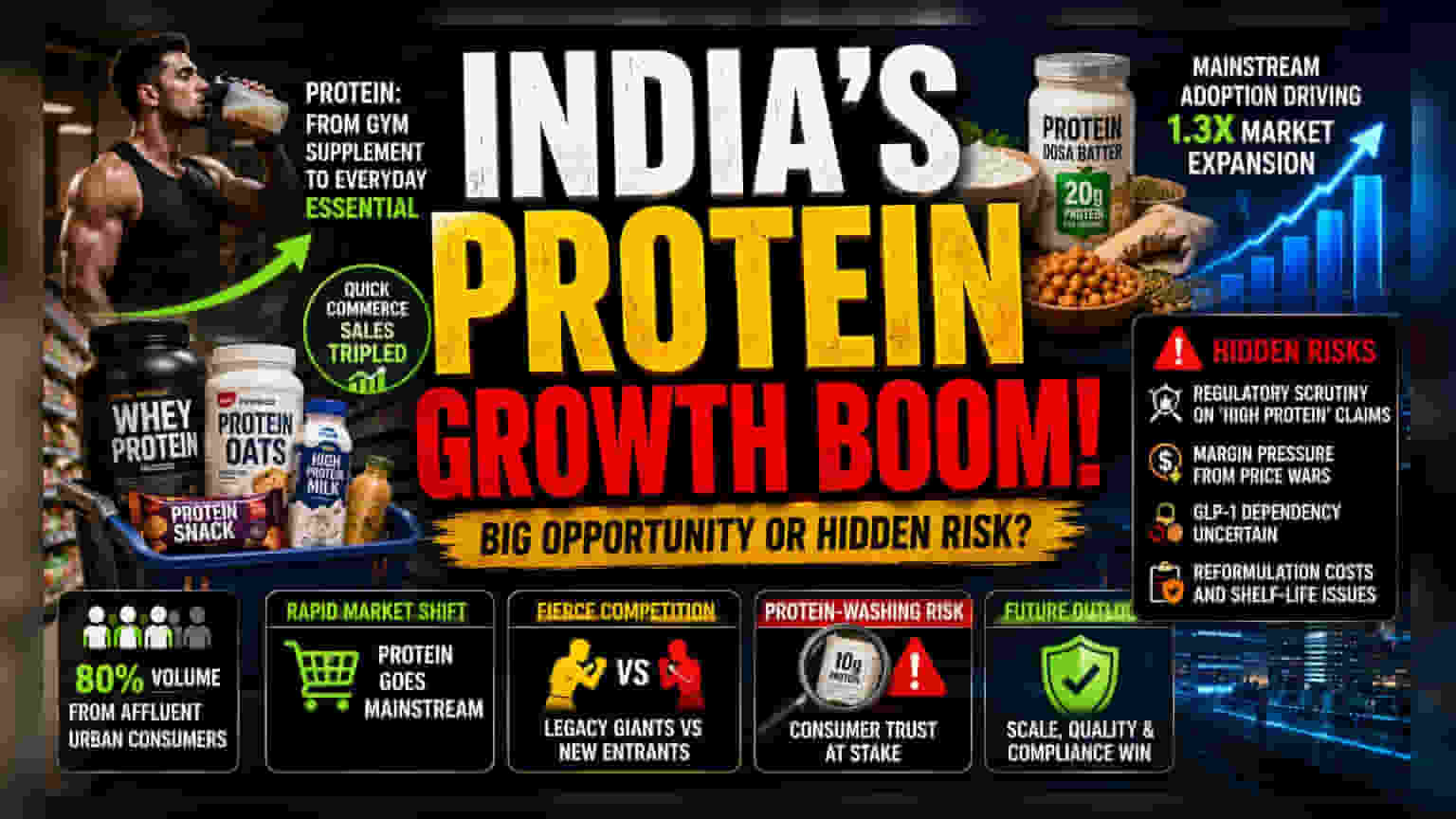


The Valuation of Nutritional Expansion
The rapid transition of protein from a specialized athletic supplement to a mainstream pantry staple is fundamentally altering the unit economics of India’s consumer goods sector. Driven by a newfound consumer obsession with glycemic management and lean muscle retention, large-cap firms are aggressively re-engineering their product portfolios. While the segment currently sees 80% of volume concentrated within affluent urban cohorts, the aggressive expansion into smaller pack sizes and everyday staples suggests a strategic attempt to capture long-tail growth. This shift reflects a broader market maturation where nutritional branding is becoming a prerequisite for sustaining top-line growth in competitive categories.
Competitive Dynamics and Capital Intensity
Recent data from quick commerce channels indicates that protein-focused snack and dairy sales have tripled, placing significant pressure on legacy players to innovate. Unlike the traditional supplement market which relied on trust and performance, the new wave of 'protein-fortified' retail products relies heavily on marketing spend and supply chain efficiency. Companies like PepsiCo are actively repositioning core staples like oats to capture this health-conscious demographic, essentially commoditizing health claims. However, this saturation is leading to diminishing returns for smaller entrants who lack the balance sheet strength to survive sustained price wars. The push into tier-two cities requires a massive reduction in per-unit manufacturing costs, a hurdle that remains the primary bottleneck for widespread adoption.
The Forensic Bear Case
The aggressive pursuit of 'protein-first' marketing masks significant structural risks, most notably the potential for regulatory intervention. As manufacturers flood the market with fortified products, the lack of standardized definitions for 'high protein' claims invites scrutiny from food safety regulators. Past experiences in the Indian packaged food industry suggest that exaggerated nutritional marketing often leads to mandatory labeling revisions, which could force expensive packaging overhauls and erode current margins. Furthermore, the reliance on GLP-1 drug adoption as a demand proxy is speculative; should the accessibility of these medications remain limited to the ultra-wealthy, the projected 1.3x market expansion may fall short of consensus expectations. Investors must also consider the hidden cost of reformulation, as high-protein variants often require more expensive raw ingredients and preservatives that can negatively impact product shelf life and retail-level profitability.
Future Outlook
The medium-term trajectory depends on whether companies can achieve scale without sacrificing pricing power. If the market continues to prioritize volume over ingredient quality, the risk of a consumer backlash against 'protein-washing'—the act of adding minimal protein to claim health benefits—increases significantly. Institutional analysts expect a period of consolidation where only those with robust distribution networks and verifiable health claims survive the upcoming regulatory tightening.