

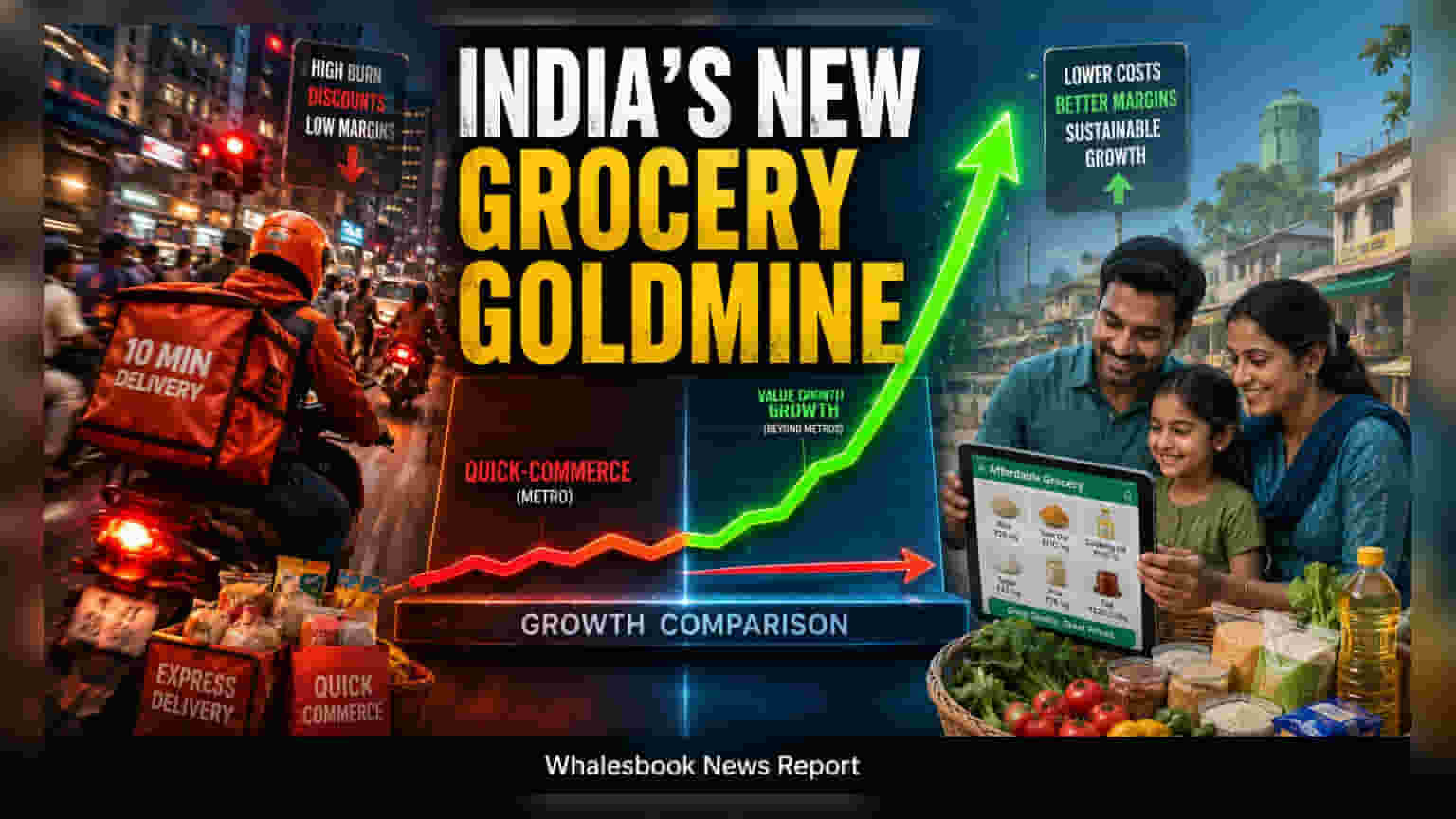
India's online grocery sector is pivoting from urban quick-delivery models to a 'value-first' approach for Tier-II and Tier-III cities. As these regions contribute to a projected $1 trillion in annual consumption by 2030, platforms are shifting focus toward deep regional assortment and lower fulfillment costs to compete with traditional kirana stores.
The online grocery market in India is splitting into two distinct business models. While major metro cities have aggressively embraced the 10-minute delivery model, the next major growth engine is emerging in smaller towns—often referred to as 'Bharat households.' In these regions, the primary driver for adoption is not speed, but rather affordability, deep regional product assortment, and price-sensitive offerings.
Financial context for the sector remains robust, with India's online retail market reaching an estimated $79 billion in Gross Merchandise Value (GMV) during FY26, reflecting a 21% increase from the previous year. However, the operational strategy for these two segments is diverging sharply. For investors, it is important to recognize that the quick-commerce model, which relies on dense networks of dark stores and high order volumes to be profitable, faces significant execution risks when scaled into smaller, less-connected geographies.
The challenge for companies is that the cost structure of quick commerce does not naturally fit the consumer behavior in Tier-II and Tier-III cities. To penetrate these markets, platforms are finding they must prioritize lower fulfillment costs, often targeted at around ₹50-55 per order. Unlike the premium-pricing strategy used in metros, these 'value-grocery' platforms must focus on private labels and localized products to attract shoppers who are accustomed to the deep personal relationships and convenience of their local kirana stores.
Despite the growth of online platforms, traditional neighborhood kirana stores are expected to remain a dominant force in the Indian grocery sector. Industry estimates suggest these stores will still hold approximately 86% of the market share by 2030, down slightly from about 91% currently. This means online players are not simply replacing these stores but are competing for a larger share of the household wallet from consumers who are already shopping online for other lifestyle goods.
The strategic shift toward value-driven grocery is intended to act as an entry point for the next 100 million online shoppers. The success of this model will depend on whether companies can build efficient, low-cost supply chains that remain sustainable without the excessive cash burn often seen in urban quick-commerce expansion. For shareholders and market observers, the most important monitorable in the coming quarters will be how these platforms balance aggressive expansion with the need to maintain healthy profit margins, especially as they face intense competition from both established retail chains and the vast, deeply-rooted kirana network.