

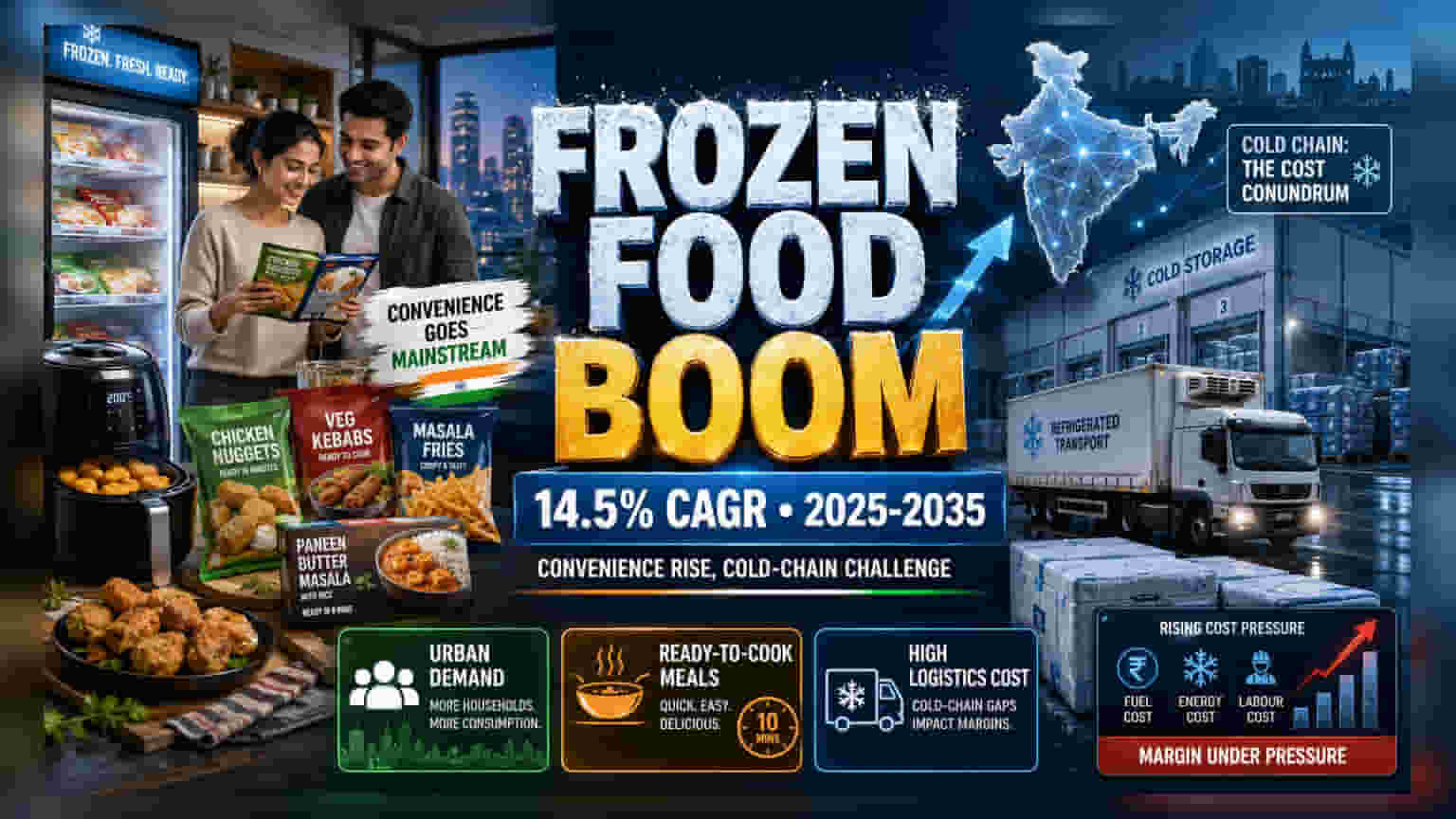
The Indian frozen food market is entering a phase of rapid expansion, with a projected 14.5% annual growth rate through 2035. As urban households shift toward ready-to-cook meals, companies are scaling up operations. However, the capital-intensive nature of maintaining cold-chain infrastructure poses a significant challenge to profit margins that investors should monitor.
What Happened
India's frozen food sector is undergoing a structural shift. Once considered an occasional luxury or a niche product, items like frozen nuggets, kebabs, and ready-to-cook meals are increasingly becoming pantry staples in urban Indian households. Recent industry data forecasts that the market is set to expand at a compound annual growth rate (CAGR) of 14.5% from 2025 through 2035. This transition is being driven by changing lifestyle patterns, including rising urban employment, dual-income households, and a strong preference for convenience without sacrificing food quality.
The Shift to Mainstream Convenience
For consumers, the move toward frozen foods is driven by the need for quick, reliable meal solutions that fit into busy schedules. This demand is changing how companies plan their product portfolios. Brands are not just selling snacks; they are aiming to capture a share of daily meal planning. The adoption of modern kitchen appliances, such as air fryers, is further supporting this trend, as it provides a convenient way to prepare frozen items at home. Consequently, major consumer goods companies and food brands are actively expanding their frozen portfolios to capture this emerging segment.
The Cold Chain Challenge
While the demand outlook is positive, the business model carries distinct risks, particularly for companies looking to scale rapidly. The frozen food business is capital-intensive, primarily due to the requirement of an 'unbroken' cold chain—a system of refrigerated storage and transport from the factory to the retail shelf. If this chain is interrupted, product quality suffers and inventory is lost. Maintaining this logistics network requires significant upfront capital spending. For investors, this means that while revenue may grow, profitability might come under pressure due to high distribution and maintenance costs. Companies must balance the need for aggressive expansion with the reality of thin margins in a cost-sensitive market.
Corporate Strategy and Competition
Listed players like ITC, through its Master Chef brand, and others like LT Foods are aggressively entering or expanding within the ready-to-cook and ready-to-eat segments. These companies are leveraging their existing distribution networks and brand recall to compete with established players like McCain Foods. The strategy for these firms involves moving beyond traditional snacking items to offer more diverse meal solutions. The success of these initiatives will depend on how effectively they can manage their supply chains and reach consumers through emerging channels like quick commerce, which allows for faster inventory turnover.
What Investors Should Track
As this sector evolves, investors should focus on a few key business indicators. First, watch for updates on profit margins; if distribution costs rise faster than sales, it could hurt the bottom line. Second, look at management commentary regarding capital allocation—how much is being spent on cold chain infrastructure versus marketing. Finally, the ability of these companies to maintain product quality during transport is vital, as any supply chain failure can lead to brand damage and loss of market share. The long-term performance of companies in this space will be defined by their ability to achieve scale while keeping logistics costs under control.