 Whalesbook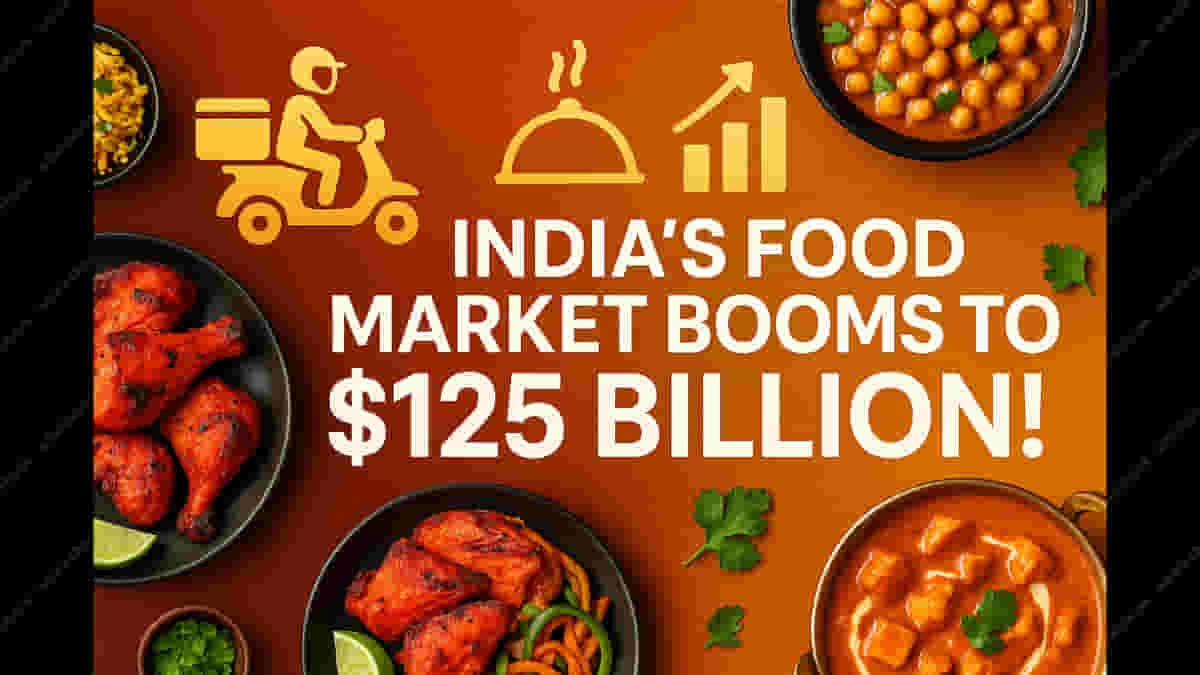
India's vibrant food service market is on the cusp of remarkable growth, poised to exceed USD 125 billion by 2030, according to a new report. This significant expansion signals a major shift, with the organized sector expected to double and eventually lead over the unorganized segment.
Background Details
- The report, titled 'How India Eats', was compiled by food delivery giant Swiggy and global management consulting firm Kearney.
- It highlights that the market, valued at USD 49 billion in 2019, is projected to reach over USD 125 billion by 2030.
- In 2025, the market is estimated to stand at USD 78 billion, indicating substantial near-term growth.
Key Numbers or Data
- Projected Market Size by 2030: Over USD 125 billion.
- Current Contribution to GDP: 1.9 percent (compared to 5% in China, 6% in Brazil), indicating significant untapped potential.
- Organized Sector Growth: Expected to double and drive over 60 percent of the total growth.
Drivers of Growth
- Rising incomes and increasing Gross Domestic Product (GDP) per capita are key macro factors fueling food service spending.
- Digital adoption and a growing appetite for convenience are transforming how consumers access food.
- Resilient supply chains and unstoppable consumer demand provide a strong foundation for this expansion.
Consumer Trends
- Indian consumers are increasingly experimenting, with a 20 percent rise in unique cuisines ordered and a 30 percent increase in restaurants frequented per customer.
- Demand for healthy and 'better-for-you' meals is growing rapidly, focusing on protein, calorie consciousness, and reduced sugar.
- There's a dual trend of rediscovering India's rich culinary heritage (like Goan, Bihari cuisines) and embracing global diversity (Korean, Vietnamese, Mexican).
- Local Indian beverages such as buttermilk and sharbat are seeing substantial growth, prompting global players to innovate.
Expert Opinions
- Rohit Kapoor, CEO of Swiggy Food Marketplace, noted the industry's rapid evolution, with consumers balancing demand for affordability in familiar cuisines and adoption of new global tastes like Matcha and Boba Tea.
- Rajat Tuli, Partner at Kearney, highlighted that growth is broadening beyond major metros, with corporate, industrial, and educational hubs showing strong dining-out trends.
Geographic Expansion
- Dining-out growth outside the top eight Indian cities is observed to be twice that within these major metros.
- This suggests a more widespread economic uplift and evolving consumer preferences across the country.
Importance of the Event
- The projected growth signifies massive potential for investors and businesses in the food tech, restaurant, and retail sectors.
- The shift towards organized players suggests consolidation and potential for larger, scalable business models.
Impact
- This forecast indicates a significant opportunity for publicly listed companies in the food service sector, including quick-service restaurants (QSRs), cloud kitchens, and food delivery platforms. It suggests potential revenue growth, market share gains, and increased investment in the sector.
- Impact Rating: 8/10
Difficult Terms Explained
- Organized Segment: Refers to businesses that are formally registered, pay taxes, and operate with standardized processes and branding (e.g., large restaurant chains, national QSRs).
- Unorganised Segment: Refers to smaller, informal businesses, often unregistered, with less standardized operations (e.g., small local eateries, street food vendors).
- QSRs: Quick Service Restaurants, which offer fast food service and often drive-through options.
- Cloud Kitchens: Food preparation and delivery facilities that operate only for delivery or take-out, without a physical dining area for customers.
- GDP per capita: Gross Domestic Product per person, an indicator of a country's economic output per person.
- Hyper-regional cuisines: Cuisines specific to a very small geographical area or region within a country, often distinct from national cuisine.