 Whalesbook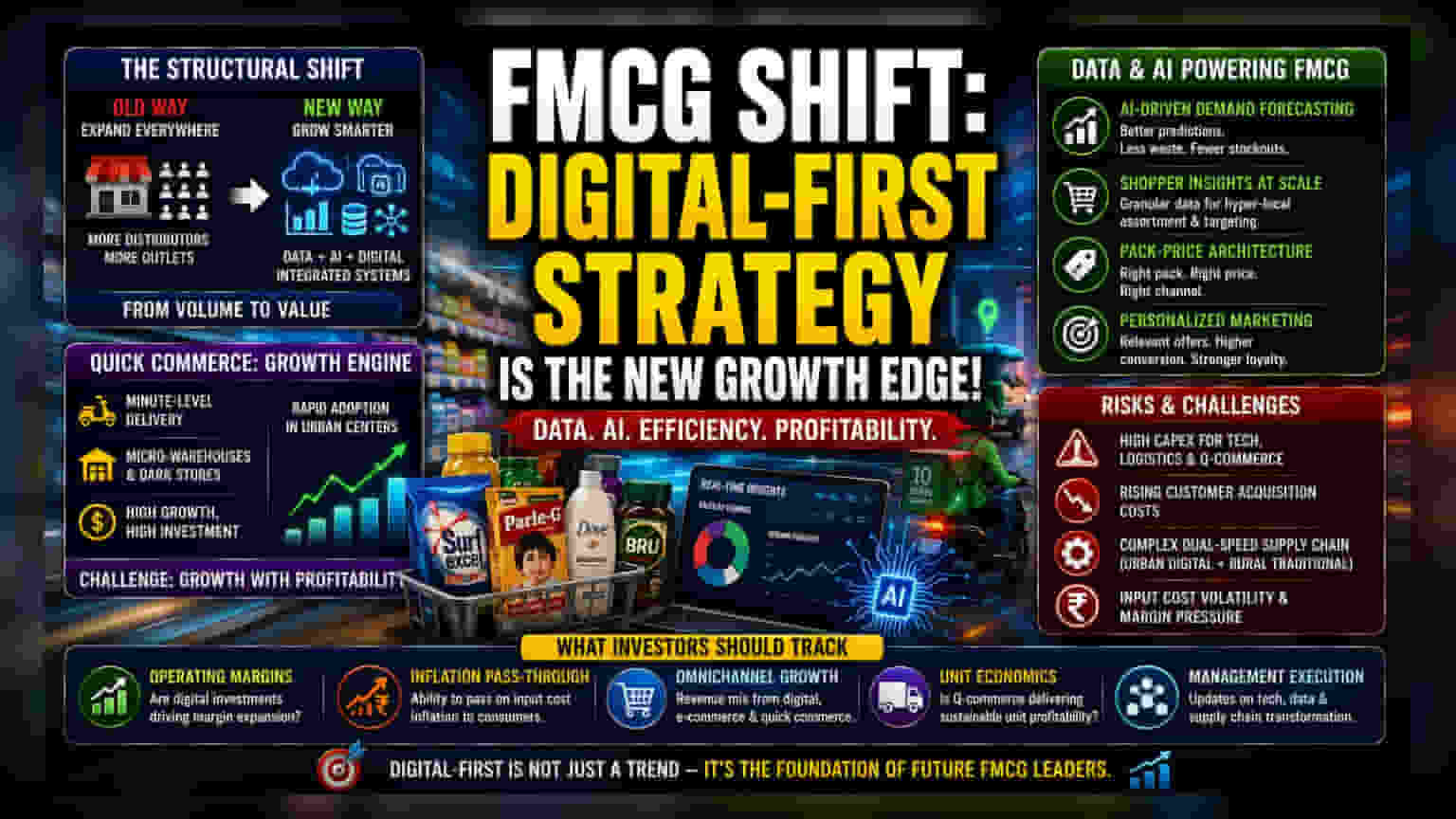


What Happened
India’s fast-moving consumer goods (FMCG) sector is undergoing a structural change. For decades, companies grew by simply adding more distributors and retail outlets. Now, they are shifting toward a digital-first strategy. Firms are increasingly using artificial intelligence (AI) and data analytics to connect their sales, supply chain, and marketing efforts into a single unified system. This pivot comes as traditional growth methods face challenges from fragmented consumer behavior and rising input costs.
Why This Matters For Investors
For investors, this shift indicates that a company's ability to compete is no longer just about the number of stores it reaches. Success now depends on how efficiently a brand manages its inventory, predicts consumer demand, and handles delivery costs. Traditional models often relied on volume, but digital transformation allows companies to focus on profitability and efficiency. Companies that integrate data into their operations can better manage the impact of raw material price spikes, as they can optimize pricing and supply chain planning in real time.
The Growth Versus Cost Dilemma
Quick commerce is currently a major growth engine, with rapid adoption in urban centers. While this channel brings products to consumers in minutes, it also changes the cost structure for companies. FMCG firms must now invest in micro-warehousing and efficient delivery partnerships to stay relevant on these platforms. This requires significant capital spending. Investors should watch whether companies can balance the rapid growth of these new digital channels with the need to protect their overall profit margins, especially when customer acquisition costs rise.
The Role of Data and AI
Data is replacing intuition in decision-making. Historically, sales teams relied on local experience to stock products. Today, AI helps companies analyze shopping patterns at a granular level. This allows for better demand forecasting, which reduces the risk of excess inventory or stockouts. Furthermore, companies are moving toward a 'pack-price architecture,' which involves customizing product sizes and prices for different digital and offline channels. This strategy is essential for navigating inflation while keeping products affordable for the average consumer.
Risks and Challenges
Despite the push for digital transformation, several risks remain. Transitioning to a digital-first model is complex and carries execution risk. If a company overspends on technology or delivery logistics without seeing a clear increase in sales, its operating margins may come under pressure. Additionally, the Indian market remains diverse. While metros are seeing a surge in quick commerce and e-commerce, the rural market still depends heavily on traditional, physical distribution. Companies must manage a 'dual-speed' supply chain, which can add complexity and cost to their balance sheets.
What Investors Should Track
Investors should look for updates on how digital initiatives are impacting the company's bottom line. Key monitorables include the trend in operating margins (EBITDA), the company’s ability to pass on raw material inflation to consumers, and the progress of its omnichannel sales strategy. It is also important to watch management commentary on how digital and quick-commerce channels contribute to revenue versus the costs associated with serving them. Long-term success will likely depend on whether these investments lead to sustainable profitability rather than just top-line growth.