 Whalesbook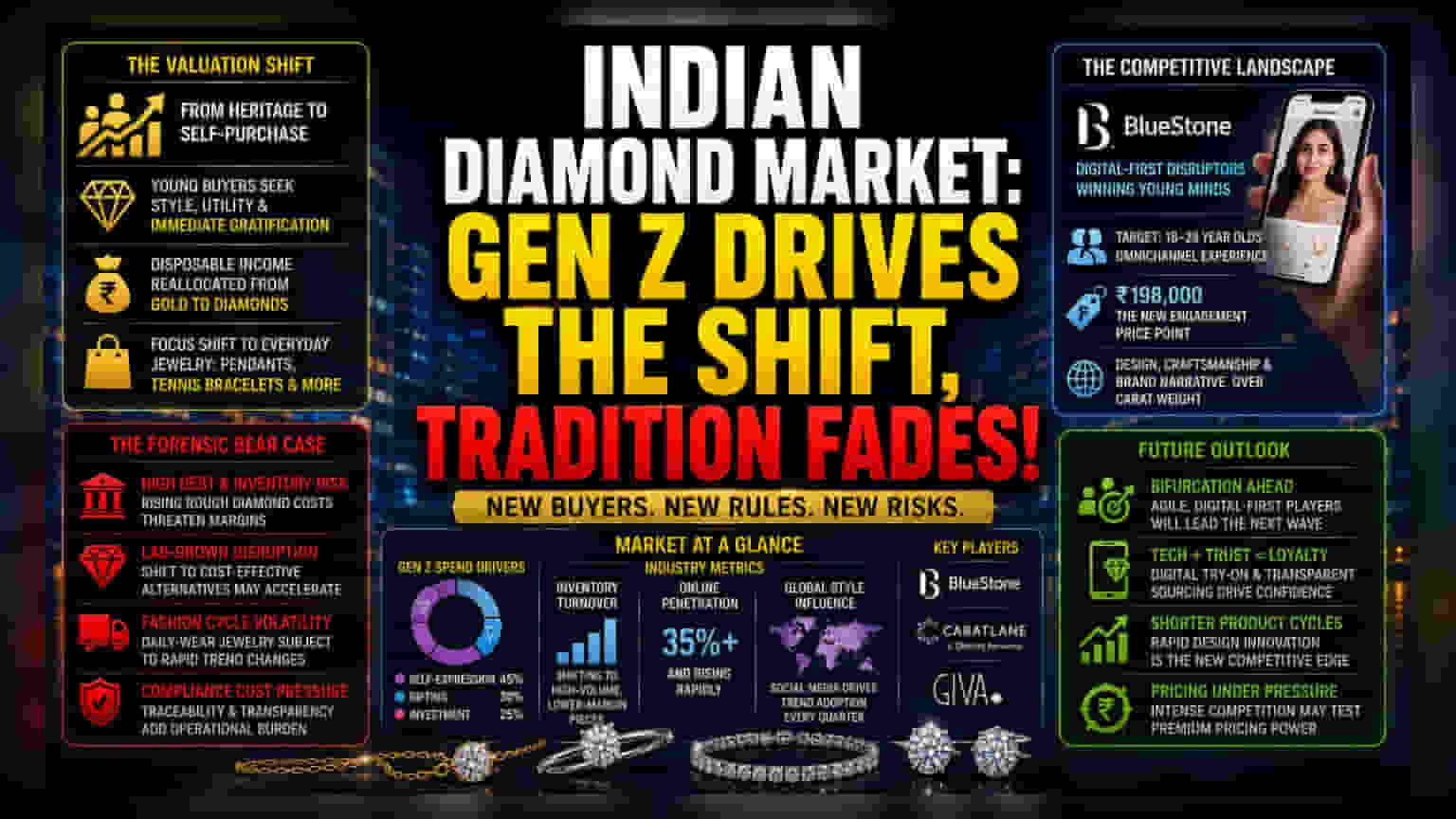


The Valuation Shift
The traditional Indian diamond market, long anchored by the cyclical nature of weddings and generational wealth preservation, is encountering a structural disruption. While institutional analysts have historically viewed Indian diamond consumption as a proxy for gold-linked stability, current consumer patterns reveal a preference for liquidity and style-based utility. This is not merely a change in consumer sentiment but a reallocation of disposable income. Young professionals, driven by the desire for immediate gratification and individual expression, are increasingly bypassing traditional family-led purchases. As this cohort gains more control over household discretionary spending, retailers are forced to adjust their inventory turnover models to accommodate lower-margin, higher-volume pieces such as everyday pendants and minimalist tennis bracelets.
The Competitive Landscape
Unlike traditional heritage jewelers who maintained long-term client relationships through trust-based bridal markets, new-age players are fighting for shelf space in a crowded attention economy. Digital-first competitors like BlueStone are effectively using omnichannel strategies to capture the 18-28 demographic that conventional brick-and-mortar players have struggled to reach. Industry data indicates that price points around the Rs198,000 mark for Gen Z acquisitions are becoming the new baseline for engagement, shifting the focus from carat weight to craftsmanship and brand narrative. This creates a significant challenge for legacy firms that lack the agile supply chains required to pivot designs toward global, social-media-influenced aesthetics on a quarterly basis.
The Forensic Bear Case: Structural Risks
Despite the enthusiasm for this younger buyer segment, several structural risks remain that could undermine long-term profitability. First, the industry’s reliance on debt to manage inventory—compounded by the rising cost of rough diamond sourcing—makes companies vulnerable to margin compression if the Gen Z trend proves to be cyclical rather than secular. Unlike the stable, predictable demand of the bridal sector, daily-wear jewelry is susceptible to rapid fashion shifts and the potential cannibalization by high-quality lab-grown alternatives. If consumer preference pivots further toward cost-effective lab-grown stones due to inflationary pressures, retailers who have over-indexed on natural diamond inventories may face significant write-downs. Furthermore, the push for traceability and pipeline transparency, while beneficial for marketing, introduces higher compliance costs that legacy retailers, burdened by outdated operational silos, may struggle to absorb efficiently.
Future Outlook
The expectation among market observers is a continued bifurcation in the sector. Firms capable of integrating seamless digital try-on technology with transparent sourcing will likely capture the lion's share of this emerging wealth. However, the move away from heavy, wedding-centric jewelry suggests that the industry will experience shorter product cycles. Investors should monitor whether retailers can maintain the current premium pricing structure as competition for the self-purchasing consumer intensifies.