

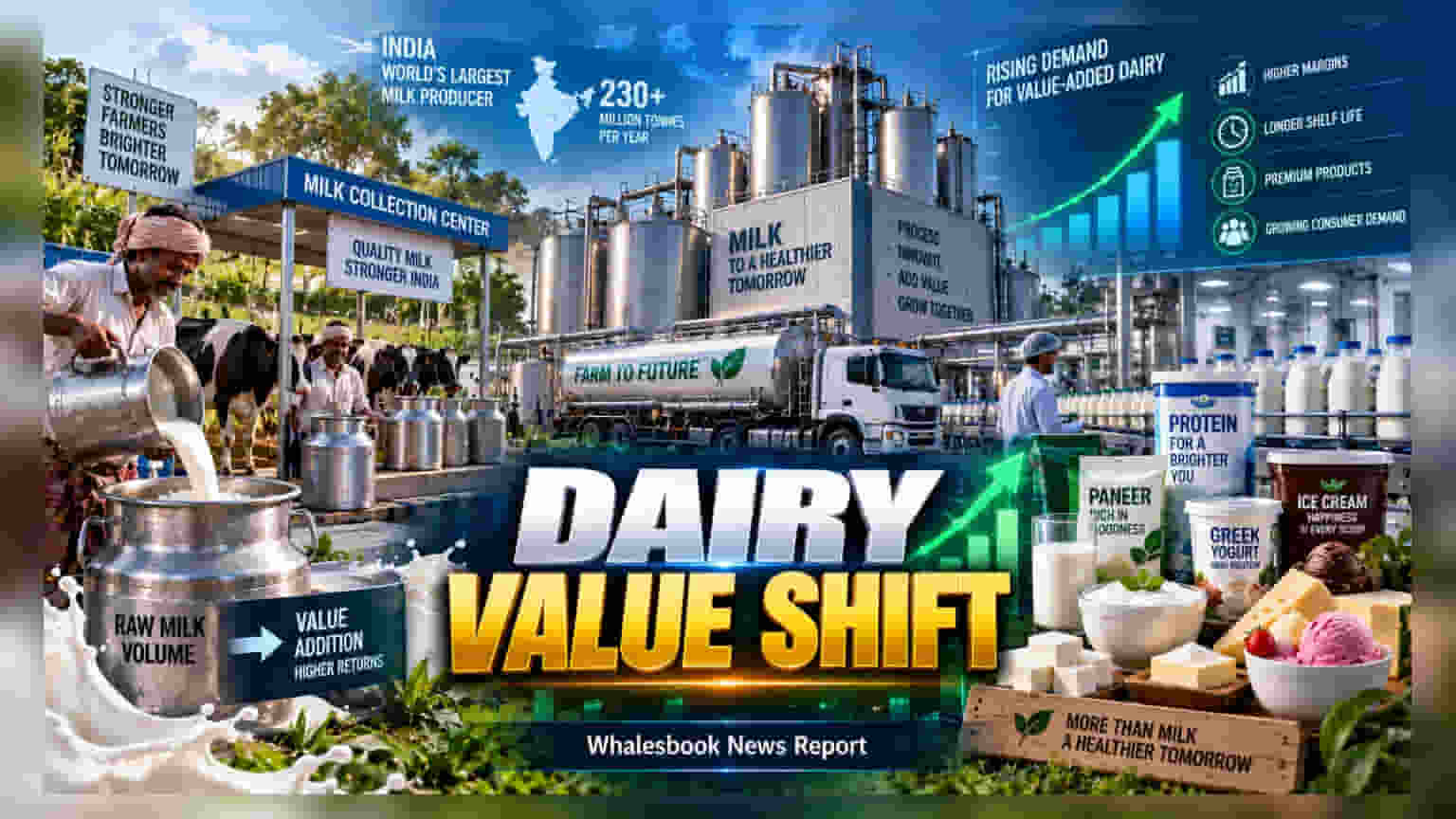
India’s dairy sector is pivoting toward high-value products like yogurt, paneer, and ice cream to combat rising raw milk procurement costs. While the country remains a global leader in milk output, future profitability for dairy processors will depend on product mix and processing efficiency rather than simple volume growth. Investors should watch how companies manage margin pressure against raw material inflation.
India has established itself as the world's largest milk producer, but the industry is entering a new phase where raw production scale is no longer the only path to profitability. The dairy sector is actively shifting its focus from basic liquid milk to value-added products. This transition is essential for processing companies looking to protect their profit margins against rising raw milk procurement costs.
Why The Shift Matters
For years, the dairy business relied on collecting and selling liquid milk. However, this model faces persistent challenges. Raw milk procurement costs fluctuate based on animal feed prices, labor, and climate conditions. Processors are often squeezed between these rising costs and the need to keep retail prices affordable for consumers. By moving toward value-added products—such as curd, cheese, paneer, yogurt, and ice cream—companies can capture better profit margins. These products generally have a longer shelf life and allow brands to command a premium price compared to standard liquid milk.
The Infrastructure Hurdle
While the shift to value-added products is strategic, it requires significant investment in cold chain infrastructure. Unlike liquid milk, which can be distributed quickly, many premium products require consistent refrigeration from the factory to the retail shelf. Building this network is expensive and can put pressure on a company’s cash flow and debt levels in the short term. Additionally, the Indian dairy market remains highly fragmented. A large portion of milk is still handled by unorganised players, which creates intense competition and limits the pricing power of formal dairy brands.
Investor Monitorables
Investors evaluating companies in this sector should pay close attention to the product mix. A higher share of revenue coming from value-added products is typically a positive sign for long-term margin stability. It is also important to track procurement efficiency and how well companies manage raw milk inflation. If a company can successfully pass on costs or mitigate them through better product positioning, it is better placed to handle market volatility.
Another factor to watch is the geographical reach and supply chain logistics. Companies that have invested in direct milk collection from farmers rather than relying on middlemen are often better positioned to ensure quality and control costs. As the industry matures, the ability to balance farmer returns with consumer pricing will remain the most critical operational challenge.