

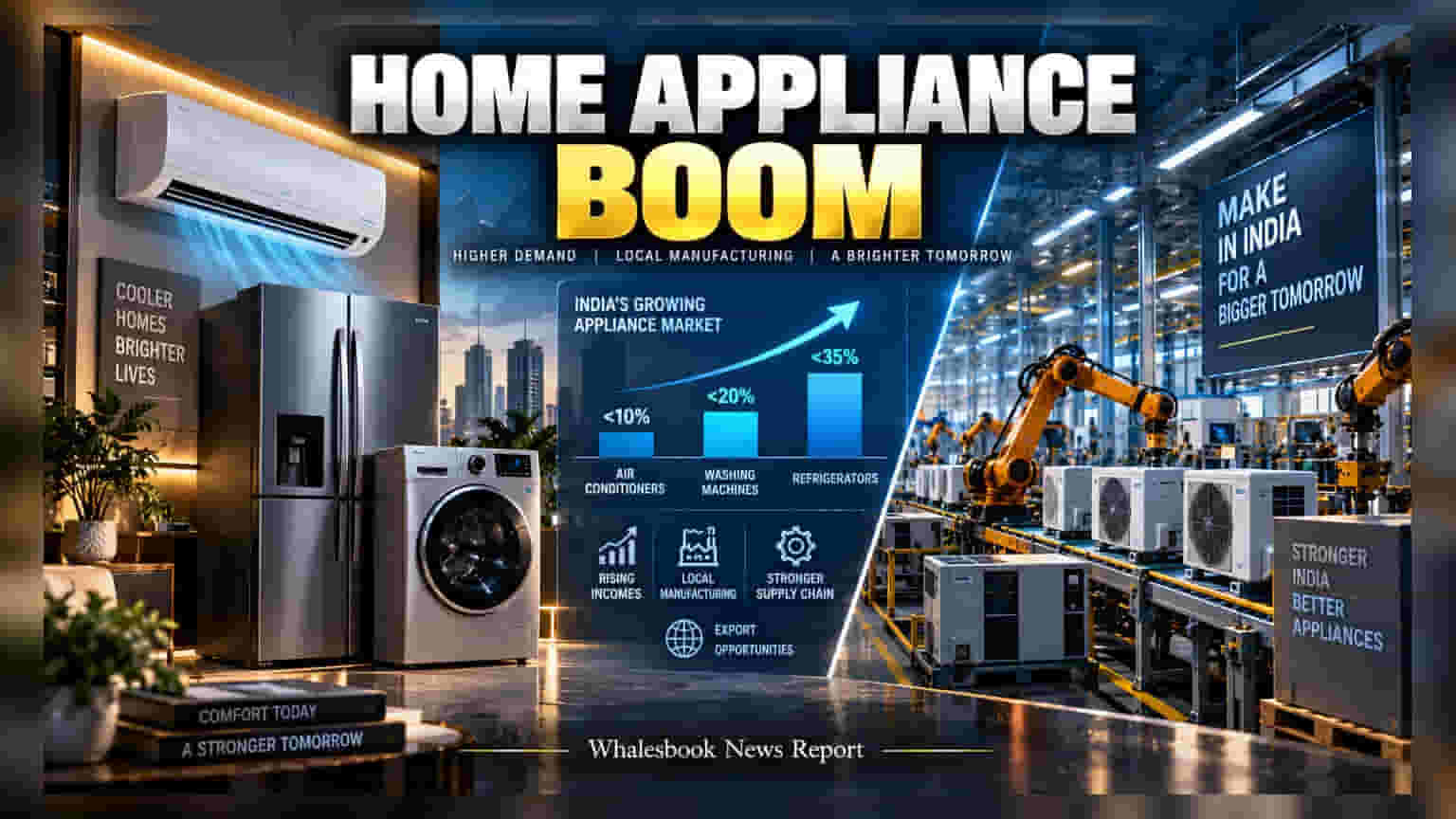
India’s consumer durables market plans to capture domestic demand by reducing heavy import dependence. With AC penetration under 10%, the industry aims to bridge a 15-16% cost gap with Chinese manufacturers by boosting local component production, a move crucial for long-term margins and global competitiveness.
The Indian consumer durables sector is preparing for a structural shift as it looks to tap into the country's rising demand for appliances. Industry leaders, including representatives from the CII National Committee on Consumer Electronics & Durables, point to the low penetration of key products as a primary growth driver. Currently, air conditioner (AC) penetration remains below 10%, washing machines are under 20%, and refrigerators are below 35%. With per-capita GDP rising, the industry aims to substantially increase these numbers in the coming years.
However, expanding the domestic market is only part of the strategy. A major hurdle for Indian manufacturers is a 15-16% cost disadvantage compared to Chinese rivals. Currently, the sector relies on imports for roughly 30-35% of components. To compete globally and improve margins, the industry is pushing to move beyond the assembly of finished goods and toward the deep manufacturing of sub-components.
For investors, this shift toward local manufacturing is a key monitorable. Companies like Voltas, Havells, Blue Star, and Whirlpool have been expanding their manufacturing footprint to take advantage of government initiatives like the Production Linked Incentive (PLI) scheme. The goal is to build a robust local supply chain that can serve both the growing Indian retail market and international export demands. If successful, this could help these companies reduce their exposure to volatile import costs and currency fluctuations.
Despite the long-term potential, the sector faces significant headwinds. The AC market, in particular, is highly competitive, with established global giants like LG, Samsung, and Daikin, alongside strong domestic players, fighting for market share. This intense competition often forces companies to pass on cost savings to consumers through aggressive pricing, which can keep profit margins under pressure. Furthermore, the industry is highly seasonal and sensitive to changes in raw material prices, such as copper, steel, and plastics, which are essential for manufacturing cooling and washing products.
Investors should also note that while the focus is on growth, the ability of these companies to successfully execute local component manufacturing will determine their future profitability. Past challenges in the industry, such as volatile demand and high working capital requirements, remain relevant risks. The next important updates to track will be the progress on local component integration, the impact of PLI-led investments on profit margins, and how companies manage competitive pricing pressure as they expand capacity.