

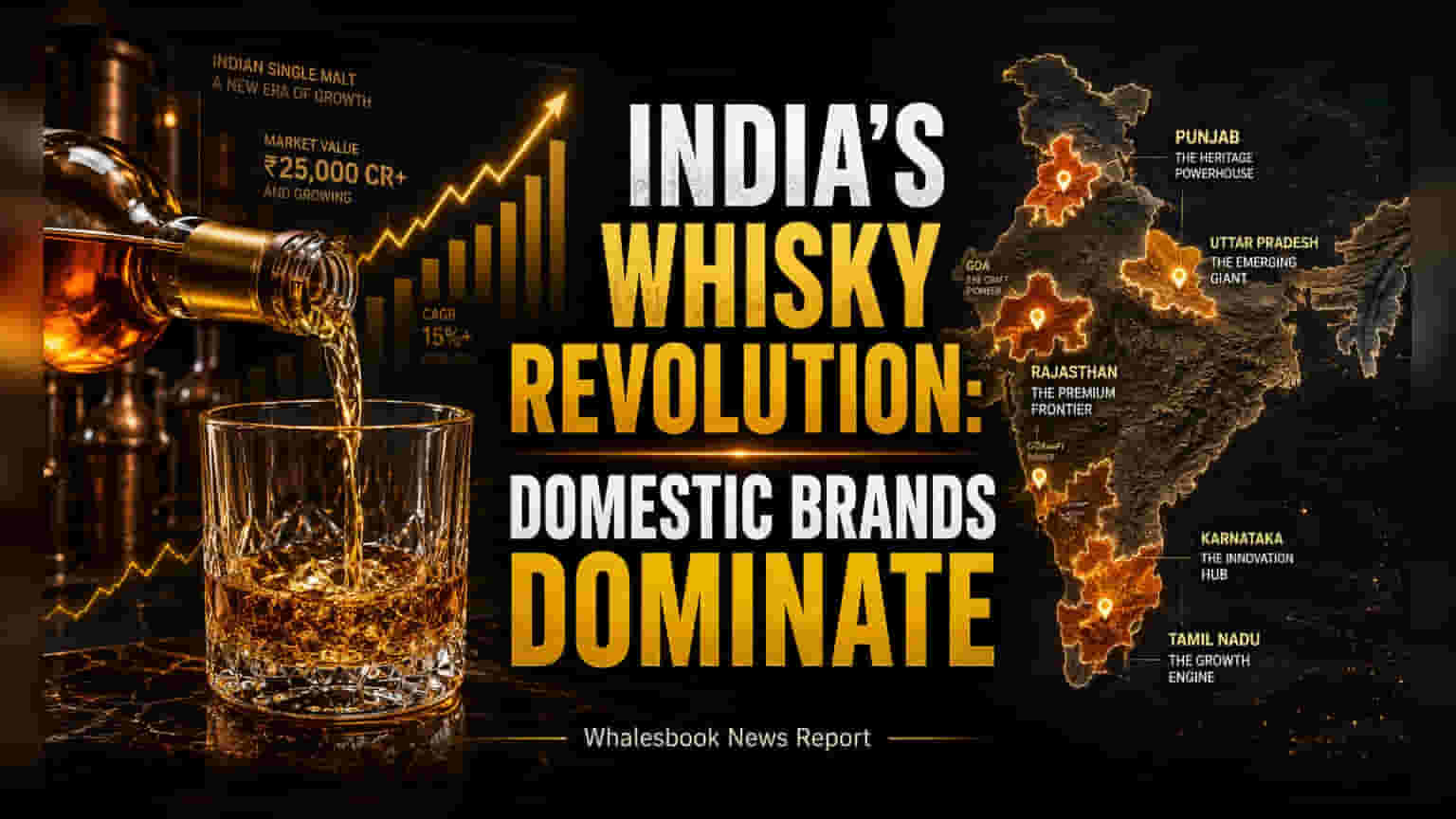
Sales of Indian-made single malt whisky grew 22% in 2025 to reach 500,000 cases. Domestic brands now command a 92% market share, outperforming multinational competitors in the premium spirits category. This growth reflects a strong shift toward higher-value products among Indian consumers.
Detailed Coverage
The Indian spirits market is seeing a major shift as locally produced single malt whiskies gain rapid popularity. In 2025, sales of Indian-made single malts reached approximately 500,000 cases, reflecting a 22% increase over the previous year. This growth highlights a clear move by Indian consumers toward premium, craft-led whisky options.
Domestic Brands Dominate Local Market
Homegrown labels are currently driving this trend, now accounting for 92% of the Indian-made single malt segment. Notable brands such as Indri, Amrut, Rampur, and Paul John, along with newer entries like Solan Gold and GianChand, have successfully established themselves against multinational competition. These Indian companies sold roughly 465,000 cases in 2025. In comparison, international giants like Diageo and Pernod Ricard have a smaller presence in this specific segment, with their locally produced offerings such as Godawan and Longitude 77 accounting for about 35,000 cases.
This success is part of a broader upward trend. Over the last two years, the 'Made in India' single malt category has grown from 350,000 cases in 2023 to 500,000 cases in 2025, marking a total rise of 43%. This shift is supported by increasing consumer recognition of the quality and distinct profiles of whiskies matured in India's unique tropical climate.
Quality Standards and Market Positioning
To maintain trust and quality, the Indian Malt Whisky Association (IMWA) recently launched a hologram certification trademark. This initiative is designed to verify the authenticity of domestic malts and align them with international production standards. Industry experts note that the premium nature of these products, which typically retail between ₹2,300 and ₹8,000, suggests a sustainable move toward higher-value products in the spirits sector.
While Indian brands lead the domestic-made category, imported single malts remain a strong competitor with 350,000 cases sold in 2025. Together, the combined market for local and imported single malts has reached 850,000 cases. For investors, the key monitorable will be whether domestic producers can maintain this high market share as multinationals increase their investments and portfolio presence in the premium segment. Future growth will also depend on how brands manage production capacity and navigate evolving state-level excise policies, which often impact the distribution and pricing of alcohol in India.