

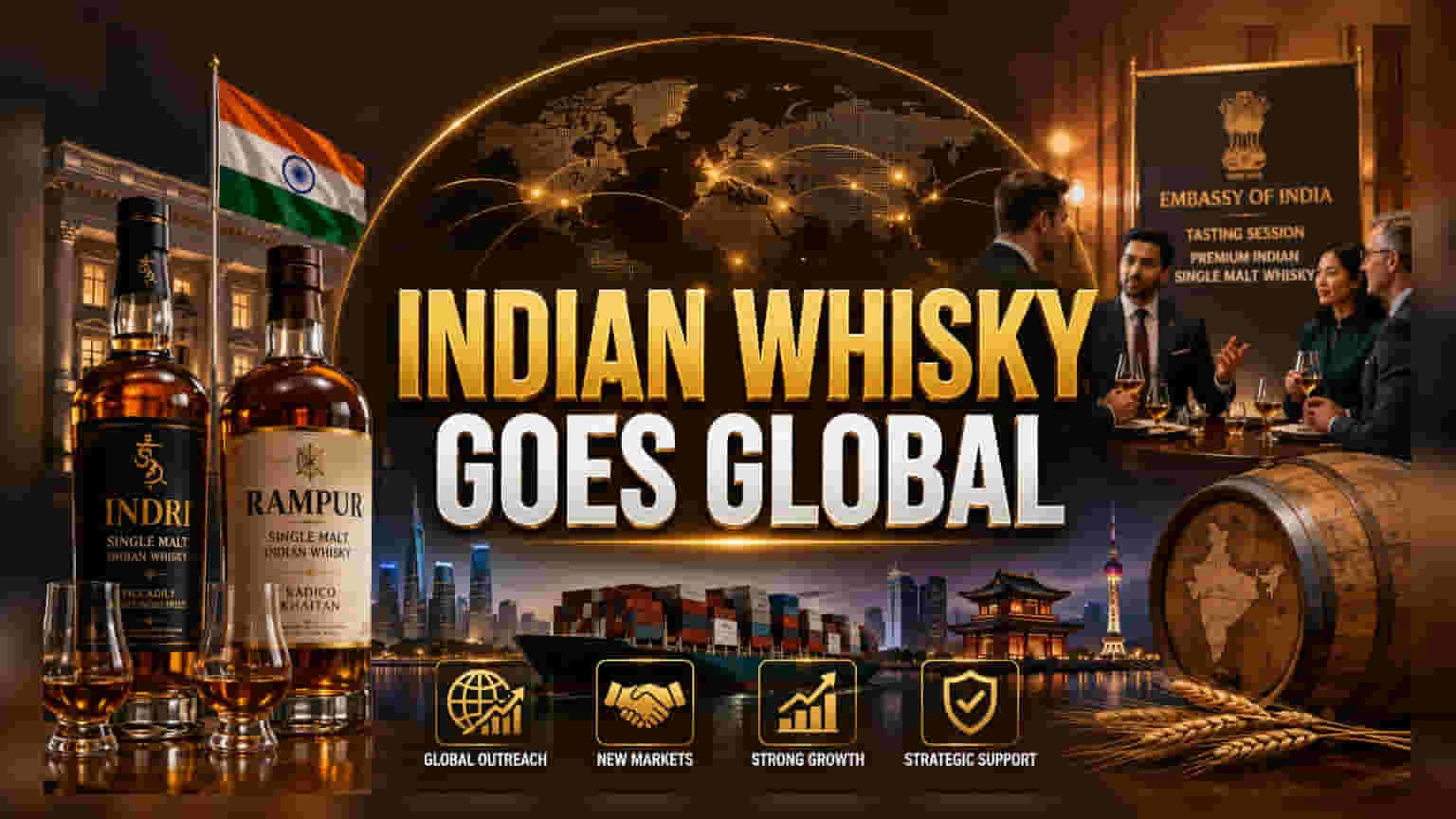
Indian embassies are actively promoting homegrown single malt brands like Indri and Rampur at international events to boost export visibility. This state-backed initiative helps premium distilleries lower marketing costs in competitive foreign markets, though the sector still faces challenges from established global brands and evolving regulatory landscapes.
What Happened
Indian diplomatic missions, from Edinburgh to Seoul, are increasingly hosting tasting sessions for indigenous single malt whiskies. By showcasing brands such as Indri (produced by Piccadily Agro Industries) and Rampur (produced by Radico Khaitan) at embassies and consulates, the government is helping these companies introduce their products to international distributors, importers, and affluent consumers. This initiative is designed to build global awareness and credibility for Indian spirits, a category that has historically been overshadowed by imported Scotch and other established international whiskies.
Why This Matters For Investors
For Indian distillery companies, this diplomatic support acts as a cost-effective marketing strategy. Entering foreign markets—particularly in the premium spirits segment—usually requires significant investment in brand building, marketing, and local networking. By leveraging diplomatic events, these companies can reach influential buyers and decision-makers without the full burden of independent, high-cost international marketing campaigns. For investors, this suggests a strategic effort by these brands to move beyond the domestic market and capture a share of the premium global whisky market, which is seeing a shift in consumer interest toward new, distinct flavour profiles.
The Growth Story of Premium Brands
This global outreach aligns with the strong financial performance seen by Indian premium distillery companies recently. Piccadily Agro Industries, for instance, reported robust growth in its distillery segment, with revenue surging significantly as its premium brands gained traction. Similarly, Radico Khaitan has strengthened its international presence, with its Rampur whisky receiving global recognition in industry rankings and consumer surveys. These companies are investing in capacity expansion to meet the rising demand for premiumisation, both within India and abroad, as the perception of Indian-made spirits shifts from budget options to quality single malts.
Risks and Market Challenges
While the diplomatic promotion is a positive step, investors should remain aware of the broader challenges in the global spirits industry. Indian brands are still in the early stages of competing with established giants from Scotland, Ireland, and Japan, which have decades of heritage and deep-rooted distribution networks. Additionally, the export business is sensitive to international geopolitics and regulatory hurdles. For example, regional conflicts in West Asia have previously disrupted shipments for Indian liquor companies. Furthermore, Indian brands must navigate diverse and often strict liquor regulations, import duties, and trade protections in various destination countries. Success in the global market is therefore not guaranteed and will require consistent product quality, competitive pricing, and efficient supply chains.
What Investors Should Track Next
Investors may monitor a few key areas to assess the long-term impact of this global push. First, watch for sustained export volume growth in quarterly company results. Second, management commentary regarding new distribution agreements or entry into major international markets will be important, as this confirms the effectiveness of current marketing efforts. Finally, track sector-wide updates on regulatory changes and duty structures in key export regions, as these factors can significantly affect profitability and market access for Indian single malt brands.