

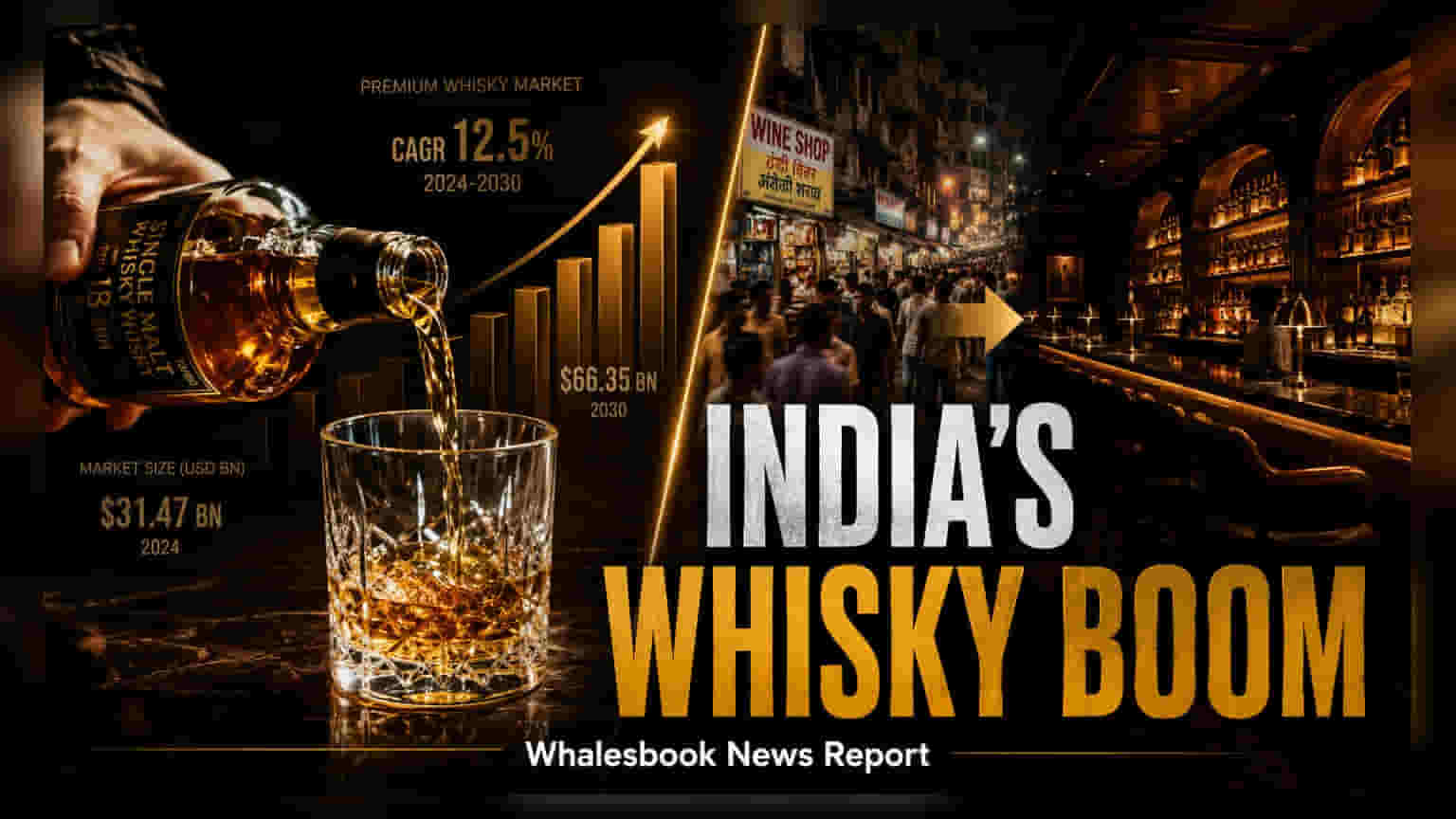
Major Indian alcohol companies are prioritizing high-value premium spirits to counter sluggish volume growth. With the prestige segment expanding rapidly, firms like Diageo India, Radico Khaitan, and Allied Blenders & Distillers are focusing on products priced between ₹3,500 and ₹27,500 to drive revenue.
The Indian alcoholic beverage market is undergoing a structural change as industry leaders move away from a volume-based business model toward higher-value products. While overall consumption growth has moderated, the premium and luxury segments are seeing rapid expansion, driven by rising disposable incomes and changing consumer preferences for quality over quantity.
Premiumization Strategy Across the Industry
Companies such as Diageo India, Radico Khaitan, and Allied Blenders & Distillers (ABD) are actively expanding their portfolios of single malts, tequilas, and imported wines. This strategic move is intended to protect profit margins and revenue as the entry-level spirit categories face slower growth. In this segment, bottles are typically priced from ₹3,500 to over ₹27,000. Industry data indicates that while the broader spirits market is growing at a modest pace, the prestige and luxury tiers are experiencing double-digit growth. For instance, Radico Khaitan reported that its luxury portfolio, which includes brands like Rampur Indian single malt and Jaisalmer Indian craft gin, reached ₹475 crore in sales, compared to ₹340 crore in the previous fiscal year.
Why High-Value Segments Matter
For investors, this shift represents an effort by companies to improve their per-bottle profitability. Allied Blenders & Distillers has signaled its intention to enter the ₹5,000-₹10,000 price band, often referred to as affordable luxury, to boost revenue realization. Similarly, Diageo India is investing in premium brands like Godawan and Don Julio, positioning them as part of a long-term growth strategy that relies on higher value per unit rather than high volumes. Other players like Tilaknagar Industries and Tandon Enterprises are also scaling up their premium offerings to tap into this trend.
Key Risks and Monitorables
While the premium strategy offers a path to better profit margins, investors should remain aware of inherent sector risks. The alcoholic beverage industry in India remains highly regulated, with excise duties and state-level taxation policies playing a major role in profitability. Any sudden changes in state regulations or pricing controls can significantly impact the margins of even the most successful luxury brands. Furthermore, because premium spirits are often imported or require longer aging processes, companies may face higher working capital requirements and supply chain complexities. The success of this strategy will depend on the companies' ability to maintain brand loyalty and successfully navigate the complex regulatory environment across different Indian states. Investors should track future quarterly results to see if the contribution of these premium products successfully translates into consistent growth in operating margins and improved cash flow, despite the ongoing challenges in the mass-market volume segment.