

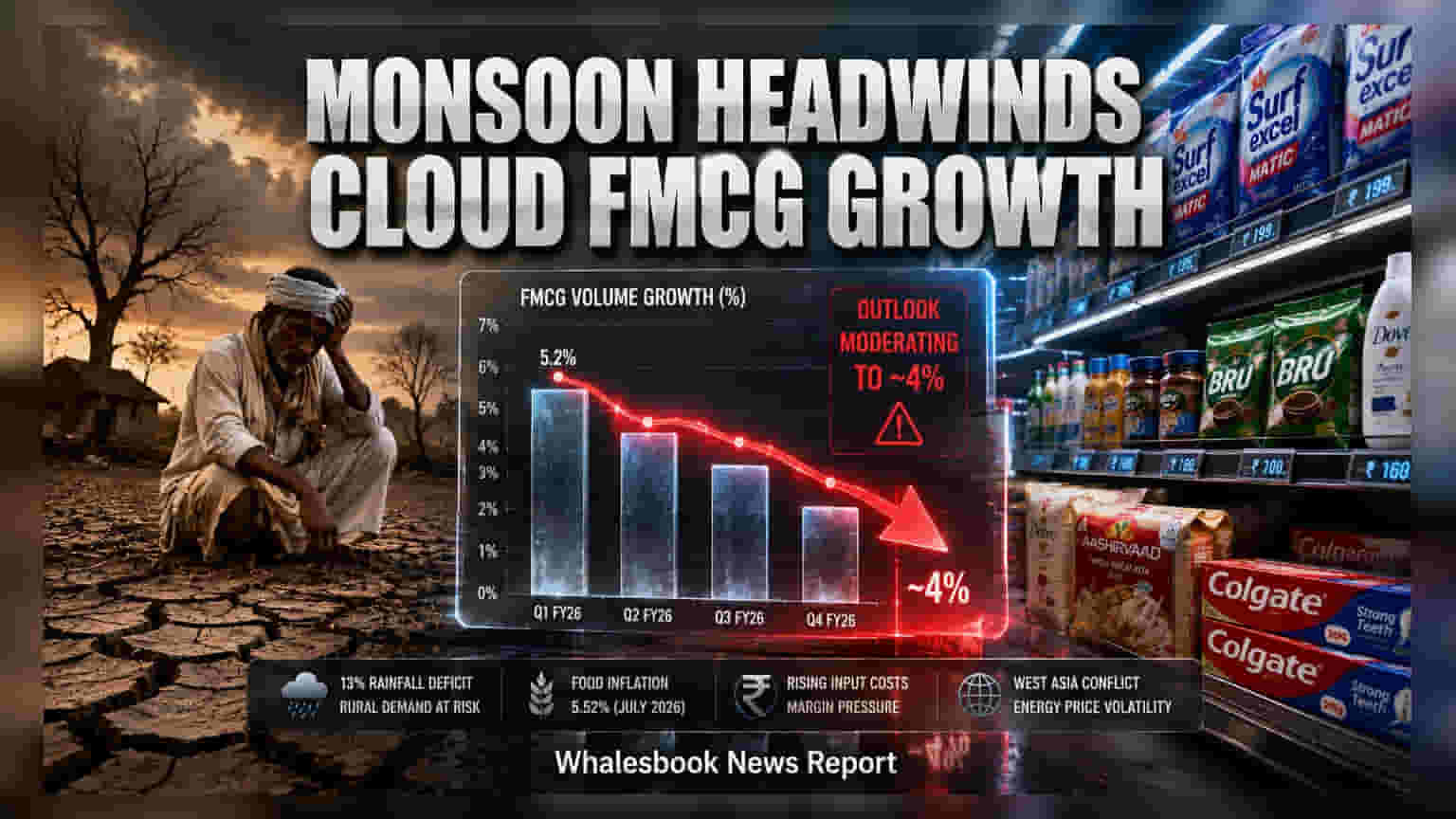
The Indian FMCG sector faces a potential slowdown in volume growth as a 13% rainfall deficit and geopolitical tensions in West Asia pressure consumer spending. With food inflation at 5.52% as of July 2026, companies are relying on price adjustments to maintain margins. Investors are tracking whether rural demand remains resilient or if the current macroeconomic environment will force a downward revision in fiscal expectations.
The Indian fast-moving consumer goods (FMCG) sector, which saw a period of steady recovery earlier in 2026, is now encountering significant headwinds. After reporting volume growth of 5.2% in the April-June quarter, the sector is bracing for a potential slowdown as the impact of uneven rainfall and global uncertainty begins to surface. Analysts estimate that volume growth across the industry could moderate toward 4% for the remainder of the year.
Rural Consumption Under Pressure
The primary concern for the industry is the uneven monsoon season. As of mid-August 2026, India recorded a 13% rainfall deficit, with specific regions such as Maharashtra, Madhya Pradesh, and Karnataka experiencing below-normal precipitation. Since rural areas contribute a substantial portion of revenue for major FMCG players, agricultural stress often leads to a lag in consumer spending. While companies have reported resilient demand in recent months, the true economic impact of the monsoon shortfall typically takes time to manifest in the household budgets of rural consumers. If the rainfall deficit continues to affect Kharif crop yields, the ripple effect on rural income could further dampen the demand for non-essential goods.
Managing Costs Amid Inflation
Compounding the consumption challenge is the persistent issue of food inflation, which stood at 5.52% in July 2026, while the headline retail inflation was recorded at 4.45%. This environment has forced FMCG companies to navigate a delicate balance between passing costs to consumers and protecting their profit margins.
Major entities, including Hindustan Unilever, Colgate, and Dabur, have implemented strategic measures such as selective price hikes and 'shrinkflation'—where companies maintain the retail price of a product while reducing the quantity provided in each pack. These tactics are designed to keep the products affordable for price-sensitive households while buffering the bottom line against rising raw material costs. However, the effectiveness of these strategies relies heavily on the consumer's willingness to continue purchasing at current price points.
Impact of Global Geopolitical Risks
Beyond domestic factors, the ongoing conflict in West Asia is introducing new risks to corporate planning. The instability has led to volatility in energy prices, which directly impacts logistics and packaging costs for consumer goods manufacturers. As supply chains remain sensitive to these global pressures, companies are keeping a cautious outlook.
While some industry leaders maintain that their core demand remains robust and fiscal year guidance remains unchanged, the divergence between corporate optimism and the macroeconomic data is widening. For investors, the key monitorable in the coming months will be the quarterly volume growth figures and whether companies can maintain their margins without sacrificing market share. Continued pressure on household budgets, driven by inflation and rural income uncertainty, suggests that the next few quarters will be critical for determining the sector's growth trajectory.