 Whalesbook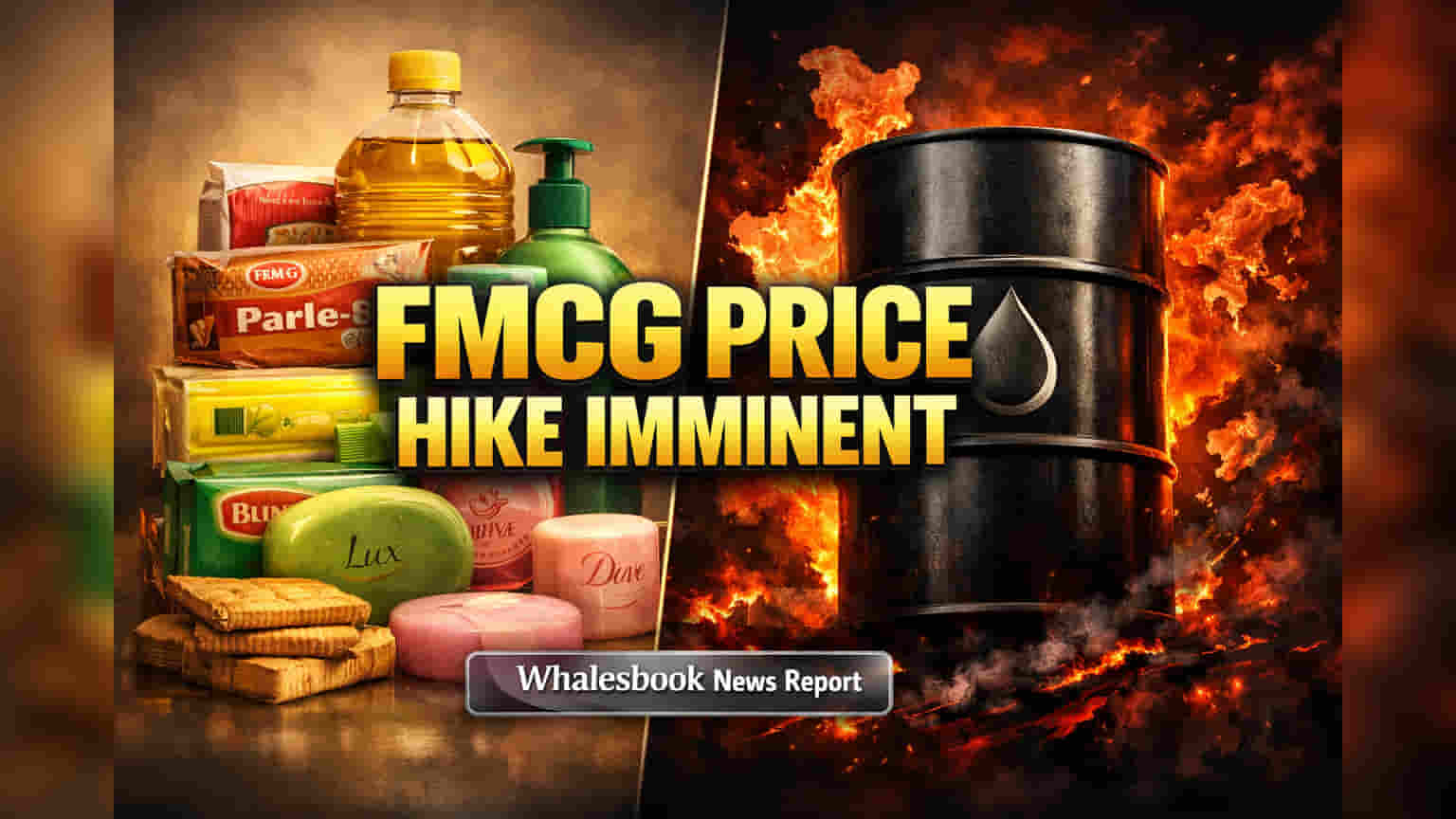
Rising Oil Prices Fuel Packaging Costs
The challenging environment is largely due to a sharp increase in crude oil prices, now exceeding $100 per barrel due to geopolitical tensions in West Asia. This surge is creating significant cost pressures for India's Fast-Moving Consumer Goods (FMCG) sector. Packaging, a crucial cost for companies like Parle Products making up 15-20% of expenses, is particularly affected. Prices for petrochemical-derived materials have jumped 40-50%. Dabur India, for example, noted the impact on input and logistics costs. While Dabur reported a 4.0% revenue rise to ₹2,655 crore and a 5.1% net profit increase to ₹439 crore in its fourth quarter of fiscal year 2026 (ending March 2026), this followed a Q4 FY25 where net profit fell 8.4% amid weak rural demand and higher input costs, showing the sector's vulnerability to these pressures.
Companies Turn to Price Hikes and 'Shrinkflation'
To cope, FMCG makers are strategically increasing prices and reducing product sizes – a practice known as 'shrinkflation'. This helps protect profit margins without driving away cost-conscious shoppers. Parle Products' Chief Marketing Officer Mayank Shah noted that smaller packs might see weight reductions and larger ones price hikes if oil prices stay high. Diversified players also face pressure, with AWL Agri Business (Fortune brands) reporting a 34.53% net profit drop in the December 2025 quarter due to slow volume growth. As of March 2026, AWL Agri's stock trades at a PE of 24.17 with a market cap around ₹22,777 crore.
Cautious Optimism for 2026 Growth
Looking ahead, the Indian FMCG sector remains cautiously optimistic for 2026, with expectations of high single-digit volume growth. This optimism is based on anticipated easing inflation, stable commodity prices, and a rebound in rural demand, supported by favourable macroeconomic trends and government policies. Dabur India, valued at roughly ₹74,761 crore with a PE ratio near 41.07, is pursuing a strategic plan for double-digit growth by FY28. Analysts point to Marico, Godrej Consumer Products, and Tata Consumer Products as well-positioned, with Goldman Sachs also favoring Varun Beverages for strong 2026 earnings.
Recovery Efforts Threatened by Cost Pressures
However, the current surge in costs poses a significant threat to this projected recovery. Many companies had recently restored product grammage after GST rate cuts, a move now jeopardized by rising input expenses. The sector's heavy reliance on crude oil derivatives for packaging leaves it highly vulnerable to geopolitical events. While publicly traded firms like Dabur and AWL Agri have clear financial data, assessing the resilience of private giants such as Parle Products is more difficult. A potential consumer backlash from ongoing price hikes and grammage reductions could halt volume growth, particularly if geopolitical tensions cause lasting disruptions in packaging material supply. Dabur's Q4 FY25 profit shortfall and AWL Agri's Q3 FY26 profit decline highlight the precarious balance companies face between managing costs and maintaining consumer affordability.
Strategic Execution Key to Future Growth
For 2026, the FMCG sector is expected to focus on volume growth over price increases, benefiting from easing inflation and improved supply chain efficiencies. Although macroeconomic trends and company strategies, such as Dabur's, provide a pathway forward, managing the impact of the West Asia conflict on crude oil prices and input costs requires constant attention. The industry's success in absorbing these shocks, balancing margin protection with consumer demand, and ensuring supply chain stability will be crucial for achieving expected earnings growth and maintaining the ongoing recovery.