

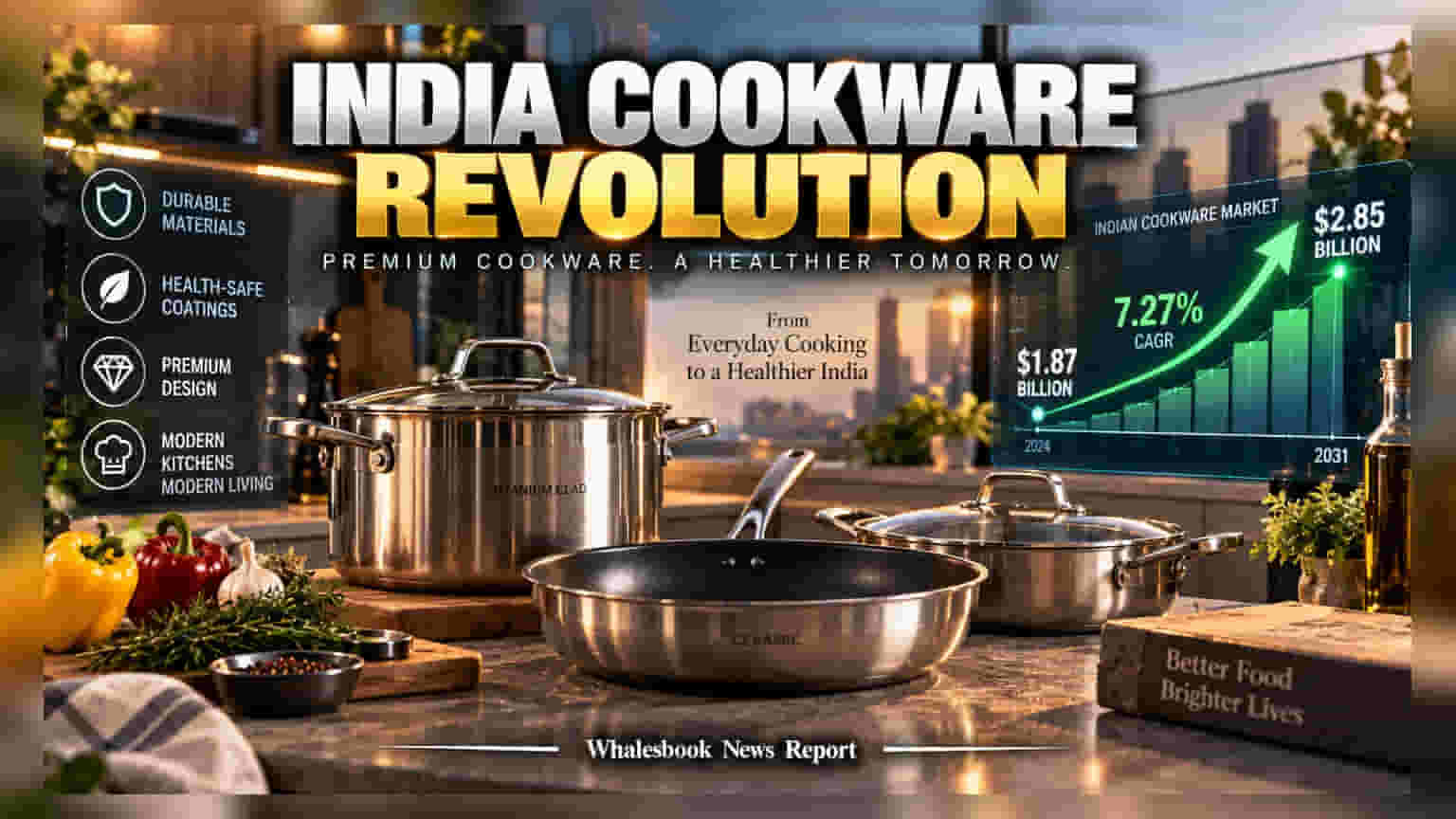
India’s $1.87 billion cookware sector is transitioning from price-sensitive commodity sales toward premium, performance-driven kitchenware. With the industry projected to reach $2.85 billion by 2031, companies are betting on material science to attract health-conscious consumers. Investors should monitor whether established legacy brands can adapt their portfolios to compete with these technology-focused new entrants.
The Indian cookware industry is experiencing a structural change as household spending shifts away from basic, price-sensitive products toward higher-value, performance-based kitchen equipment. Currently valued at $1.87 billion, the sector is expected to grow at an annual rate of 7.27% over the next several years, reaching a projected valuation of $2.85 billion by 2031. This growth is driven by a new generation of buyers who prioritize durability, health-safe coatings, and specialized materials over low-cost options.
While traditional stainless steel continues to maintain a significant presence, holding roughly 32% of the market share, consumer interest in alternatives like cast iron, ceramics, and advanced mineral-based coatings is rising. This trend is pushing manufacturers to move beyond simple manufacturing and invest in material science to differentiate their products. For instance, newer entrants are deploying proprietary innovations like 'NanoFusion' technology, which aims to provide non-stick properties without the need for traditional chemical coatings. These efforts are part of a broader attempt to position kitchen tools as long-term investments rather than disposable items.
Strategic Shifts and Market Challenges
Companies are also rethinking how they reach customers. The distribution model is evolving, with brands increasingly balancing direct-to-consumer digital sales with a presence in quick-commerce apps and premium retail outlets. This pivot to digital-first marketing is designed to capture the attention of a more globalized, health-conscious audience.
However, this premiumization strategy comes with significant risks. Operating as a newer, technology-focused player requires substantial and consistent spending on research and development to maintain a competitive advantage. Furthermore, the Indian market remains highly price-sensitive. As premium brands attempt to carve out a niche, they face the risk of intense competition and potential price wars. Established legacy manufacturers, which benefit from deep distribution networks and lower production costs, may react to these new entrants by lowering prices or launching their own premium lines. This competitive environment could put pressure on profit margins for all players in the space.
Another challenge lies in the scalability of these specialized products. While demand for premium goods is growing in urban centers, convincing mass-market consumers to switch from low-cost, proven stainless steel to more expensive, specialized cookware remains a difficult hurdle. If the transition toward premium products happens slower than expected, companies that have heavily invested in capacity and marketing may face pressure on their cash flow.
For investors, the key monitorable will be the ability of these companies to sustain pricing power and maintain healthy profit margins as the sector becomes more crowded. Tracking how established players respond to the entry of D2C brands, and whether the shift toward premium materials gains traction in smaller cities, will be essential for understanding the long-term outlook of the industry.