 Whalesbook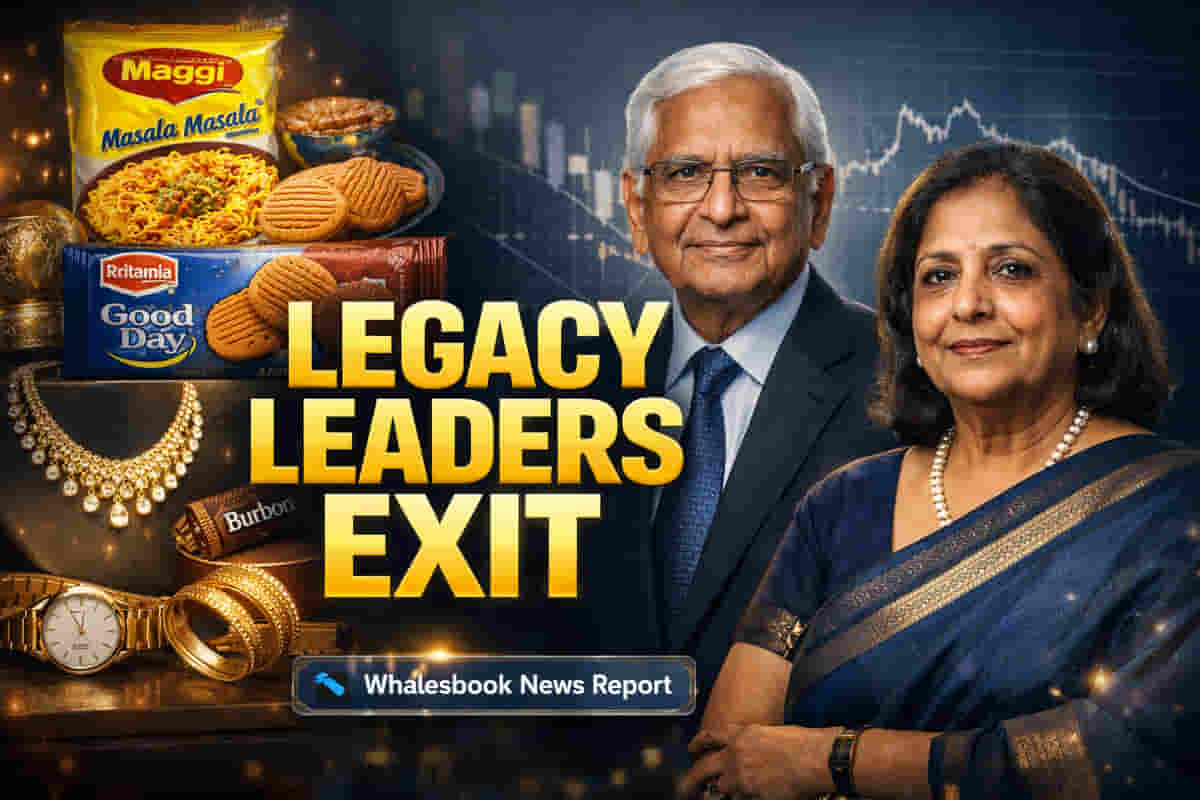
Consumer Industry Stalwarts Depart, Leaving Enduring Legacies
The year 2025 marks a significant transition in India's consumer goods sector with the retirement of several key leaders, including Suresh Narayanan from Nestle India, Varun Berry from Britannia Industries, and C.K. Venkataraman from Titan Company. Rohit Jawa also exited as MD of Hindustan Unilever. These individuals have shaped the industry through their distinct leadership styles and strategic vision.
Navigating Crises and Building Value
Suresh Narayanan's tenure at Nestle India was defined by his ability to steer the company through immense challenges. He famously managed the existential crisis in 2015 when Maggi noodles faced accusations of containing lead. This involved a massive recall of 39,000 tonnes of product and rebuilding consumer trust, ultimately leading to sustained growth. Narayanan also successfully led Nestle Egypt through the turmoil of the Arab Spring in 2011, demonstrating resilience and a commitment to employees even amidst chaos. His leadership saw Nestle India's revenue grow substantially, from ₹8,175 crore in FY14 to ₹24,276 crore, with its market capitalization soaring.
Varun Berry is credited with transforming Britannia Industries into a highly profitable entity. Taking over in 2013, he focused on cost efficiencies rather than price wars, leading to profit growth exceeding 70% by 2020. Berry’s strategy elevated the profitability of the biscuit category from a mere 2-3% to 15-16%, making it attractive for entrepreneurs. He envisioned Britannia evolving into a complete food company, expanding beyond its core biscuit business.
C.K. Venkataraman, during his leadership of Titan Company's jewellery business, dramatically expanded its scale. Starting with a business of around ₹500 crore in 2005, he grew it to ₹19,000 crore over 15 years. Venkataraman challenged conventional wisdom, such as focusing solely on VVS1 diamond quality, by introducing more accessible grades like SI and VS. This strategy made Tanishq's diamond jewellery more affordable and expanded its market reach, creating a strong brand with significant emotional resonance.
A Culture of People-Centricity and Long-Term Vision
Across their careers, these leaders consistently emphasized people-centricity and long-term value creation. Narayanan viewed himself as part of a team, learning from tennis analogies that success relies on coaches, physiotherapists, and partners. He stressed the importance of leadership responsiveness to all levels of inquiries, ensuring consumer needs and team collaboration were paramount. Venkataraman was known for making time to listen to employees, fostering a culture of inclusivity. Berry, initially result-driven, evolved his leadership style after feedback, recognizing the importance of people over just outcomes.
Their exits signify the end of an era for many, but their emphasis on building resilient businesses, fostering brand loyalty, and prioritizing their people leaves a lasting blueprint for the future of India's consumer sector.
Impact
This news highlights the impact of strong leadership on corporate growth and resilience within India's consumer sector. The retirements may lead to shifts in strategic direction for these major companies, influencing investor sentiment and market performance. The legacy of people-centricity and long-term value creation promoted by these leaders could inspire future corporate governance practices in India. Their ability to navigate crises and transform businesses offers valuable lessons for market participants.
Impact Rating: 7/10
Difficult Terms Explained
- CPG (Consumer Packaged Goods): Products that are consumed rapidly and replaced frequently, such as food, beverages, toiletries, and over-the-counter drugs.
- Stalwarts: People who are experienced and skilled in a particular field.
- Existential Crisis: A situation where a company faces a threat to its survival.
- Commodified Businesses: Businesses where products are largely interchangeable and differentiated primarily by price.
- Reverse Logistics: The process of moving goods from their typical final destination back to the origin for the purpose of capturing value or proper disposal.
- Market Share: The percentage of total sales in an industry generated by a particular company's products and services.
- COBO (Company-Owned Bottling Operation): A bottling plant that is directly owned and operated by the beverage company itself.
- VVS1, VS, SI: These are grades used to classify the clarity of diamonds. VVS1 is very, very slightly included (very high quality), VS is very slightly included, and SI is slightly included. Lower clarity grades typically mean more internal imperfections, making the diamonds less expensive.
- Premiumization: The strategy of marketing products or services as higher quality, more desirable, and often more expensive than standard offerings.
- Conglomerate: A large company composed of multiple distinct businesses operating in different industries.
- 360-degree appraisal: A performance review process where feedback is gathered from multiple sources, including supervisors, peers, subordinates, and sometimes customers.