

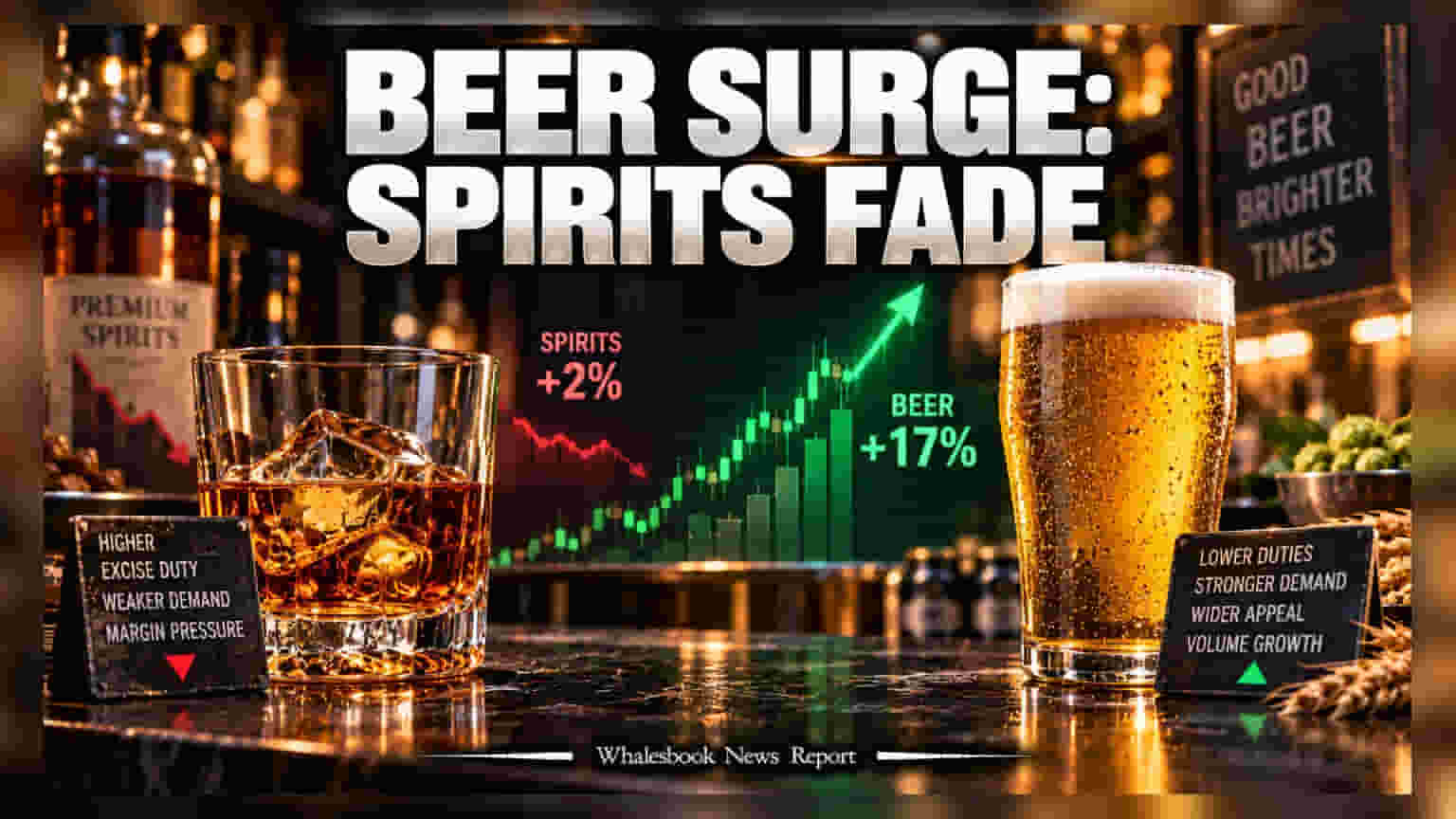
India’s alcoholic beverage industry is shifting as beer volumes rose 17% in the June 2026 quarter, while spirits saw only 2% growth. Tax hikes on Indian-made foreign liquor in key states have triggered this trend, pushing price-sensitive consumers toward beer. This divergence highlights the pressure on traditional spirits manufacturers and the growing reliance of the sector on state-level excise policy changes.
The Indian alcoholic beverage industry is navigating a structural shift as consumers increasingly pivot away from spirits toward beer. Data from the June 2026 quarter shows a significant divergence in demand, with beer volumes surging by 17% while the spirits category managed only a sluggish 2% growth. This trend reflects a broader change in purchasing behavior, largely driven by regional excise duty structures that have made spirits relatively more expensive for the average consumer.
The Impact of State Tax Policies
The primary driver of this shift is the disparity in state-level excise policies. Several key markets, including Maharashtra, Karnataka, Odisha, and West Bengal, have implemented tax increases on Indian-made foreign liquor (IMFL), while simultaneously keeping duties on beer stable or in some instances, reducing them. This pricing gap has directly impacted the mass-market whisky segment, which accounts for nearly two-thirds of the spirits market and reported a 1% decline in volume during the same period. For price-sensitive buyers, the growing cost difference between a bottle of spirit and a beer has become a deciding factor at the point of purchase.
Karnataka, in particular, has been at the forefront of this shift, having introduced an alcohol-content-based excise duty structure in 2026. This policy has been noted by industry participants as a catalyst for stronger beer category performance in the state. In contrast, spirits manufacturers are facing a double challenge: subdued demand and the inability to pass on increased costs due to the sensitivity of their customer base.
Operational Risks and Industry Outlook
The alcoholic beverage sector in India faces unique structural risks that go beyond consumer preference. Because alcohol remains a state subject, companies must manage a fragmented regulatory landscape. When a state decides to hike taxes, manufacturers have limited flexibility to offset these costs, often resulting in squeezed profit margins. Additionally, the industry struggles with input cost pressures that are not always easy to manage given the limitations in offsetting GST on raw materials against final product taxes, which are governed by state excise laws.
Seasonal factors also continue to play a role in volume trends. The month of August, which includes the observance of Shravan in North India, traditionally acts as a dampener for alcohol demand. While the industry experienced a decline during this period, companies are looking toward the second half of the fiscal year for a potential recovery. The sustainability of the current growth in beer volumes will depend largely on whether state governments maintain stable excise policies or if they choose to revise duties further to meet revenue targets.
Investors are keeping a close watch on how spirit-heavy portfolios adapt to this changing landscape. The key monitorable for the coming months will be the pace of demand recovery post-Shravan and whether the current price disparity between beer and spirits persists or narrows through further regulatory intervention.