

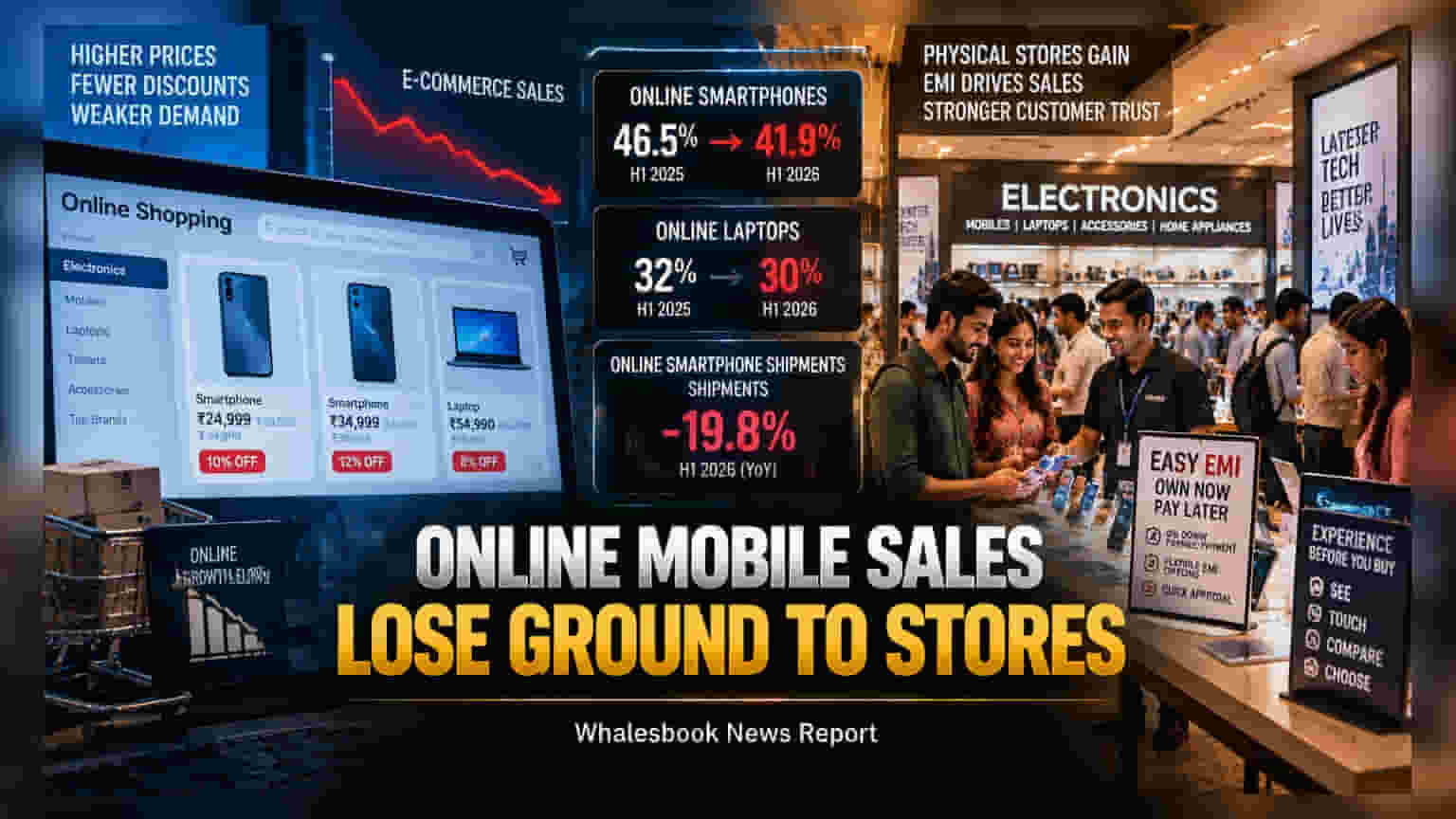
India's online smartphone market share fell to 41.9% in the first half of 2026 as record-high memory costs forced device prices up by 40%. Consumers are shifting to physical stores that offer better EMI and financing options. The upcoming festive season will test if e-commerce can recover, while new UPI merchant fees present an added challenge for the retail sector.
The smartphone market in India saw a significant change in consumer behavior during the first half of 2026. Data from the first six months of the year shows that online channels accounted for 41.9% of smartphone sales, a sharp decline from the 46.5% share held during the same period in 2025. This shift reflects a cooling of the rapid digital adoption seen in previous years as shoppers returned to physical retail outlets.
The primary driver of this trend is the rising cost of core device components. Demand for AI-accelerated memory chips has pushed the cost of DRAM and NAND memory components higher, causing overall smartphone prices to climb by 35% to 40% in many segments. This price inflation has significantly weakened demand in the entry-level smartphone category, which was traditionally the backbone of online volume. As a result, total smartphone shipments in India declined by 7.9% in the first half of 2026, marking the lowest volume for a first-half period in five years.
Physical retailers are capturing a larger share of the market by focusing on affordability and financing. While online discounts have become less aggressive, brick-and-mortar stores have expanded their EMI and consumer financing schemes. With financing expected to play a role in 42% of total smartphone sales throughout 2026, shoppers are finding it easier to manage high device prices through monthly installments at local outlets compared to online platforms.
Retailers are now facing a new regulatory hurdle that could impact transaction costs. A 0.4% Merchant Discount Rate (MDR) on UPI transactions exceeding ₹2,000 is set to take effect on October 15, 2026. This regulatory development has drawn criticism from the Retailers Association of India, as it may increase operational costs for businesses that rely on digital payments. Investors are tracking whether this fee will affect consumer payment habits or push retailers to shift away from digital transaction incentives.
The upcoming festive season will serve as the next critical test for the electronics market. Whether online marketplaces can counter the offline momentum with deep festive discounts and stronger financing offers remains to be seen. If the current trend of high device prices and cautious consumer spending continues, the second half of the year may remain challenging for volume growth, even as the market benefits from a shift toward higher-value products.