

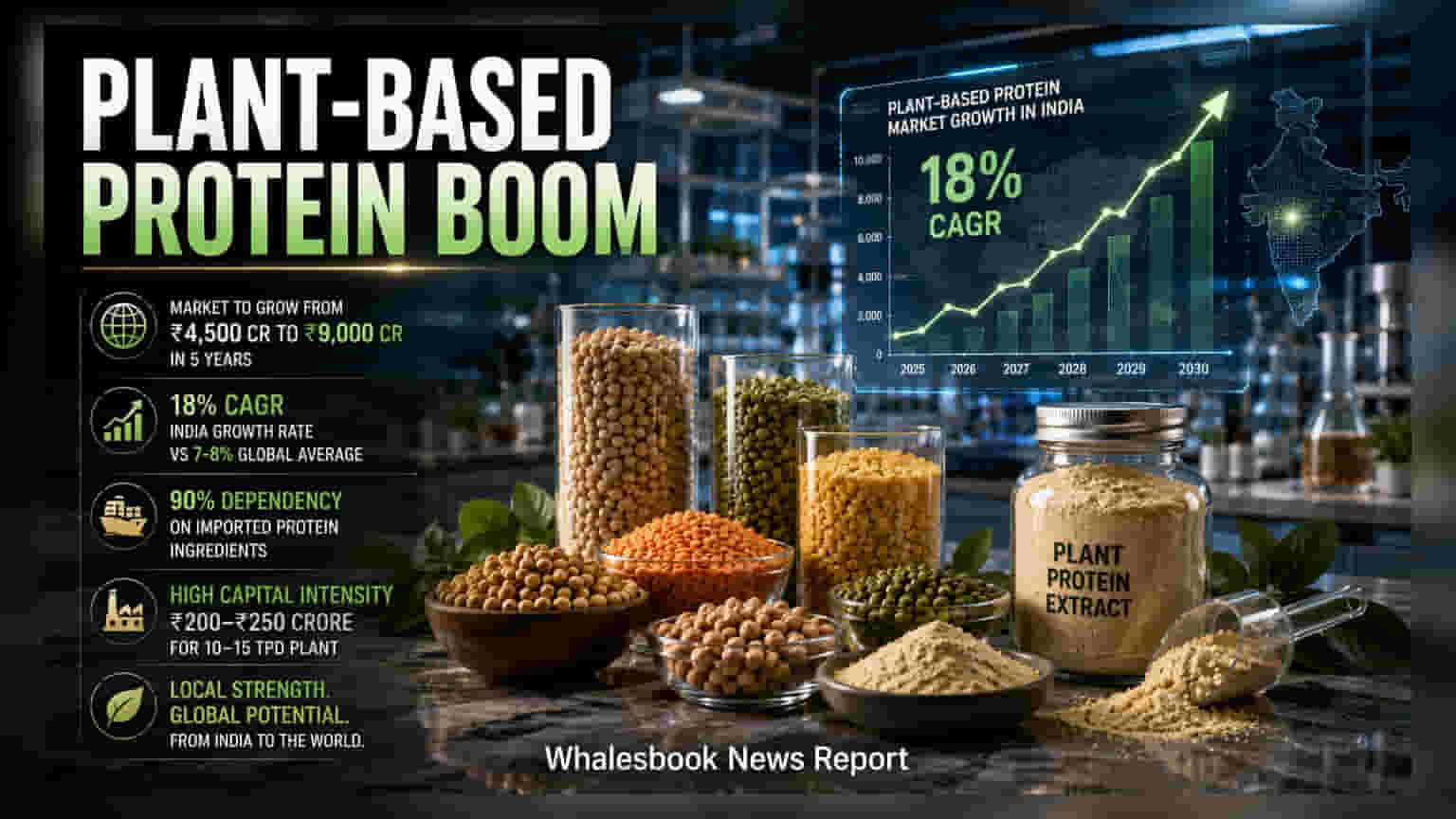
India’s plant-based protein ingredient sector is projected to double to Rs 9,000 crore within five years, growing at an annual rate of 18%. While the market shows high potential, the country currently imports 90% of its protein ingredients. Investors should monitor domestic manufacturing plans and high capital requirements as the industry aims for import substitution.
The plant-based protein ingredient market in India is entering a period of rapid expansion, with projections suggesting the sector’s valuation could rise from approximately Rs 4,500 crore today to Rs 9,000 crore within the next five years. This growth, estimated at an annual rate of 18%, is significantly outpacing the global average of 7-8%, driven by a structural shift toward nutritional awareness and a push for localized food manufacturing.
The Import Dependency Challenge
For investors and industry participants, the most significant figure in this growth story is the 90% dependency on imported protein ingredients. This high level of reliance creates a supply chain vulnerability, exposing domestic food processors to global price fluctuations, currency risks, and shipping disruptions. The current situation presents a clear opportunity for import substitution, as domestic players look to reduce costs and secure their supply lines by setting up local manufacturing infrastructure. The government has identified this segment as a critical area for food processing development, which may bring policy support in the coming years.
Capital Intensity and Barriers to Entry
While the demand outlook is positive, establishing a foothold in this sector requires substantial financial commitment. Industry data indicates that building a medium-scale ingredient extraction facility with a capacity of 10-15 tonnes per day demands an upfront capital investment of Rs 200-250 crore. This high capital intensity acts as a barrier to entry, meaning that only companies with strong balance sheets or access to funding will be able to build the necessary infrastructure to capture market share. Investors may want to look for companies that can manage these large capital projects without over-leveraging their balance sheets or compromising on cash flows.
Strategic Value of the Agriculture Base
India holds a distinct advantage in this sector due to its vast agricultural raw material base. By combining local agricultural resources with modern scientific processing, companies have the potential to lower the cost of production compared to importing finished ingredients. The next phase of industry growth will likely focus on closing the loop between farmers, food processing units, and research institutions. This integration is essential for creating high-value manufacturing capabilities that can serve both domestic demand and export markets.
As the sector matures, the key monitorables for investors will be the announcement of new capacity expansions, the timeline for these projects to come online, and whether companies can successfully improve their profit margins by shifting away from expensive imports toward localized production. Changes in raw material costs and progress in government-led infrastructure support for the food processing industry will also be important indicators of the sector's long-term sustainability.