 Whalesbook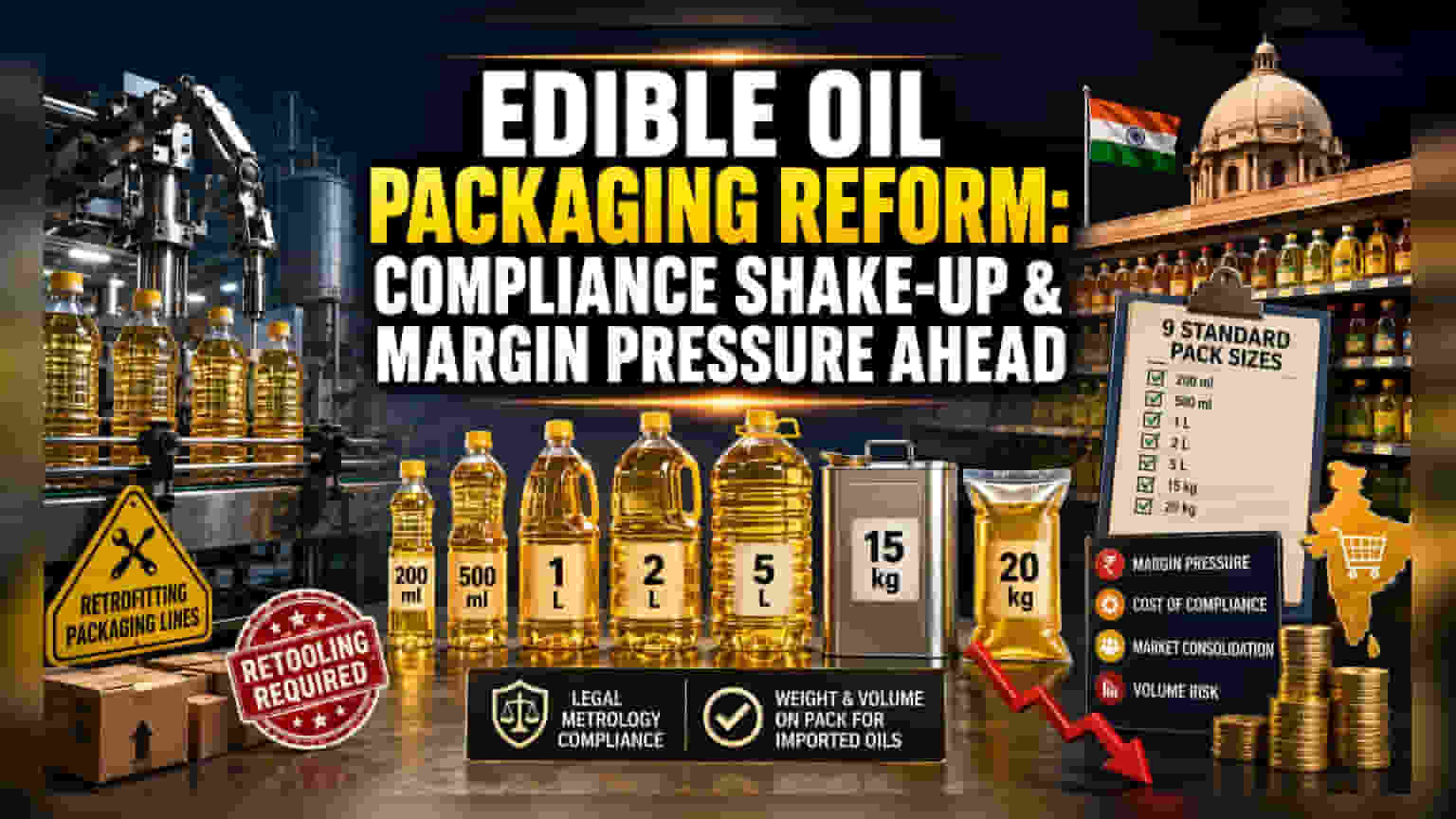


Operational Friction in the Oil Supply Chain
While the mandate for nine standard pack sizes—ranging from 200 ml to 20 kg—is being presented as a consumer-friendly transparency initiative, the immediate consequence for producers is a period of significant logistical retooling. By enforcing strict adherence to fixed volumes for products like soybean, palm, and sunflower oil, the government is effectively eliminating the 'shrinkflation' strategy often employed by manufacturers to hide price increases. This regulatory tightening compels firms to overhaul their existing packaging lines, which historically relied on unique, non-standard sizes to occupy specific retail price points or shelf slots.
The Competitive Landscape and Margin Pressure
Companies operating in this sector, such as Adani Wilmar, face a complex challenge. Historically, SKU variation has been a primary tool for competitive differentiation and margin protection in a commodity market where raw material costs are notoriously volatile. When global prices for crude palm oil or sunflower oil spike, manufacturers often reduce package volumes slightly to maintain established price points. With the new standardization, this tactical flexibility is removed. Analysts observing the sector suggest that companies with higher operational leverage and less diversified product portfolios may struggle to maintain current profitability levels as they absorb the transition costs of new machinery and inventory write-offs associated with legacy packaging.
The Forensic Bear Case: Structural Weaknesses
The move towards standardization poses a distinct risk to smaller regional players who lack the capital to quickly upgrade packaging infrastructure. While larger conglomerates possess the balance sheet strength to weather the three-month compliance window, the regulation acts as a silent consolidation catalyst, potentially forcing smaller, less efficient producers out of the market or into unfavorable mergers. Furthermore, the requirement to print both weight and volume on packaging for imported oils adds an extra layer of administrative compliance that could delay distribution speed, particularly at ports where supply chain velocity is essential to maintaining freshness and shelf-life metrics. Investors should monitor whether these firms attempt to pass the compliance costs to consumers, which could lead to a temporary volume dip in an already price-sensitive Indian market.
Market Outlook and Regulatory Trajectory
Despite the immediate disruption, the long-term outlook for the sector remains tethered to global commodity price trends rather than domestic regulatory shifts alone. However, the alignment with the Legal Metrology framework indicates a broader government effort to standardize consumer goods across the board. Future volatility in the stock performance of major edible oil producers will likely hinge on their ability to maintain market share while navigating these rigid constraints. The market will be watching closely to see if mid-cap producers can successfully scale their operations to meet these new standards without sacrificing the economies of scale that underpin their current valuation multiples.