 Whalesbook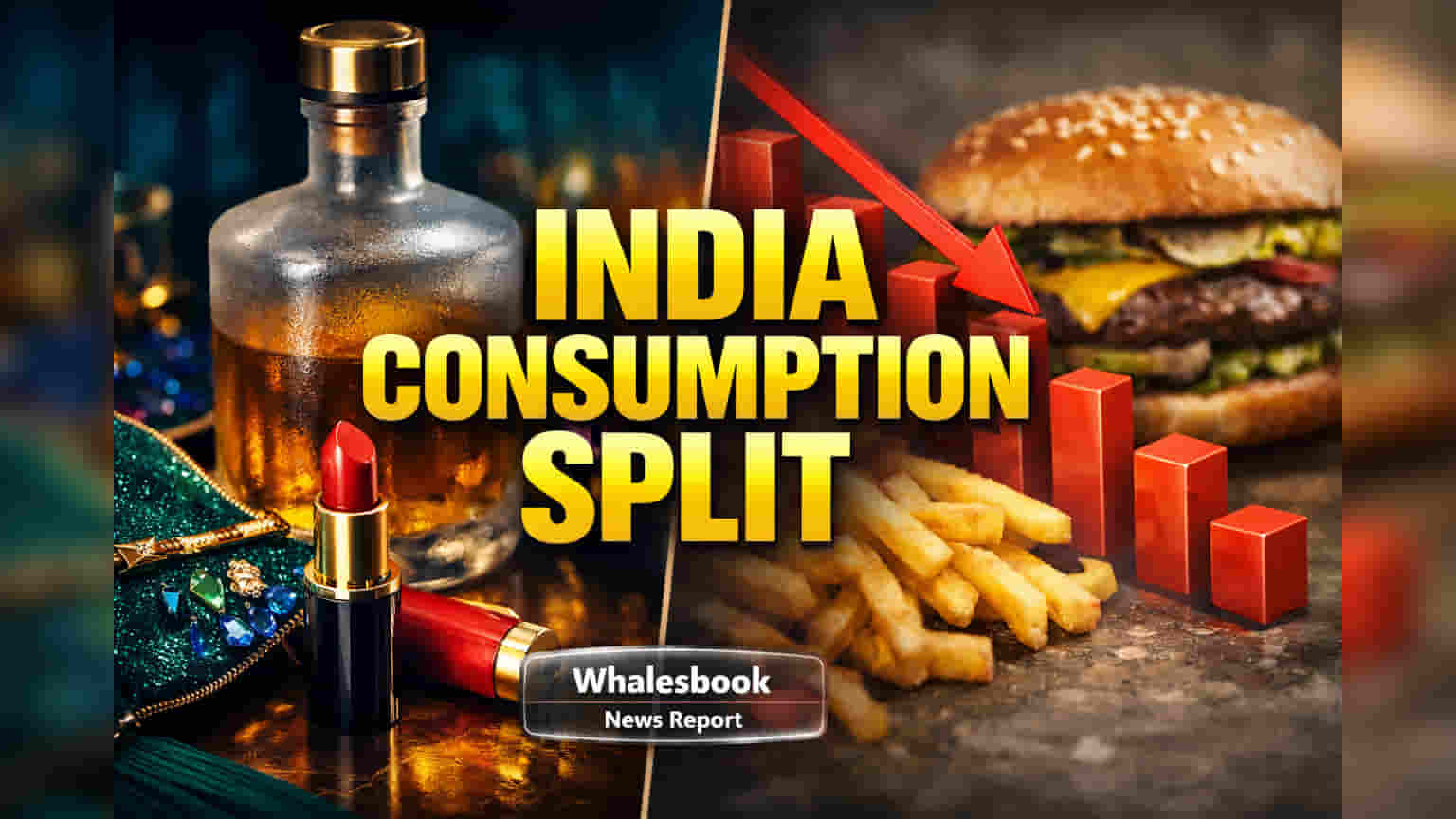


Consumer Spending Diverges Sharply
India's consumption story in Q4FY26 is marked by a clear split. Premium alcohol and beauty sectors are growing strongly, supported by pricing power and brand loyalty. However, the quick-service restaurant (QSR) sector is seeing a slow and uneven rebound. This divide, noted by Elara Capital, points to changing consumer priorities, with a preference for value and experience even at higher prices.
Premium Brands Drive Growth in Alcobev and Retail
The alcohol beverage (alcobev) sector is increasingly relying on price increases and a shift to premium products, rather than just selling more volume. Premium and above (P&A) spirits are expected to grow volumes by about 21% year-on-year, mainly from vodka and broad appeal. Value growth is more modest, around 2-3%, showing that higher prices and better product mix are the main growth drivers, with EBIT margins nearing 18%. Some spirits segments might see volume dips due to higher duties, but value growth and stable margins are still expected. The beer segment shows signs of recovery, with United Breweries forecasting 4% volume growth. However, rising costs for glass and packaging materials are squeezing margins.
Discretionary retail remains strong. Trent reported around 18% year-on-year sales growth, boosted by a 24% expansion in its network, including Zudio and Westside stores. Gross margins are also improving, reaching an estimated 45%. Nykaa continues its strong performance, with overall sales growth projected at 26.5% year-on-year. The beauty and personal care (BPC) segment is expected to drive GMV growth of 24-26%, while fashion GMV should rise about 25%. EBITDA margins are climbing towards 8.1%. This steady growth in premium and fashion retail highlights strong pricing ability and brand value in a challenging economy.
QSR Sector Faces Demand Fluctuations and Higher Costs
The quick-service restaurant (QSR) sector continues its slow and uneven recovery. While sales growth at comparable stores (SSSG) is stabilizing, performance varies among brands. Westlife Foodworld is expected to lead with about 4% comparable store growth. Brands like Restaurant Brands Asia (Burger King India) might see around 5% SSSG. However, Pizza Hut operators, Sapphire Foods India and Devyani International, are projected to lag, possibly with SSS declines of 4% and 8% respectively. Chains focusing on burgers and fried chicken are performing better, with KFC operators anticipated to grow around 4%, supported by value-focused options.
Profitability in QSR is also uneven. Jubilant FoodWorks is expected to maintain strong EBITDA margins near 20.4%. In contrast, competitors like Sapphire Foods India and Devyani International may see margins shrink due to higher operating expenses, including rising raw material costs and increased spending on expansion. Disruptions in LPG supply also pose a short-term operational risk for QSR chains.
Risks Ahead: Margin Pressure and Competition
Despite strong growth in premium areas, significant risks remain. For alcobev companies, ongoing cost increases for packaging materials like glass and aluminum, along with potential duty hikes or new state rules, could hurt profits even with good price realization. While premiumization is a strong trend, a sharp economic downturn could hit these higher-priced segments harder than more affordable options.
In the QSR sector, continuous pressure on margins from rising input, labor, and rent costs, without a corresponding increase in consumer spending on pricier items, is a major challenge. Devyani International and Sapphire Foods India, in particular, face margin risks from higher operating costs and investments. This contrasts with Jubilant FoodWorks' stronger margin profile. Sapphire Foods India has reported losses recently, suggesting possible operational issues. Restaurant Brands Asia, while showing positive SSSG, also reported a net profit loss last quarter. Westlife Foodworld operates at a high valuation, reflecting high investor expectations and potential vulnerability to any missed targets. United Breweries also faces margin pressure from packaging costs despite volume recovery.
Outlook: Strong Pricing and Execution Drive Success
Looking ahead, companies with strong pricing ability, effective cost control, and efficient operations are best positioned. The steady demand for premium products suggests that brands offering good value and a superior customer experience will continue to perform well. For QSR operators, managing cost pressures while maintaining service levels and adapting to changing consumer preferences for value and health will be vital. The market's split is likely to continue, benefiting companies that can command premium prices and operate efficiently. Those in mass-market segments will need to focus on cost savings and strategic value offerings to stay competitive. Most companies have 'Buy' or 'Outperform' ratings from analysts, but targets often show significant upside potential, reflecting the perceived challenges and growth opportunities in each sector.